
El Hedim Square (Place El-Hedim), Meknes
Public square in Meknes, Morocco, created in the late 17th century under Sultan Moulay Ismail; fronted by Bab Mansour and serving as a historic marketplace and ceremonial space.
El Hedim Square (ساحة الهديم) is the broad open plaza that lies before the imperial enclosure of Meknes in northern Morocco. Created during the reign of Sultan Moulay Ismail, it functions as both the ceremonial forecourt to the royal precinct and a long-standing urban market and gathering place.
Image gallery
1 Image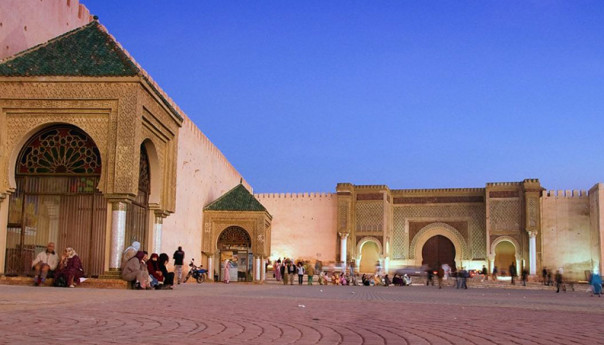
Overview
The name El Hedim (also written Place El-Hedim) is commonly translated as "square of demolition," a reference to the demolition of part of the old medina to make way for the sultan's palace complex. The open space was organized in the late 17th century and immediately became the main external plaza serving the palace and city gates.
Layout and architecture
The square is dominated by the monumental Bab Mansour gate, which faces the plaza and is noted for its horseshoe arch, intricate zellij tile decoration and imposing stone and marble columns. Around the square are arcades, cafés and souk stalls that open onto the plaza, creating an interface between formal royal architecture and everyday commercial life. Narrow streets and alleys lead away from the square into the older medina quarter.
History and cultural role
El Hedim has historically combined practical and ceremonial functions. Because it adjoins the palace's service buildings — stables, granaries and barracks constructed under Moulay Ismail — it was a centre for provisioning, military display and public ceremony. Over time it retained its importance as a marketplace and meeting place for residents and travellers and is frequently compared in travel literature to other Moroccan city squares that act as hubs of social life.
Visiting today
Part of the ensemble of historic monuments that make up the heart of Meknes, the square remains a major attraction for visitors exploring the city's imperial past. It provides the primary vantage point for viewing Bab Mansour and serves as an entry to nearby sites such as the royal granaries (Heri es-Souani) and the mausoleum associated with Sultan Moulay Ismail. Vendors, street performers and occasional cultural events keep the plaza lively.
- Location: Meknes, northern Morocco
- Main landmark: Bab Mansour gate (facing the square)
- Date of creation: late 17th century, during the reign of Moulay Ismail
- Functions: market, ceremonial forecourt, tourist focal point
El Hedim Square offers a compact introduction to Meknes's imperial planning: its open scale, decorative details and surrounding commercial life illustrate how royal projects and urban commerce were combined to shape a lively civic centre that continues to be central to the city's identity.
Questions and answers
Q: What is El Hedim Square?
A: El Hedim Square is a well-known square located in Meknes, Morocco.
Q: What does the name El Hedim mean?
A: The name El Hedim translates to "the square of demolition" in Arabic.
Q: When was El Hedim Square built?
A: El Hedim Square was built between the years 1672-1674.
Q: Who was responsible for the construction of El Hedim Square?
A: The construction of El Hedim Square was carried out by the Sultan of Morocco, Moulay Ismail.
Q: Why did the Sultan demolish half of the Old City of Meknes?
A: The Sultan of Morocco, Moulay Ismail, demolished half of the Old City of Meknes to make way for his palace and the square.
Q: What is the Mansour Gate and where is it located?
A: The Mansour Gate is a gate situated in front of El Hedim Square in Meknes, Morocco.
Q: Why is El Hedim Square famous?
A: El Hedim Square is famous for its history and significance, which is linked to the construction of the square and the demolition of half of the Old City of Meknes by the Sultan of Morocco during the 17th century.
Related articles
Author
AlegsaOnline.com El Hedim Square (Place El-Hedim), Meknes Leandro Alegsa
URL: https://en.alegsaonline.com/art/30563