
Eichsfeld (district)
Rural district in northern Thuringia, Germany, known for its historic Catholic identity, rolling countryside, small towns and cultural heritage in the larger Eichsfeld region.
Overview
Eichsfeld is a rural district in Thuringia and in Germany. It takes its name from the broader historical region of Eichsfeld, a culturally distinct area that crosses modern state boundaries. The district combines agricultural lowlands, wooded hills and market towns and is known for a strong local identity shaped by centuries of religious and political history.
Image gallery
2 Images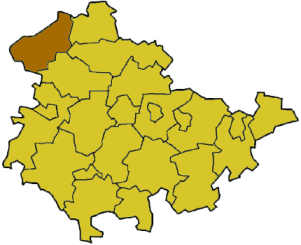
Geography and administration
The district covers a varied landscape of river valleys, small hills and forested stretches that form part of central Germany's transition between the Harz region to the north and the Thuringian Basin to the south. Administratively it is a rural district (Landkreis) composed of several towns and many smaller municipalities. Local government focuses on rural services, conservation of historic villages and promoting tourism.
History and identity
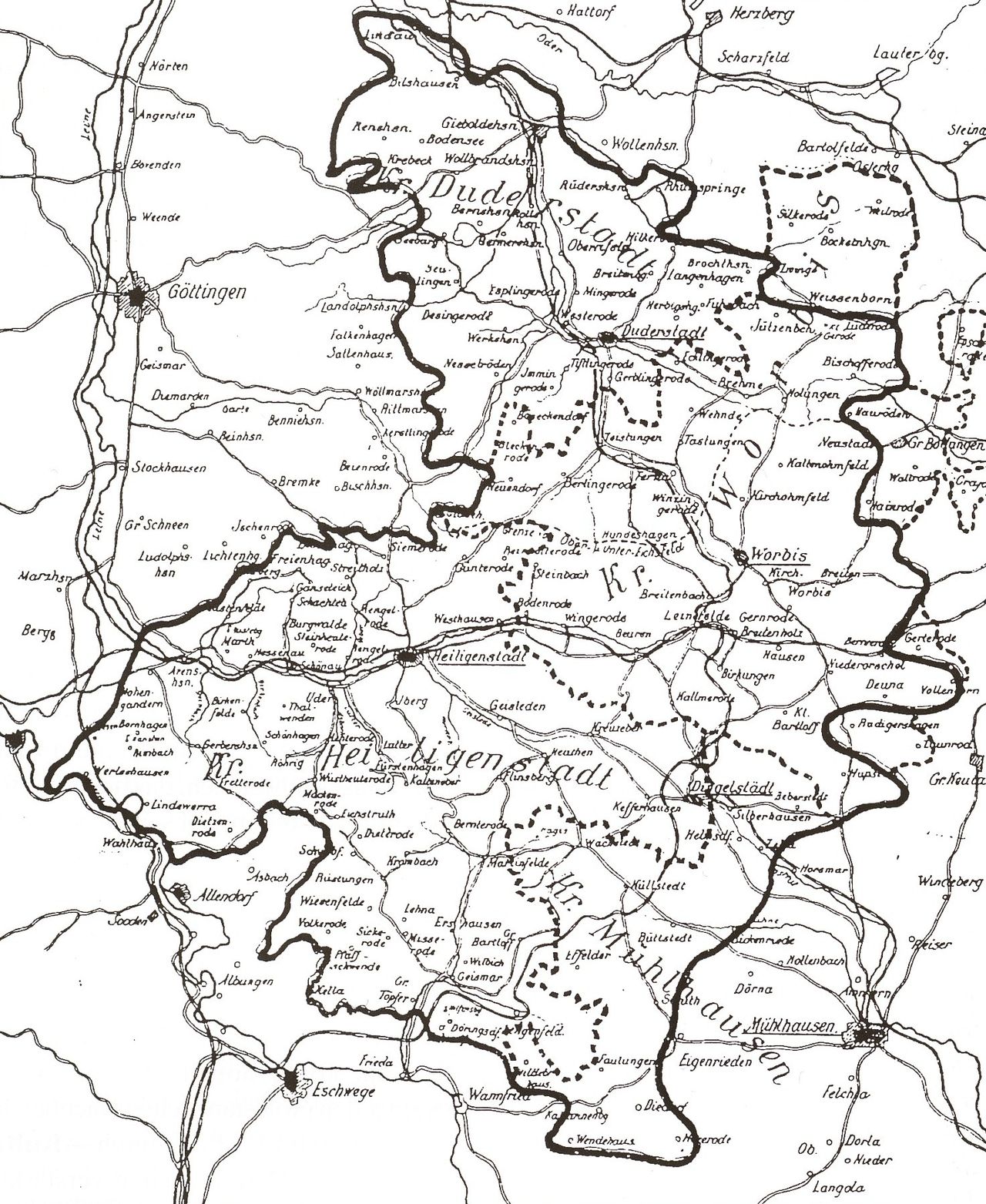
Eichsfeld's historical development was influenced by medieval territorial arrangements and the long presence of the Archbishopric of Mainz, which left a lasting Catholic tradition. That religious continuity set Eichsfeld apart from surrounding, largely Protestant regions. In the 20th century the area experienced the divisions of post‑war Germany, and the inner‑German border affected local life until reunification, after which economic and administrative reforms reshaped the district.
Economy, culture and tourism
Economic life in the district blends agriculture, small and medium-sized industry, crafts and services. Cultural offerings highlight pilgrimage sites, churches, half-timbered architecture and local festivals. Rural tourism promotes walking, cycling and visits to historic towns or natural attractions nearby. Spa and wellness services in some towns contribute to the visitor economy.
Notable towns and transport
- Heilbad Heiligenstadt — the administrative center and a traditional spa and market town.
- Leinefelde-Worbis — an important local hub for trade and regional connections.
- Numerous small villages that preserve regional crafts, churches and cultural events.
Transport links include regional roads and rail connections that tie the district to larger cities and neighbouring regions, supporting commuting and tourism. The district's character derives from its mix of natural scenery, historical continuity and the resilience of small communities.
Related articles
Author
AlegsaOnline.com Eichsfeld (district) Leandro Alegsa
URL: https://en.alegsaonline.com/art/30436