
Henry Ford: industrialist who shaped modern mass production
Henry Ford (1863–1947), founder of the Ford Motor Company, pioneered mass production techniques and changed automobile manufacture and labor practices; his legacy includes both innovation and controversy.
Overview
Henry Ford (July 30, 1863 – April 7, 1947) was an American engineer and businessman best known for founding the Ford Motor Company and for transforming the auto industry. Beginning in the late 19th century he produced early gasoline automobiles and later introduced methods that allowed cars to be built faster and at lower cost, making personal transport accessible to a much larger portion of the public.
Image gallery
10 Images


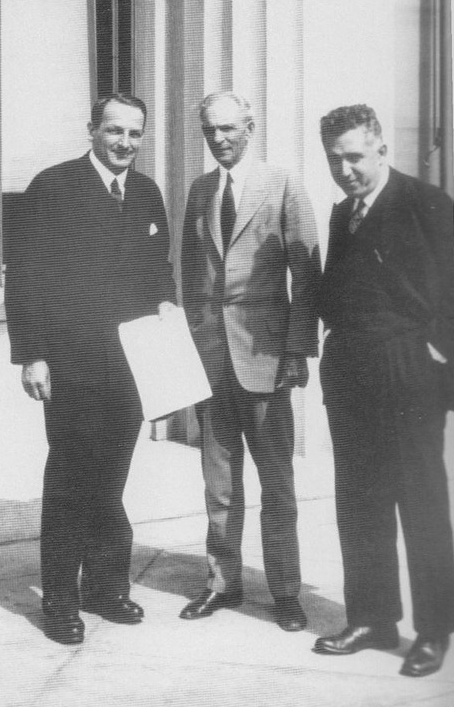

Innovations and methods
Ford is often credited with popularizing the moving assembly line, a production system in which each worker performs a specific, limited task as a product moves along a conveyor or series of stations. This division of labor reduced build time per vehicle and supported higher volumes without proportionally higher costs. Ford also pursued standardization of parts, vertical integration of suppliers, and workplace changes intended to raise productivity.
- Moving assembly and task specialization
- Standardized, interchangeable components
- Wage and labor policies intended to reduce turnover and increase stability
Life and career
Born on a farm in Michigan, Ford left home as a young man to pursue mechanical work and eventually moved to Detroit to find opportunities in engineering and manufacturing. He built his first automobiles near the end of the 19th century and formally established the Ford Motor Company in the early 1900s. The company's early models, including the widely known Model T introduced in the first decade of the 20th century, played a central role in popularizing the automobile in the United States and abroad.
Impact and importance
Ford's methods reshaped manufacturing far beyond cars; many factories worldwide adopted assembly-line techniques and supplier integration. The ability to produce affordable vehicles contributed to changes in urban planning, commuting patterns, and consumer culture. By lowering costs and raising production volumes, mass production helped create new markets for goods and led to economies of scale in numerous industries.
Criticism and controversies
Ford's legacy is mixed. He received praise for technical and managerial innovations but also drew criticism for his labor relations and for publishing and promoting views that were widely condemned as antisemitic. His approach to organized labor and to some social and political positions sparked dispute during his lifetime and remains a subject of historical debate.
Legacy and notable facts
Henry Ford's influence extends through the continuing operations of the Ford Motor Company, the Ford family's long involvement in the firm, and the adoption of mass-production principles across industries. Museums, historical sites, and industrial studies examine both the technical achievements and the complex social consequences of his work. Scholars and business leaders still study Ford's innovations as foundational examples of modern manufacturing and managerial practice.
For further reading about his life, business practices, and the broader effects of his innovations, follow introductory resources and specialized histories that explore both achievements and controversies in context. Engineer profile, labor studies, and archival material at company and museum collections provide diverse perspectives on his career.
Questions and answers
Q: Who was Henry Ford?
A: Henry Ford was an American engineer and businessman.
Q: What did Henry Ford do?
A: Henry Ford started making cars in 1896 and founded the Ford Motor Company. He developed the idea of the assembly line, which made it possible to produce cars in large numbers.
Q: What was Henry Ford's contribution to the manufacturing industry?
A: Henry Ford's contribution to the manufacturing industry was the development of the assembly line, which allowed for faster and cheaper production of goods.
Q: How did the assembly line work?
A: The assembly line involved each worker doing one small part of the process of making something, leading to faster and more efficient production of goods.
Q: How did Henry Ford's idea of the assembly line change the way factories operate?
A: Henry Ford's idea of the assembly line revolutionized the way factories operate, allowing for faster and more efficient production of goods.
Q: When did Henry Ford start making cars?
A: Henry Ford started making cars in 1896.
Q: What is the legacy of Henry Ford?
A: The legacy of Henry Ford includes the development of the assembly line, which changed the way factories operate and allowed for faster and more efficient production of goods. He also founded the Ford Motor Company, which remains a major player in the automotive industry.
Related articles
Author
AlegsaOnline.com Henry Ford: industrialist who shaped modern mass production Leandro Alegsa
URL: https://en.alegsaonline.com/art/120527
Sources
- Henry Ford
- hfmgv.org : "The Henry Ford"
- pbs.org : "A Science Odyssey: People and Discoveries: Ford installs first moving assembly line"
- web.mit.edu : "Inventor of the Week: Archive"
- history.com : "Moving Assembly Line at Ford — History.com This Day in History — 10/7/1913"
- history.hanover.edu : "Power, Ignorance, and Anti-Semitism: Henry Ford and His War on Jews"
- adl.org : "Anti-Semitism of 1920's Revived on Web – The International Jew"
- jewishvirtuallibrary.org : "Henry Ford Invents a Jewish Conspiracy"
- wikidata.orgQ8768.html : wikidata.orgq8768.html
- authority.bibsys.no : 90543045
- catalogo.bne.es : XX930702
- catalogue.bnf.fr : cb122359096
- data.bnf.fr : (data)
- cantic.bnc.cat : a11024355
- d-nb.info : 118534300