
Ecological succession: processes, stages, and ecological significance
Ecological succession describes how biological communities change after disturbance or over time. Covers primary vs secondary succession, stages, driving processes, examples, human impacts, and ecological importance.
Overview
Ecological succession is the process by which the species composition and structure of an ecological community change over time. Succession can follow a disturbance — such as fire, flood, or human activity — or occur on newly formed substrates like cooled lava or glacial till. The sequence of changes often leads to greater biomass, complexity, and altered resource availability as communities develop.
Image gallery
10 Images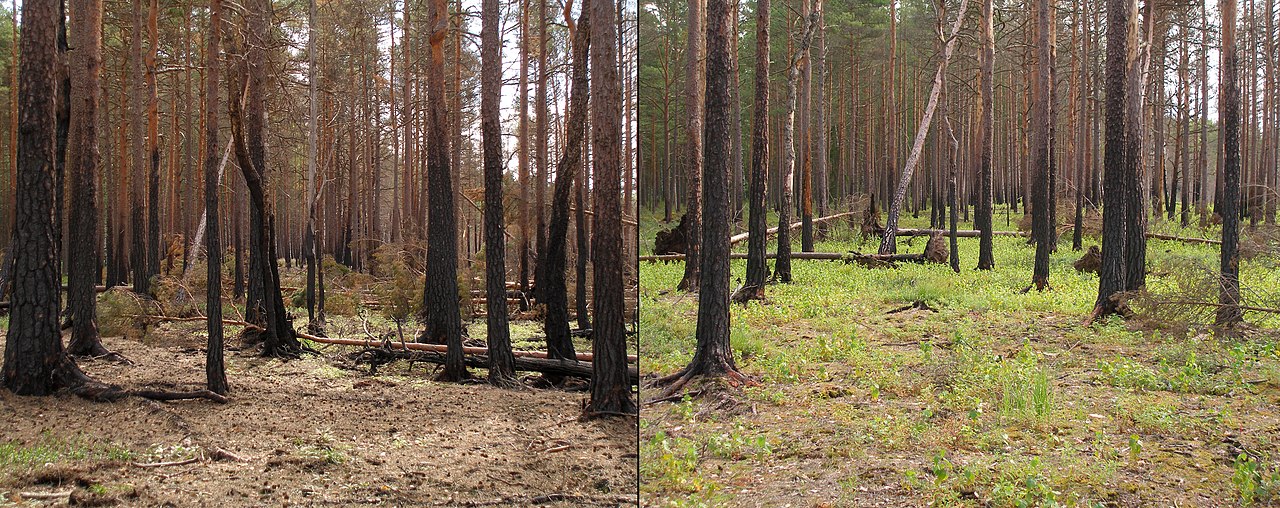





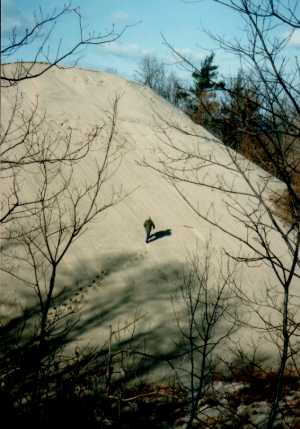
Types of succession
Succession is commonly divided into two broad types. Primary succession begins on surfaces with no preexisting soil or biological legacy, for example on bare rock or fresh volcanic deposits. Secondary succession occurs where a disturbance has removed much of an existing community but left soil, seeds, or roots intact, such as after a wildfire or agricultural abandonment. Both types may follow different rates and trajectories depending on local conditions.
Stages and conceptual models
Successional development is often described in stages from pioneer species to more complex communities. Early colonizers are typically hardy, fast-growing species that modify the environment. Over time they are replaced or joined by species better suited to the changed conditions.
- Pioneer stage: tolerant, dispersive species establish and begin soil formation.
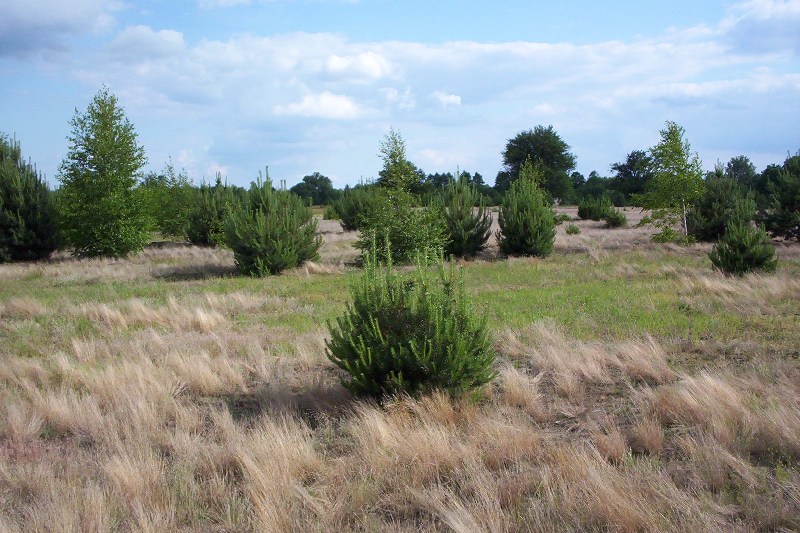
- Intermediate stages: a mix of grasses, shrubs, and young trees increases diversity and biomass.
- Climax or mature community: a relatively stable assemblage shaped by climate and soils (though the concept of a single climax is debated).
Three classic models explain how species replace one another: facilitation (early species modify conditions to help later ones), inhibition (early species hinder others), and tolerance (replacement depends on life-history traits and tolerance of conditions).
Factors affecting succession
Rates and pathways of succession depend on abiotic factors (climate, soil type, nutrient availability, disturbance regime) and biotic interactions (competition, predation, symbiosis). Dispersal limitation, seed banks, and the presence of legacy organisms also shape outcomes. Human activities such as land use, invasive species introductions, and fire suppression can alter successional trajectories.
Examples, management, and human impacts
Well-known examples include plant colonization on newly exposed glacial surfaces, forest recovery after fires, and regrowth on abandoned farmland. Ecological restoration and conservation use successional principles to guide interventions: for instance, managers may plant native pioneers to accelerate recovery or remove invasive species to restore a desirable trajectory. For further reading on applied approaches, see additional resources.
Importance and distinctions
Succession is central to understanding ecosystem development, resilience, and carbon and nutrient cycling. Distinctions often drawn by ecologists include autogenic change driven by organisms (e.g., soil formation by plants) versus allogenic change driven by external physical forces (e.g., climate shifts). Modern views emphasize multiple possible pathways, shifting baselines, and the role of disturbances as both destructive and creative forces in ecosystems.
Related articles
Author
AlegsaOnline.com Ecological succession: processes, stages, and ecological significance Leandro Alegsa
URL: https://en.alegsaonline.com/art/29944
Sources
- books.google.com : Positive Impact Forestry, p. 32.
- edwardgoldsmith.org : "Ecological Succession Rehabilitated,"