
Easy Rider (1969) — landmark American counterculture road film
Easy Rider (1969) is a landmark American road film directed by Dennis Hopper that captured 1960s counterculture, helped usher in New Hollywood, and was added to the U.S. National Film Registry in 1998.
Overview
Easy Rider is a 1969 American road film directed by Dennis Hopper and written by Hopper, Peter Fonda and Terry Southern. It follows two motorcycle riders who travel across the American Southwest and the South in search of freedom and a place where they belong. The film became widely associated with the era's youth counterculture and is often cited as a key early success of the New Hollywood movement, an industry shift toward director-driven, more realistic filmmaking approaches.
Image gallery
8 Images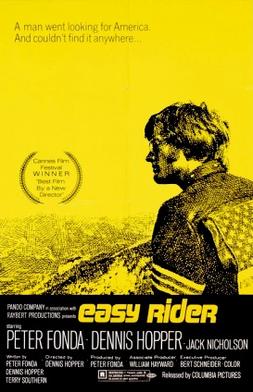


Plot, characters and themes
The narrative centers on two bikers and, later, a companion they meet on the road. The episodic structure presents a sequence of encounters that reveal cultural tensions of the late 1960s: generational conflict, distrust of traditional authority, social alienation, and debates over personal liberty and moral boundaries. The road journey is used as both physical movement and metaphor for a search for identity and belonging.
The film is commonly discussed in relation to the hippie movement, drug culture and communal experiments of the period. Its frank depiction of recreational drug use, communal lifestyles and the ambivalence of the protagonists toward mainstream society was provocative at release and remains central to discussions of its historical context.
Production, style and filmmaking
Made on a relatively modest budget, Easy Rider blended planned sequences with improvisation. It favored natural locations, long takes of landscape and a loose, episodic pacing that contrasted with conventional studio pictures of the time. Cinematography emphasized open roads, wide skies and the sensory experience of travel, while editing often allowed music and imagery to carry emotional and narrative weight.
Music and cultural tone
The film's contemporary rock soundtrack—featuring well‑known pop and rock songs of the late 1960s—played a central role in creating mood and identifying cultural moment. Its use of licensed popular music to underscore scene transitions and character states influenced later filmmakers and helped demonstrate the dramatic potential of contemporary songs in motion pictures.
Performances and reception
Performances from the principal actors and a notable supporting turn by Jack Nicholson drew attention; Nicholson received an Academy Award nomination for his role. Upon release, the film was both a commercial surprise and a subject of lively critical debate. Some critics praised its energy and honesty; others questioned its politics and approach to representation. Over time, Easy Rider has come to be seen as an archetype of the American road movie and a touchstone for films that address generational change.
Controversies and discussion
Alongside praise, the film generated controversy for its depiction of drug use and for scenes that some viewers found exploitative or sensational. Accounts about on‑set practices and the degree of realism in certain sequences vary; scholars typically approach these matters cautiously, treating contemporary reports and later recollections as part of a contested historical record rather than settled fact.
Legacy and preservation
Easy Rider helped launch or boost the careers of several people associated with its production and influenced subsequent road films, independent filmmakers and mainstream studios that sought a new youth audience. In recognition of its cultural, historical and aesthetic significance the film was added to the U.S. Library of Congress National Film Registry in 1998 (see registry). For contextual discussions of the film’s place in genre and national cinema, see general studies of road films and American counterculture (genre context).
Scholars and critics continue to examine Easy Rider’s relationship to its moment: how it reflects contradictions within the counterculture, how it negotiates the boundary between realism and myth, and how its production and reception illuminate broader changes in the film industry and American society of the late 1960s (writers and cast, screenwriting context, cultural background).
Questions and answers
Q: Who directed Easy Rider?
A: Dennis Hopper directed Easy Rider.
Q: Who wrote Easy Rider?
A: Easy Rider was written by Dennis Hopper, Peter Fonda, and Terry Southern.
Q: What is Easy Rider about?
A: Easy Rider is about two bikers traveling through the American Southwest and South for freedom.
Q: When was Easy Rider added to the Library of Congress National Registry?
A: Easy Rider was added to the Library of Congress National Registry in 1998.
Q: What phase of movie making did the success of Easy Rider help spark?
A: The success of Easy Rider helped spark the New Hollywood phase of movie making during the early 1970s.
Q: What issues and tensions in the United States during the 1960s does Easy Rider explore?
A: Easy Rider explores issues and tensions in the United States during the 1960s, such as the rise and fall of the hippie movement, drug use, and communal lifestyle.
Q: What is Easy Rider famous for in terms of drug use?
A: Easy Rider is famous for its use of real drugs in its portrayal of marijuana and other substances.
Related articles
Author
AlegsaOnline.com Easy Rider (1969) — landmark American counterculture road film Leandro Alegsa
URL: https://en.alegsaonline.com/art/29802
Sources
- the-numbers.com : "Box Office Information for Easy Rider"
- boingboing.net : "Peter Fonda's Easy Rider auction"
- imdb.com : Easy Rider: Shaking the Cage
- festival-cannes.com : "Festival de Cannes: Easy Rider"