
Dreidel: the four-sided spinning top of Hanukkah
A dreidel is a four-sided spinning top used in a traditional Hanukkah game. It bears Hebrew letters, is played with tokens such as gelt, and has cultural and historical associations across Jewish communities.
Overview
The dreidel (Hebrew: סביבון) is a four-sided spinning top commonly associated with the Jewish festival of Hanukkah. Played as a simple gambling-style game, it uses small counters such as chocolate coins (gelt), nuts, raisins, or other tokens. The dreidel is both a toy and a cultural symbol, often used in family gatherings and educational settings to mark the holiday.
Image gallery
8 Images

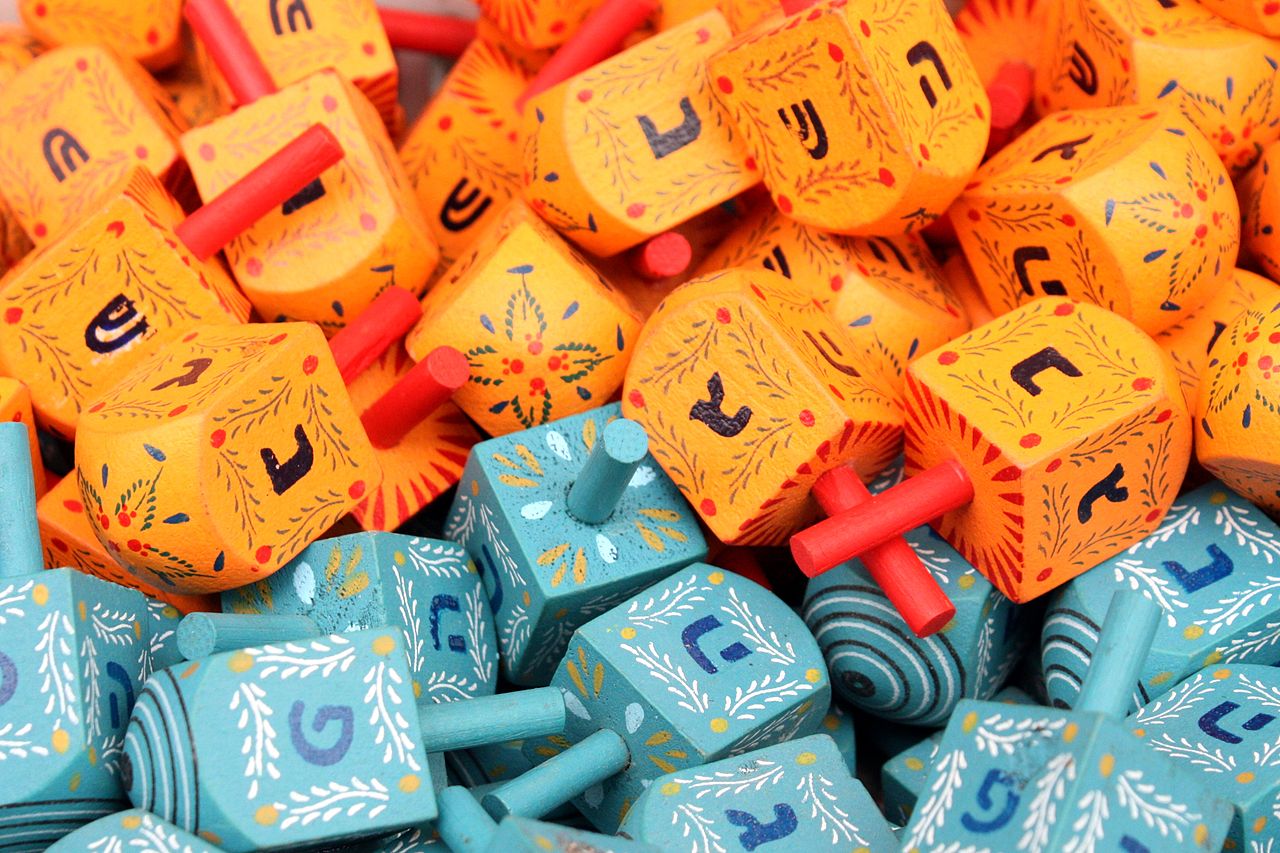


Design and letters
A typical dreidel has four flat sides, each marked with a Hebrew letter: נ (nun), ג (gimel), ה (hei) and ש (shin) in the Diaspora; in Israel the shin is often replaced by פ (peh). These letters are commonly explained as an acronym for the phrase "nes gadol haya sham" (a great miracle happened there) or, in Israel, "po" (here). Dreidels are made from wood, clay, metal, plastic or ceramic and range from simple play pieces to decorative or collectible items.
How the game is played
The game requires two or more players, an initial pot of tokens, and a dreidel. Play proceeds by each participant spinning the dreidel in turn. Outcomes depend on the letter facing up when the dreidel stops:
- Nun – nothing happens (pass).
- Gimel – the spinner takes the entire pot.
- Hei – the spinner takes half the pot (rounding rules vary).
- Shin/Peh – the spinner adds a token to the pot.
House rules, such as what constitutes "half" or when the pot is replenished, vary by community and family.
History and cultural significance
The exact origin of the dreidel is not fully documented. It is related to the European teetotum, a multi-sided top used for children's games and gambling. Jewish use of the dreidel became linked to Hanukkah by the 18th–19th centuries, with folk explanations that the top was used to conceal religious study under persecution; such stories are part of cultural memory rather than established historical fact. Today the dreidel functions as a festive symbol of Hanukkah, taught to children and used in synagogues, schools, and homes.
Variations and notable facts
- Regional differences include the shin/peh distinction and minor rule variations.
- Dreidels appear in many materials and artistic designs; antique examples are collected by museums and enthusiasts.
- While playful rather than ritual, the dreidel helps transmit language, tradition, and communal celebration.
For more general information about the holiday context in which the dreidel is used, see the Hanukkah overview: Hanukkah.
Related articles
Author
AlegsaOnline.com Dreidel: the four-sided spinning top of Hanukkah Leandro Alegsa
URL: https://en.alegsaonline.com/art/28920
Sources
- chabad.org : Let's Go for a Dreidel Spin!
- celebrations360.com : Meaning of Dreidel Symbols
- abcnews.go.com : Dreidel Games Generation