
Alma, Kansas
Alma is a small city in Wabaunsee County, Kansas, United States, serving as the county seat. This article summarizes its location, character, history, government, economy, and community life.
Overview
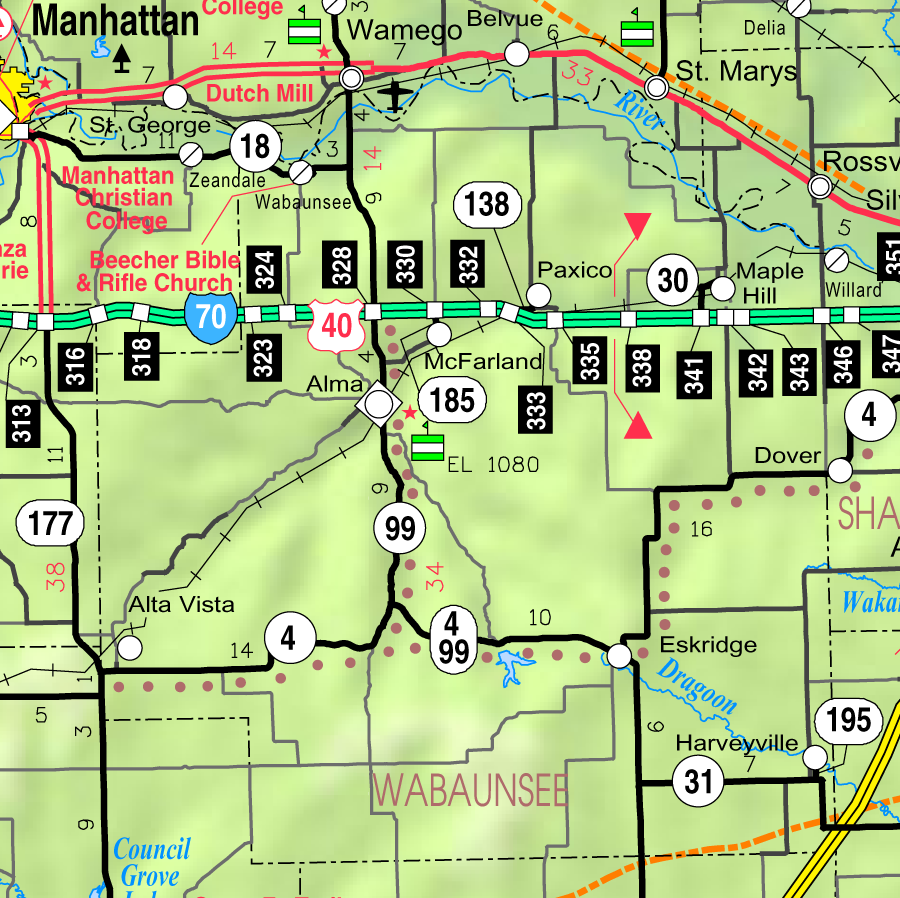
Alma is a small city located in Wabaunsee County in the U.S. state of Kansas. It serves as the county seat, making it the administrative center for county government and related services. According to the 2010 census, the city population was 832, reflecting its character as a compact, primarily rural community.
Image gallery
4 Images


Characteristics and layout
Like many small county seats in the American Midwest, Alma is organized around a central courthouse square and a modest commercial district. Residential neighborhoods, local schools, churches and parks lie within short distance of the downtown core. The city offers basic municipal services and a range of locally owned shops and businesses that serve both residents and people from surrounding rural areas.
History and development
Alma developed during the 19th century as settlers established towns across Kansas and county governments were organized. Its status as county seat attracted civic institutions, businesses and legal services that shaped its role in the region. Over time the community has retained much of its small-town character even as agricultural technology and regional transportation networks evolved.
Economy, education and community life
The local economy is anchored in agriculture, small enterprises and service industries that support area farms and households. Public institutions such as the local school system, municipal services and county offices are important employers. Community life commonly centers on school events, civic organizations, religious congregations and seasonal gatherings that reflect longstanding local traditions.
Government, services and points of interest
As the seat of county government, Alma houses county administrative offices and the courthouse, which are focal points for legal, record-keeping and civic activities. Visitors to the city can typically find historic buildings in the downtown area, community parks and public amenities maintained by city and county government.
Notable facts and context
Alma stands as an example of a small Midwestern county seat where civic institutions and rural community life intersect. Its population, according to the 2010 count, is under 1,000 people, and the city continues to function as a local center for government, education and commerce for Wabaunsee County and nearby rural communities.
Tags
Related articles
Author
AlegsaOnline.com Alma, Kansas Leandro Alegsa
URL: https://en.alegsaonline.com/art/2886
Sources
- cityofalma-kansas.net : "City of Alma, Kansas"
- lkm.org : "City of Alma"
- www2.census.gov : "2018 U.S. Gazetteer Files"
- factfinder2.census.gov : "American FactFinder"
- census.gov : "Population and Housing Unit Estimates"
- factfinder2.census.gov : "American FactFinder" · web.archive.org
- geonames.usgs.gov : "US Board on Geographic Names"
- naco.org : "Find a County" · web.archive.org
- factfinder2.census.gov : "2010 City Population and Housing Occupancy Status" · web.archive.org
- books.google.com : Kansas: A Cyclopedia of State History, Embracing Events, Institutions, Industries, Counties, Cities, Towns, Prominent Persons, Etc
- home.covad.net : "Rock Island Rail History" · web.archive.org