
Double play (baseball)
A double play in baseball is a single continuous play that records two outs. This article explains how double plays occur, common types (e.g., 6-4-3), strategic importance, scoring, and notable variations.
A double play is a defensive play in baseball in which two offensive players are put out as part of one continuous action while the ball remains live. Double plays remove baserunners and outs simultaneously, often ending innings or changing momentum. Because they can erase a scoring threat quickly, double plays are sometimes called a pitcher's best friend.
Image gallery
4 Images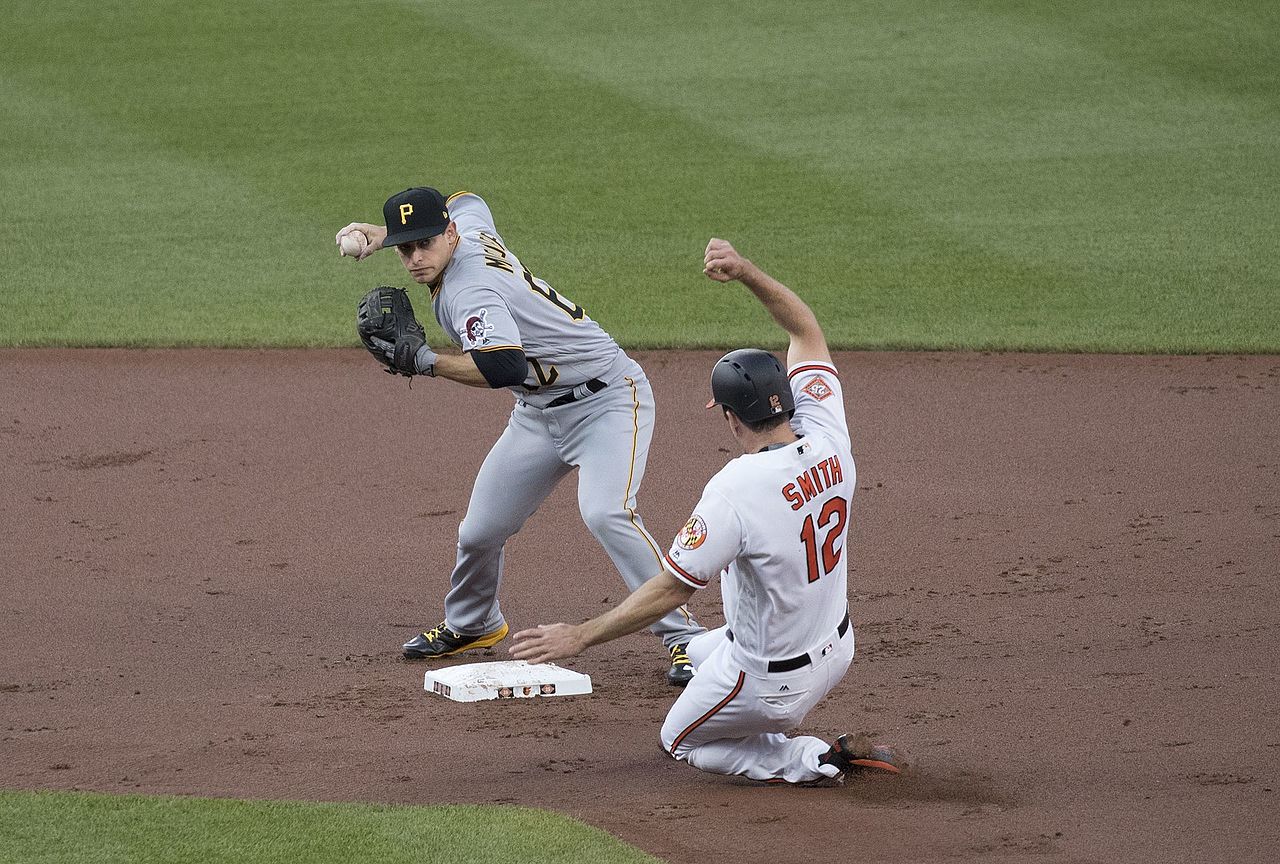



How double plays occur
Double plays most commonly arise from ground balls when one fielder makes a routine throw to complete a force out and the receiving infielder then throws to first to retire the batter. The sequence is continuous: the first out must be made and the play completed without an intervening dead-ball stoppage. Double plays may be produced by force plays, tag plays, line-drive catches followed by throws to double off runners, or legal appeals when a runner has violated a base-running rule.
Common types and notation
- 6-4-3 — shortstop to second baseman to first baseman; one of the most frequent sequences on grounders to the left side.
- 4-6-3 — second baseman to shortstop to first baseman; similar to the 6-4-3 but initiated on the right side.
- 5-4-3 — third baseman to second to first; occurs on plays to the right side when the third baseman fields the ball.
Scorekeeping uses position numbers (1–9) to record the series of throws and putouts when crediting players with double-play participation.
Strategy, positioning, and importance
Pitchers who induce ground balls — sinkerballers, for example — often aim to create double-play opportunities. Middle infielders and first basemen practice quick footwork and exchanges to "turn" the double play efficiently. For defenses, a reliable double-play combination reduces pitch counts and shortens innings; for offenses, avoiding ground balls with a runner on first or stealing to disrupt timing are common countermeasures.
Variations, scoring, and notable facts
Not every two-out sequence qualifies as a double play in the same sense: an unassisted double play occurs when a single fielder records both outs without a throw (for instance, catching a line drive and tagging a base), and rare plays like double plays on appeals or plays that include a strikeout and a caught stealing can register as two outs on a single continuous play under the rules. Teams and individual players are credited with "double plays turned" in statistical records, a metric used to evaluate defensive effectiveness.
Related articles
Author
AlegsaOnline.com Double play (baseball) Leandro Alegsa
URL: https://en.alegsaonline.com/art/28641