
Drag racing
A straight-line acceleration motorsport in which two vehicles race from a standing start over a measured distance, timed for reaction and elapsed time; popular classes range from street stock to Top Fuel dragsters.
Overview
Drag racing is a motorsport in which two competitors accelerate in a straight line from a stationary position to a finish line on a measured course. Vehicles involved include automobiles and motorcycles, raced two at a time in short, intense sprints. Competitions typically take place on a prepared course known as a dragstrip, and starts are executed from a standing start so that both reaction time and vehicle acceleration determine the result.
Image gallery
10 Images




Key characteristics and timing
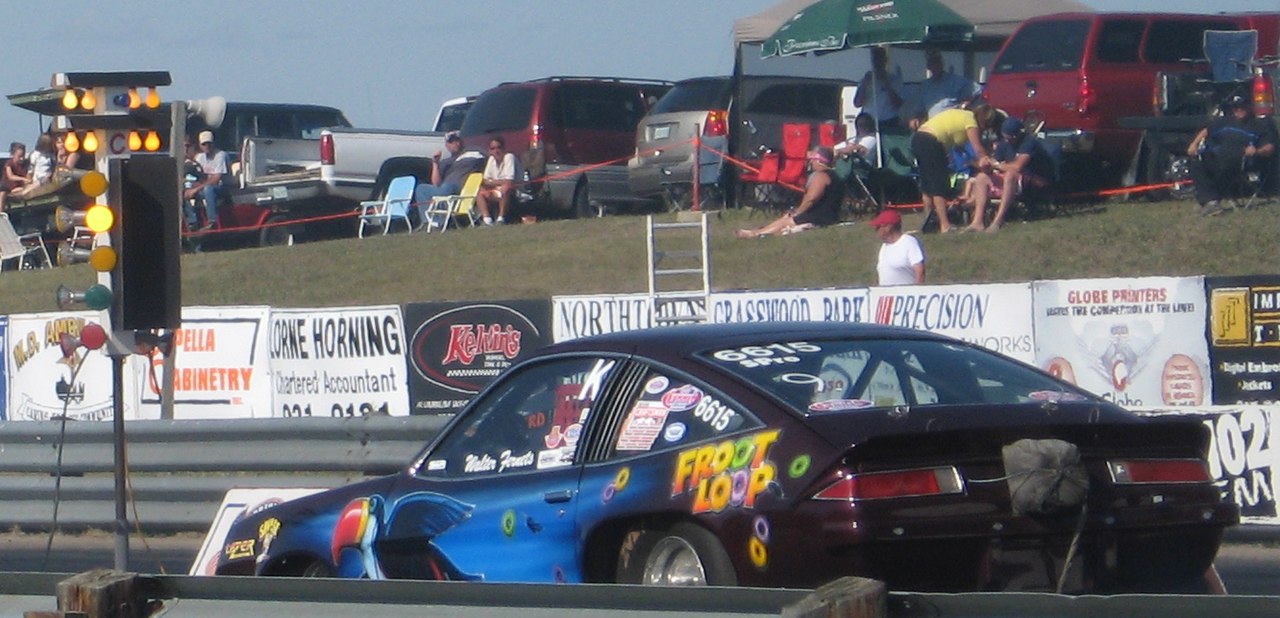
Two timing measures are central: reaction time, the driver’s delay after the start signal, and elapsed time (ET), the time the vehicle needs to travel the measured distance. Modern events use electronic timing systems and a vertical lighting array—commonly called the "Christmas tree"—to sequence staging and the start signal. A quick reaction can overcome a marginally slower ET; such "holeshot" wins are a distinctive feature of drag competition.
Classes and vehicle types
- Street and stock classes: lightly modified production cars or motorcycles, often used for club events.
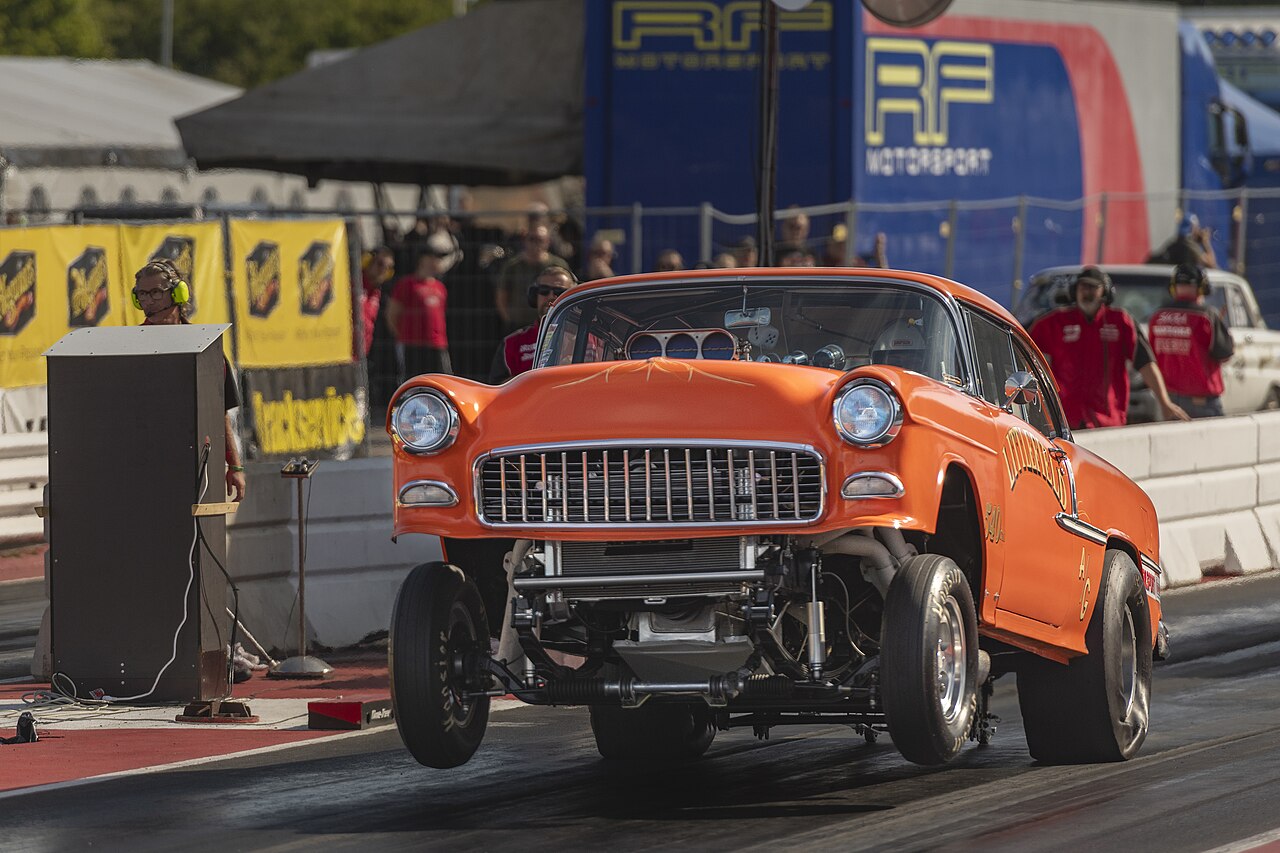
- Modified and altered classes: vehicles with extensive engine, drivetrain, or chassis changes for improved acceleration.
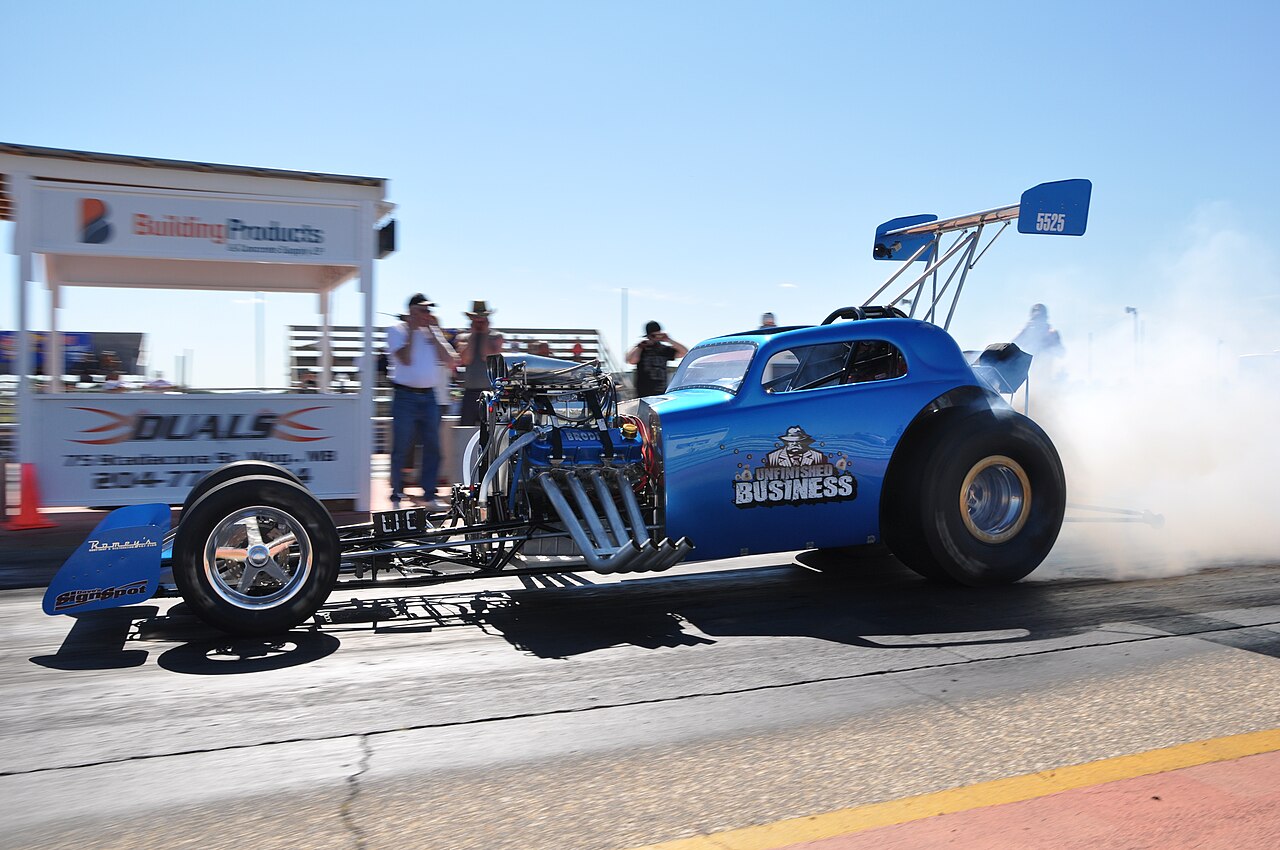
- Purpose-built race classes: including funny cars, Pro Stock, and the extremely powerful Top Fuel dragsters and motorcycles.
Race formats and rules
Formats vary: "heads-up" racing sees competitors start simultaneously with the first across the line winning; index or handicap racing assigns target times so different vehicles can compete on performance parity. Typical distances include the quarter-mile, though some events use shorter courses such as the eighth-mile or revised lengths for safety and class regulations. Fouls, such as red-light starts, and technical inspections enforce fair play.
Safety, technology, and culture
Due to extreme acceleration and speeds, drag racing relies on safety measures: roll cages, helmets, flame-resistant suits, catch fencing, and parachutes for high-speed deceleration. Advances in tire compounds, fuel chemistry, aerodynamics, and data acquisition have driven performance improvements. Drag racing has roots in informal street and dry-lake contests and later organized under national sanctioning bodies to codify rules and improve safety, becoming a significant motorsport with both grassroots and professional scenes.
Notable facts and appeal
The sport’s appeal lies in its simplicity and spectacle—short, decisive runs where mechanical engineering, driver skill, and split-second timing combine. Events range from local club nights to major national series, drawing fans who appreciate raw acceleration and the technical variety across classes. For introductory resources and governing bodies, see event organizers and rulebooks linked by sanctioning groups.
Further reading and event listings may be found through organization and venue pages: automobile class info, motorcycle class info, starting procedures, track and facility details.
Questions and answers
Q: What is drag racing?
A: Drag racing is a competition between specially prepared automobiles or motorcycles.
Q: How do racers compete in drag racing?
A: Racers compete, two at a time, to be the first to cross a finish line.
Q: What is the format of drag racing?
A: Races are run from a standing start, in a straight line, over a measured distance, usually a ¼-mile straight track.
Q: What is the name of the race track used for drag racing?
A: The race track used for drag racing is known as a dragstrip.
Q: What system is used to decide the winner in drag racing?
A: An electronic timing system is usually used to decide the winner in drag racing.
Q: Can both automobiles and motorcycles participate in drag racing?
A: Yes, both automobiles and motorcycles can participate in drag racing.
Q: What is the ultimate goal of drag racing?
A: The ultimate goal of drag racing is to be the first to cross the finish line and win the race.
Related articles
Author
AlegsaOnline.com Drag racing Leandro Alegsa
URL: https://en.alegsaonline.com/art/28835
Sources
- nhra.com : ""NHRA Glossary""