
Donato Bramante: Architect of the High Renaissance
Italian architect Donato Bramante (c.1444–1514) helped introduce High Renaissance classicism to Rome; known for the Tempietto, the original plan for St. Peter’s, and a restrained, geometric vocabulary.
Donato Bramante (c.1444 – April 11, 1514) was an Italian architect whose work played a central role in bringing the principles of the High Renaissance to architecture. Active in Milan and Rome, Bramante combined study of classical Roman forms with a new emphasis on balanced composition, clear geometry, and monumental order.
Image gallery
4 Images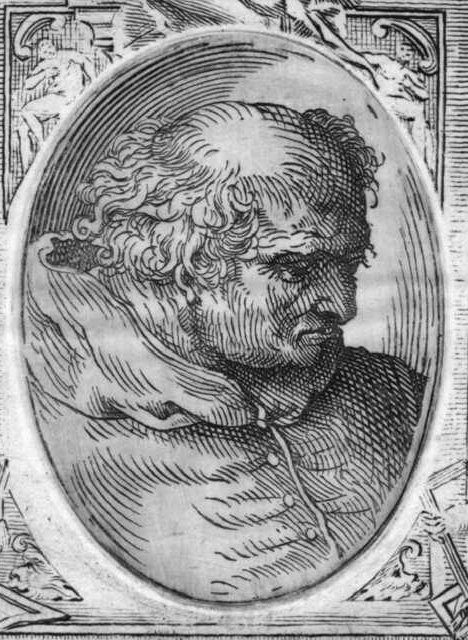


Early life and career
Bramante was probably born in the Marches region near Urbino around 1444 and trained in northern Italy. He came to prominence in Milan under the patronage of the Sforza court, where he worked on churches and civic commissions. His move to Rome in the late 15th century coincided with a period of renewed interest in antiquity and large papal building projects.
Major works
- Tempietto, San Pietro in Montorio (Rome) – a small, centrally planned martyrium celebrated for its classical proportions and serenity.
- Initial design for St. Peter’s Basilica – a grand central-plan scheme that set the tone for later development of the site.
- Cortile del Belvedere (Vatican) – a unifying courtyard that linked ancient sculpture collections with new papal spaces.
- Santa Maria presso San Satiro (Milan) – noted for its ingenious trompe-l'œil choir and compact spatial solutions.
- Palazzo Caprini (Rome) – an influential urban palace elevation that introduced rusticated bases and classical pilasters to Roman domestic architecture.
Bramante’s patrons included Ludovico Sforza in Milan and Pope Julius II in Rome. His work often responded to both liturgical needs and the desire to express papal power through built form.
Style and influence
Bramante synthesized classical vocabulary—columns, pediments, harmonious ratios—with a clarity of plan and axial organization that became characteristic of the High Renaissance. He favored centralized church plans, geometric rigor, and façades that expressed order without excessive ornament. These ideas influenced contemporaries and successors such as Raphael, Antonio da Sangallo, and Michelangelo, who engaged with and adapted Bramante’s solutions on major Roman projects.
Today Bramante is remembered as a pivotal figure who helped shift Italian architecture from late medieval precedent to a revived classicism. His projects demonstrate how Renaissance architects used archaeological study, mathematical proportion, and urban context to create buildings that aimed for measured beauty and civic meaning.
Related articles
Author
AlegsaOnline.com Donato Bramante: Architect of the High Renaissance Leandro Alegsa
URL: https://en.alegsaonline.com/art/28418