
Dominoes: tiles, play styles, history and cultural uses
Dominoes are rectangular tiles used in matching and scoring games. This article explains tile types, common rules and variants, origins and cultural roles, plus puzzle and mathematical uses.
Dominoes are small rectangular tiles used to play a large family of tabletop games. Each tile is divided into two squares by a central line and bears a pattern of pips (dots) or a blank on one or both ends. Players take turns laying tiles so that matching faces touch; scoring and winning conditions vary by game. The same basic pieces are also used for puzzles, mathematical demonstrations, and decorative toppling displays.
Image gallery
10 Images


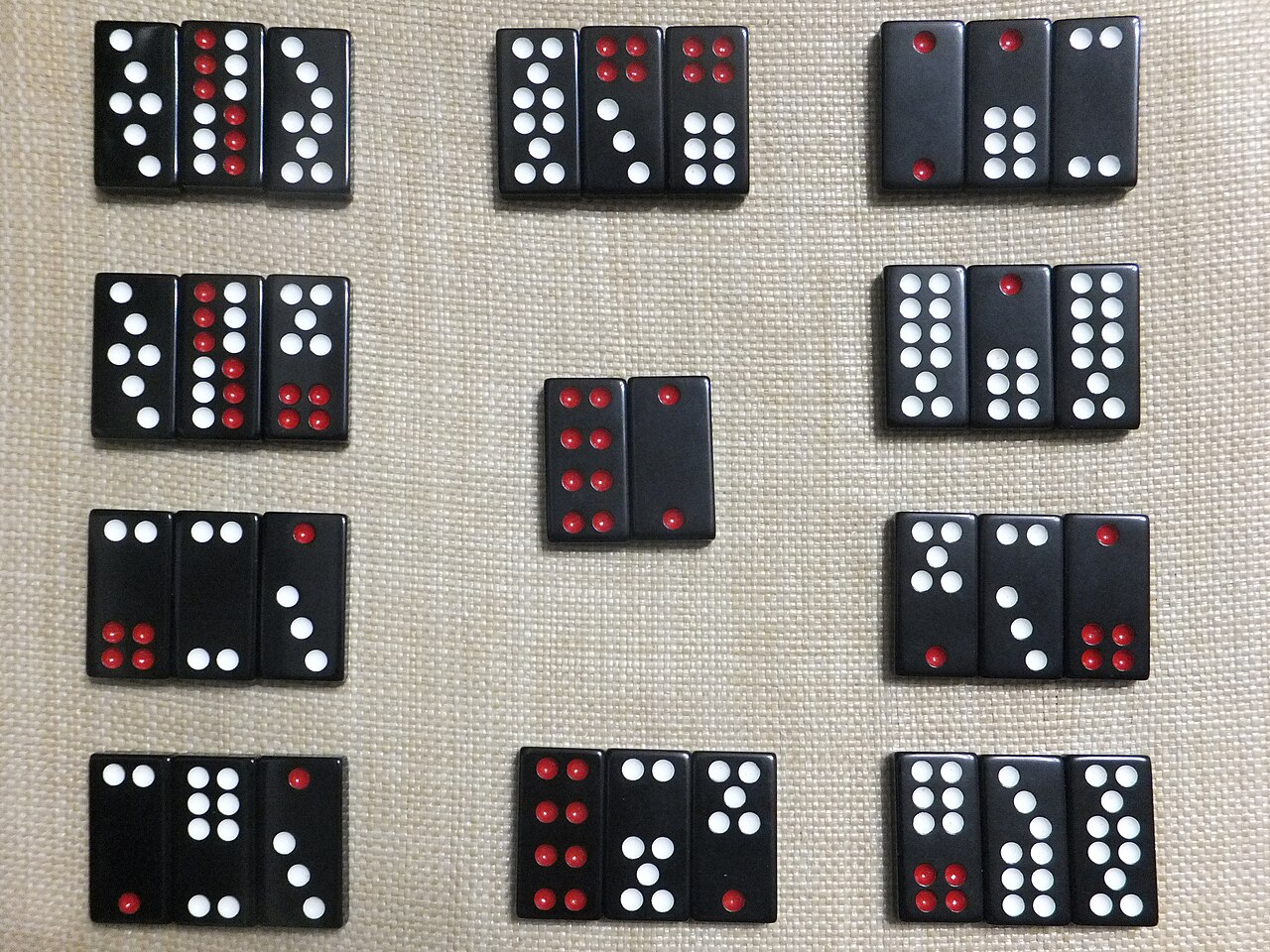
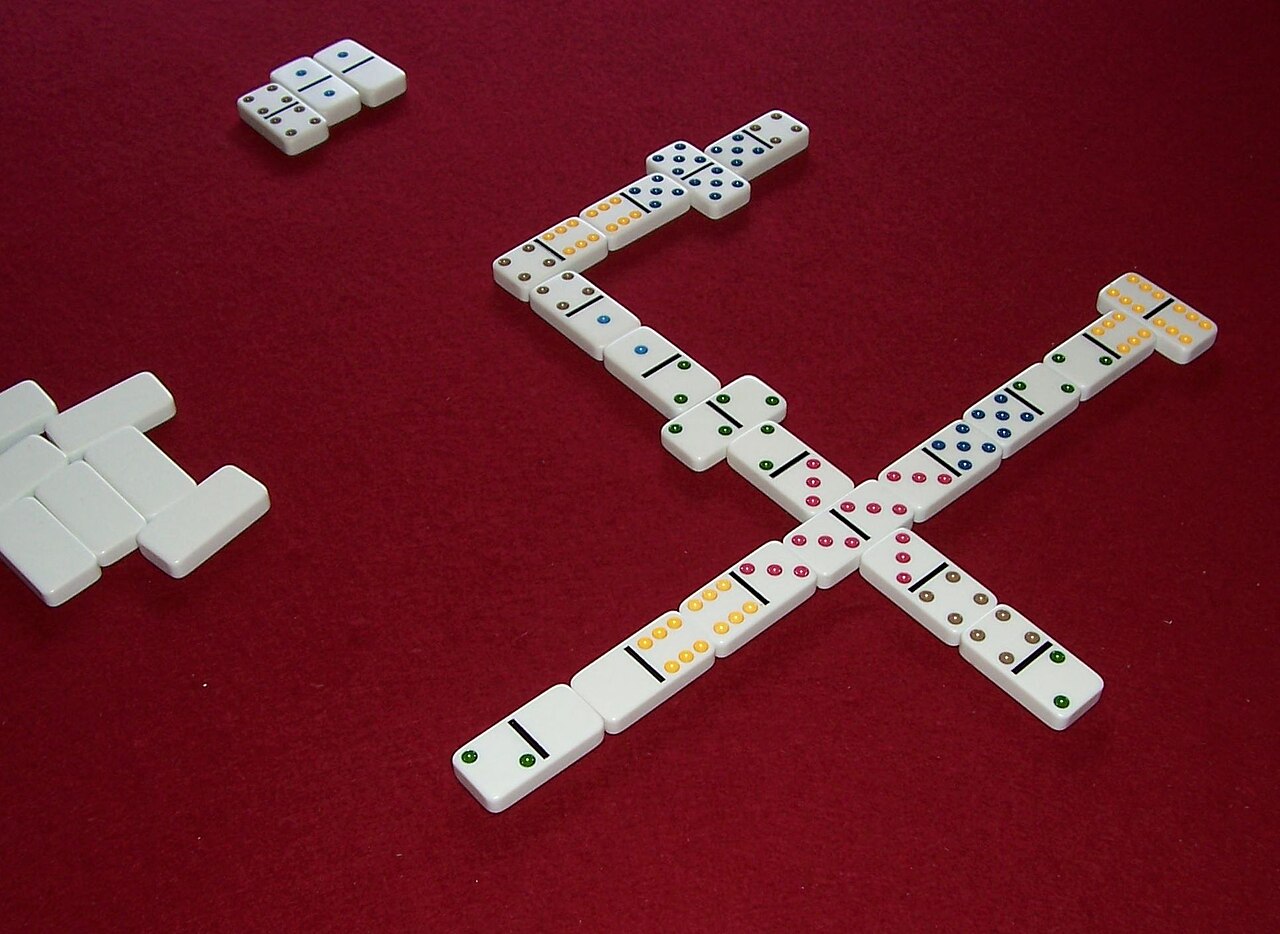


Characteristics and components
Typical tiles are made from plastic, wood or historically bone and ivory; modern mass-produced sets are usually molded plastic. Tiles are commonly called "bones", "men", or "pieces." The most familiar set is the double-six, containing 28 tiles with values from double-blank up to double-six. Larger sets such as double-nine, double-twelve or higher increase the number of tiles and change strategy and player count.
- Pips: Dotted marks that indicate a numeric value on each half of a tile.
- Doubles: Tiles with identical values on both ends; often played crosswise and can act as spinners.
- Blank ends: A side without pips used in many tactical plays and scoring rules.
Basic rules and common variants
Despite many rule variations, most domino games share the matching principle: a tile may be placed at an open end only if one of its halves matches the exposed value. Games fall into broad categories:
- Blocking games: Players try to be the first to play all tiles or to block opponents; example: Bergen.
- Scoring games: Points are scored during play for configurations with end totals divisible by five or three; All Fives is a classic example.
- Draw games: Players replenish tiles from a common stock (the "boneyard") when they cannot move.
Popular named variants include Mexican Train, Chicken Foot, Draw and All Fives. House rules often change whether doubles act as spinners, how scoring is computed, and how the boneyard is handled. For introductions to formal rules and local variants see rules and variations.
History and cultural spread
Dominoes are generally believed to have originated in China, where they were played by at least the 12th century, and later spread to Europe in the 18th century where new rule sets and traditions developed. The game became especially popular in parts of Europe, Latin America and the Caribbean, and it has important social and competitive traditions—played informally in cafés, at family gatherings, and in organized tournaments.
Other uses, puzzles and notable facts
Beyond competitive play, domino tiles appear in recreational mathematics and puzzles. Domino tilings model covering problems in combinatorics and can illustrate parity arguments (for example, why a modified chessboard cannot be tiled by dominoes). Another cultural use is domino toppling—arranging thousands of tiles to fall in sequence—which has become a performance art and a popular demonstration of chain reactions.
For information about different set sizes, manufacturing and collector topics, consult resources about domino construction and collecting at domino set types and historical origins at domino history.
Author
AlegsaOnline.com Dominoes: tiles, play styles, history and cultural uses Leandro Alegsa
URL: https://en.alegsaonline.com/art/28312