
Districts of Prussia (Kreise): administrative units of the Kingdom and Free State
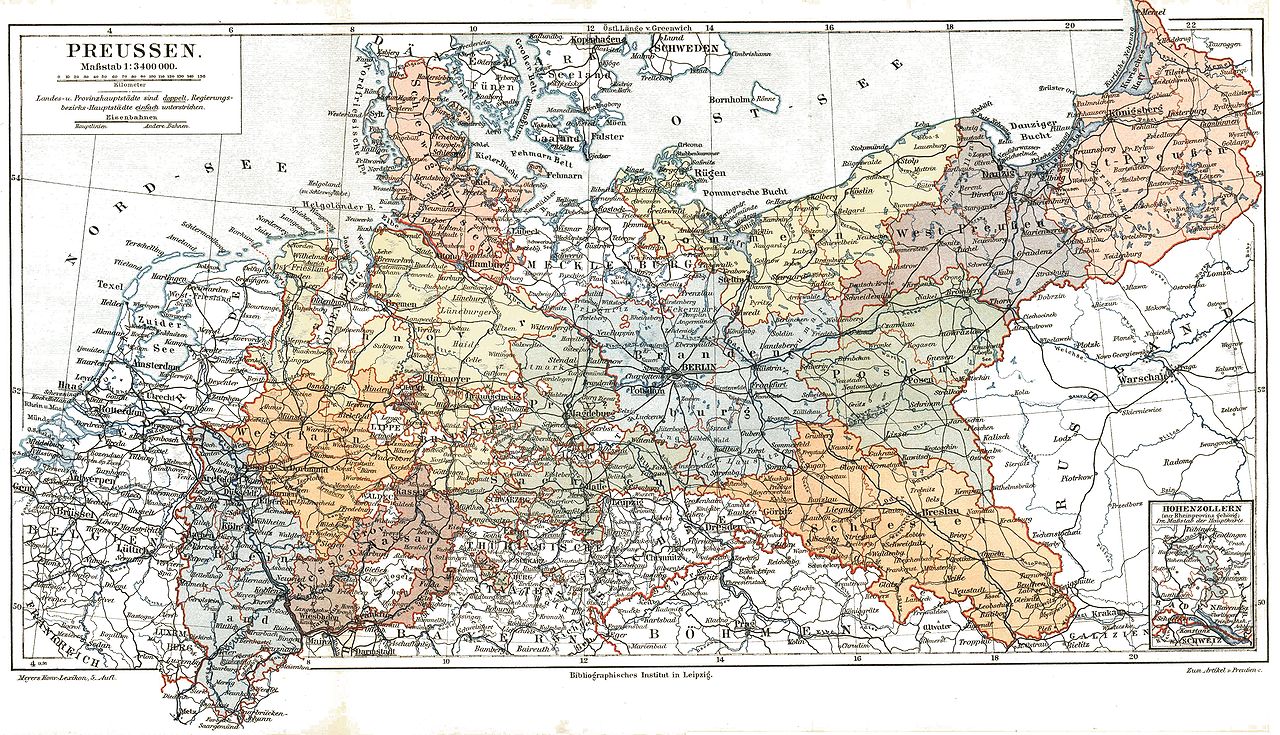
Subdivision of Prussia from 1815–20th century, the Kreise were county-like units between provinces and municipalities and provided a model for modern German districts.
Overview
In Prussia the term commonly used for a district was Kreis (plural: Kreise). These were mid-level administrative units created to sit between the larger provinces and the smaller municipal bodies. Established in the wake of early 19th-century reforms, they existed through the period of the German Empire and continued in the Free State of Prussia as a principal tier of local government.
Image gallery
2 Images
Organization and functions
Prussian districts performed tasks now typically associated with counties or shires: local administration, maintenance of roads and bridges, public health measures, oversight of primary schooling, cadastral and civil registers, and certain welfare duties. Large towns were sometimes separated as independent urban districts, while surrounding rural territory formed a Landkreis. Districts were led by officials such as a Landrat and had consultative and executive bodies responsible for implementation of provincial and national laws.
History and development
The modern Kreis system took shape between about 1815 and 1818 during administrative reforms intended to rationalize and centralize state administration after the Napoleonic era. These reforms reduced fragmentation by introducing consistent territorial units across the kingdom. Over the 19th and early 20th centuries the roles and boundaries of districts evolved with population changes, municipal growth, and legal reforms, but the basic concept persisted through political transitions.
Legacy and influence
Prussian districts served as the structural model for contemporary German districts; many present-day Landkreise and kreisfreie Städte trace their organizational roots to the Kreis. The distinction between rural districts and independent city districts is one of the lasting legacies. Comparisons are often made to an English county or a traditional shire in terms of function and scale.
Typical features and notable facts
- Two main types: rural districts (Landkreise) and urban districts (kreisfreie Städte).
- District heads (Landräte) acted as the state's local executive and were often appointed rather than elected in early periods.
- Responsibilities combined state duties with local public services, creating a hybrid role between central government and municipal authorities.
- After 1918 administrative practice continued though republican reforms and, following World War II and the dissolution of Prussia as a state, many districts were reorganized in new federal and regional structures.
For further contextual reading on administrative levels and the modern descendants of these units, see general summaries of German district systems here. Additional historical perspectives and archival information may be found via general administrative history resources and here and comparative governance discussions here or here.
While terminology and precise powers changed with time and across provinces, the Kreis remained one of the most durable elements of Prussian administrative organization and a significant influence on the structure of local government in modern Germany.
Related articles
Author
AlegsaOnline.com Districts of Prussia (Kreise): administrative units of the Kingdom and Free State Leandro Alegsa
URL: https://en.alegsaonline.com/art/27769