
Dieu a besoin des hommes (1950) — French drama by Jean Delannoy
1950 French drama directed by Jean Delannoy, starring Antoine Balpêtré, Lucienne Bogaert and Charles Bouillaud. A postwar film examining faith, duty and community; distributed by 20th Century Fox.
Overview
Dieu a besoin des hommes (God Needs Man) is a 1950 French drama film directed by Jean Delannoy. Released in the early postwar years, it treats questions of faith, responsibility and the social bonds that tie individuals to their community. The film was distributed internationally by 20th Century Fox, which helped bring a French moral drama to wider audiences outside France.
Image gallery
1 Image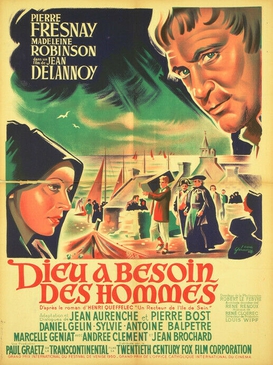
Context and production
Jean Delannoy was a leading practitioner of what critics later named the "tradition of quality," an approach to filmmaking in France that favored carefully crafted narratives, literary influences and studio‑era production values rather than avant‑garde experimentation. This picture reflects that tradition through its clear storytelling, deliberate pacing and an emphasis on ethical dilemmas rooted in everyday life. Production details are typical of the period: studio sets and location work combined to support a restrained visual style that foregrounds performance and dialogue.
Cast and performances
The cast is headed by Antoine Balpêtré, Lucienne Bogaert and Charles Bouillaud, performers with strong stage and screen experience. Their acting is marked by a measured, theatrical intensity common in mid‑century French drama, favoring articulation of moral conviction and interpersonal conflict over broad melodrama. Supporting players contribute to a sense of communal life that the story scrutinizes.
- Antoine Balpêtré — principal role
- Lucienne Bogaert — principal role
- Charles Bouillaud — principal role
Themes and significance
Rather than delivering doctrinal statements, the film raises questions about human obligation, the limits of authority and the interdependence of spiritual and social responsibilities. Its title suggests a reversal of a common theological posture, proposing that divine purpose and human action are linked. In the context of postwar reconstruction, such themes resonated with audiences seeking moral frameworks for rebuilding community life.
Reception and legacy
On its release the film was noted for its sober craftsmanship and the reputations of its director and principal actors. International distribution by a major studio expanded its reach and placed it among other postwar European films that addressed social and moral issues in a classical manner. In later assessments, the film is often cited as an example of mid‑century French cinema that privileges narrative clarity and ethical inquiry over formal experimentation.
Notable aspects
While not a radical stylistic work, Dieu a besoin des hommes remains of interest to students of French film for its thematic seriousness and its embodiment of a cinematic current that influenced directors and critics in the postwar decades. Its treatment of faith as a communal concern continues to invite discussion about the role of religion and responsibility in cinematic storytelling.
Related articles
Author
AlegsaOnline.com Dieu a besoin des hommes (1950) — French drama by Jean Delannoy Leandro Alegsa
URL: https://en.alegsaonline.com/art/27336