
Dirty Dancing (1987 film)
1987 American romantic drama set at a Catskills resort. A coming-of-age story starring Jennifer Grey and Patrick Swayze, celebrated for its dance scenes, soundtrack and lasting cultural influence.
Overview
Dirty Dancing is a 1987 American romantic drama directed by Emile Ardolino. The story follows Frances "Baby" Houseman, a 17-year-old on summer vacation, and her relationship with Johnny Castle, the resort's dance instructor. Set in 1963 at a Catskills resort in New York, the film blends a coming-of-age narrative with passionate dance sequences and period pop music.
Image gallery
8 Images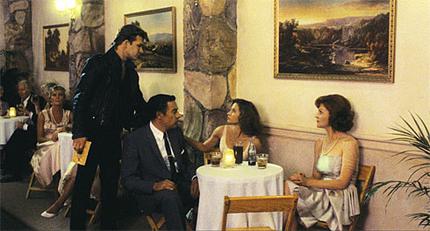
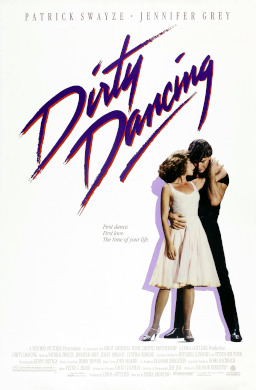



Setting and plot
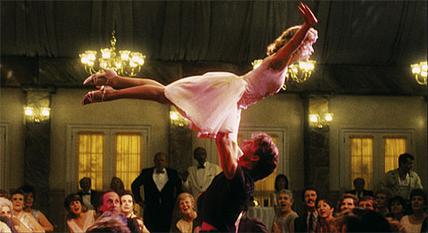
The action takes place at a fictional mountainside resort in the Catskill Mountains, New York. Baby arrives with her family expecting a genteel holiday but is drawn into the staff's behind-the-scenes world. Her bond with Johnny crosses social boundaries and forces both characters to confront expectations about gender, class and ambition. The finale's lift has become one of the film's most widely recognized images.
Cast and production
The leads are played by Jennifer Grey as Baby and Patrick Swayze as Johnny, supported by a cast portraying resort staff and vacationing families. Johnny's role as the central dance instructor provides the film's choreography-driven set pieces. Director Ardolino, himself experienced with dance on screen, emphasized movement and chemistry when staging sequences.
Music and reception
The soundtrack mixed contemporary pop with period songs and became a major part of the movie's appeal. The film was produced on a relatively modest budget but achieved surprising commercial success at the box office. Critics and audiences embraced its emotional simplicity and musical moments, and over time the picture attained status as a cult classic.
Legacy and adaptations
Dirty Dancing influenced popular culture through its memorable scenes, dance-oriented storytelling and a widely played soundtrack. It inspired stage adaptations, touring shows and a televised remake. The film remains a frequent reference point in discussions of dance in mainstream cinema and of 1960s-set coming-of-age dramas.
Notable facts
- The lead characters—Baby and Johnny—are often cited as an example of an on-screen romantic pairing built around dance chemistry.
- Several songs from the soundtrack are commonly associated with the film and with 1980s nostalgia for earlier popular music.
- Its appeal endures through repeat broadcasts, home video, stage versions and cultural references in television and film.
Related articles
Author
AlegsaOnline.com Dirty Dancing (1987 film) Leandro Alegsa
URL: https://en.alegsaonline.com/art/27620