
Diary of a Mad Housewife (1970 film)
1970 American comedy-drama directed by Frank Perry, adapted from Sue Kaufman’s novel. Noted for Carrie Snodgress’s performance and its portrayal of suburban malaise and marital alienation.
Overview
Diary of a Mad Housewife is a 1970 American comedy-drama film directed by Frank Perry and adapted from Sue Kaufman’s 1967 novel of the same name. The story follows a disaffected suburban housewife whose diary entries reveal her emotional isolation and mounting frustration with marriage and social expectations. The film blends dark humor with a realist look at domestic life in late-1960s America.
Image gallery
1 Image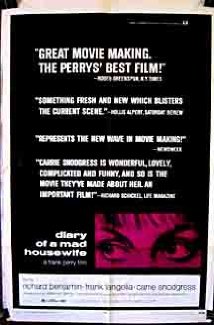
Themes and narrative style
At its core the film examines themes of identity, loneliness, and the constraints placed on women by conventional roles. Its tone alternates between satirical and melancholic, using diary narration and intimate scenes to present the protagonist’s inner life. Critics have often noted the movie’s focus on psychological nuance rather than on plot-driven action.
Principal cast and performances
- Carrie Snodgress — the lead whose performance drew significant attention and awards recognition.
- Richard Benjamin — portraying a complex and sometimes unsympathetic husband figure.
- Frank Langella — in an early-career role that added depth to the ensemble.
- Peter Boyle — contributing a memorable supporting performance.
- Alice Cooper — appears briefly in a cameo, reflecting the era’s crossover between film and rock culture.
Production and release
Directed by Frank Perry, the film reflects the independent-minded cinema of its time while being distributed by a major studio. Its modest production emphasizes character and performance, with straightforward cinematography and naturalistic dialogue. Upon release it entered the cultural conversation about changing gender roles and domestic unhappiness.
Reception, awards and legacy
Reaction to the film ranged from praise for its lead actress to debate over its bleak subject matter. Carrie Snodgress received an Academy Award nomination for Best Actress, which remains one of the movie’s most widely cited honors. Over time the film has been discussed in studies of feminist themes in American cinema and remembered for bringing a literary domestic novel to the screen.
Notable facts
- Based on Sue Kaufman’s 1967 novel of the same title.
- Balances dark comedy with social critique, typical of late-1960s and early-1970s American dramas.
- Known today for its central performance and its depiction of suburban malaise rather than for spectacle.
For further reading on the novel and the film’s participants, see resources linked to the principal performers above.
Related articles
Author
AlegsaOnline.com Diary of a Mad Housewife (1970 film) Leandro Alegsa
URL: https://en.alegsaonline.com/art/27144