
Demolition Man (1993 film)
1993 American science-fiction action film starring Sylvester Stallone and Wesley Snipes, set in a controlled future society. Explores law, order, and cultural change through an action-driven dystopian story.
Overview
Demolition Man is a 1993 film from the United States that blends dystopian themes with science fiction and high‑energy action. It was directed by Marco Brambilla and became widely known for pairing an action star with a high‑concept future world. The movie uses a near‑utopian setting to stage confrontations between individual violence and social control.
Image gallery
6 Images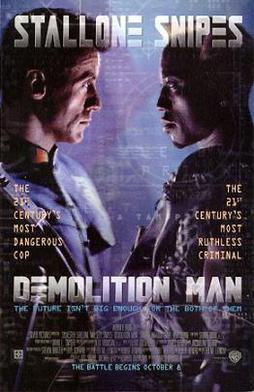




Premise and setting
The story places a law enforcement officer from the late 20th century into a sanitized, tightly regulated society of the future. That collision of eras—old‑style police tactics versus a pacified and technologically managed community—drives most of the plot and the film's satire of political correctness, consumer comforts, and corporate governance.
Principal cast
- Sylvester Stallone — the film's tough, principled protagonist.
- Wesley Snipes — the charismatic antagonist whose violence destabilizes the new order.
- Sandra Bullock — the film's central supporting lead who helps bridge the two worlds.
- Nigel Hawthorne, Benjamin Bratt, Bob Gunton, Denis Leary, and Bill Cobbs in notable supporting roles.
Themes and influences
The film draws on long‑standing dystopian ideas, echoing classic critiques of controlled societies found in works by authors such as Aldous Huxley. It is commonly discussed in relation to Brave New World and other cautionary tales about technological comfort and moral regulation; the movie adapts these concerns into a commercial action format rather than a straight literary adaptation. This mixture of satire and genre entertainment prompts reflection on law, freedom, and cultural change.
Production, reception, and legacy
Released in the early 1990s, the film achieved commercial success and entered popular culture through memorable lines, striking production design, and the contrast between its leads. Critics were divided: some praised its concept and performances while others treated its social commentary as uneven. Over time the movie has remained notable for its imaginative depiction of a future city and for helping to define the era's approach to action‑driven sci‑fi.
Notable facts and distinctions
- The film mixes satire with blockbuster tropes, making it accessible to mainstream audiences while engaging with political and ethical questions.
- Its use of a fish‑out‑of‑water protagonist frames debates about enforcement, rehabilitation, and what a civilized society should tolerate.
- Because of its cast and premise, the movie is often cited in discussions of genre hybrids that pair big‑budget action with speculative social ideas.
For further background on the movie's themes and the broader cultural conversation it sparked, see related material and archival reviews available through various film resources (reference, database, box office summaries).
Related articles
Author
AlegsaOnline.com Demolition Man (1993 film) Leandro Alegsa
URL: https://en.alegsaonline.com/art/26522