
Defensive Tackle (American and Canadian football)
Comprehensive overview of the defensive tackle position in American and Canadian football: duties, alignments, variations, physical and technical traits, numbering rules and tactical importance.
Overview
A defensive tackle is an interior lineman in American football and Canadian football. Typically positioned near the center of the defensive front, the defensive tackle's primary duties are to disrupt running plays between the offensive tackles, occupy blockers to free teammates, and apply pressure up the middle to disrupt the opposing quarterback. How the position is used is influenced by the defensive scheme, personnel groupings and differences between American and Canadian rules and field dimensions.
Image gallery
2 Images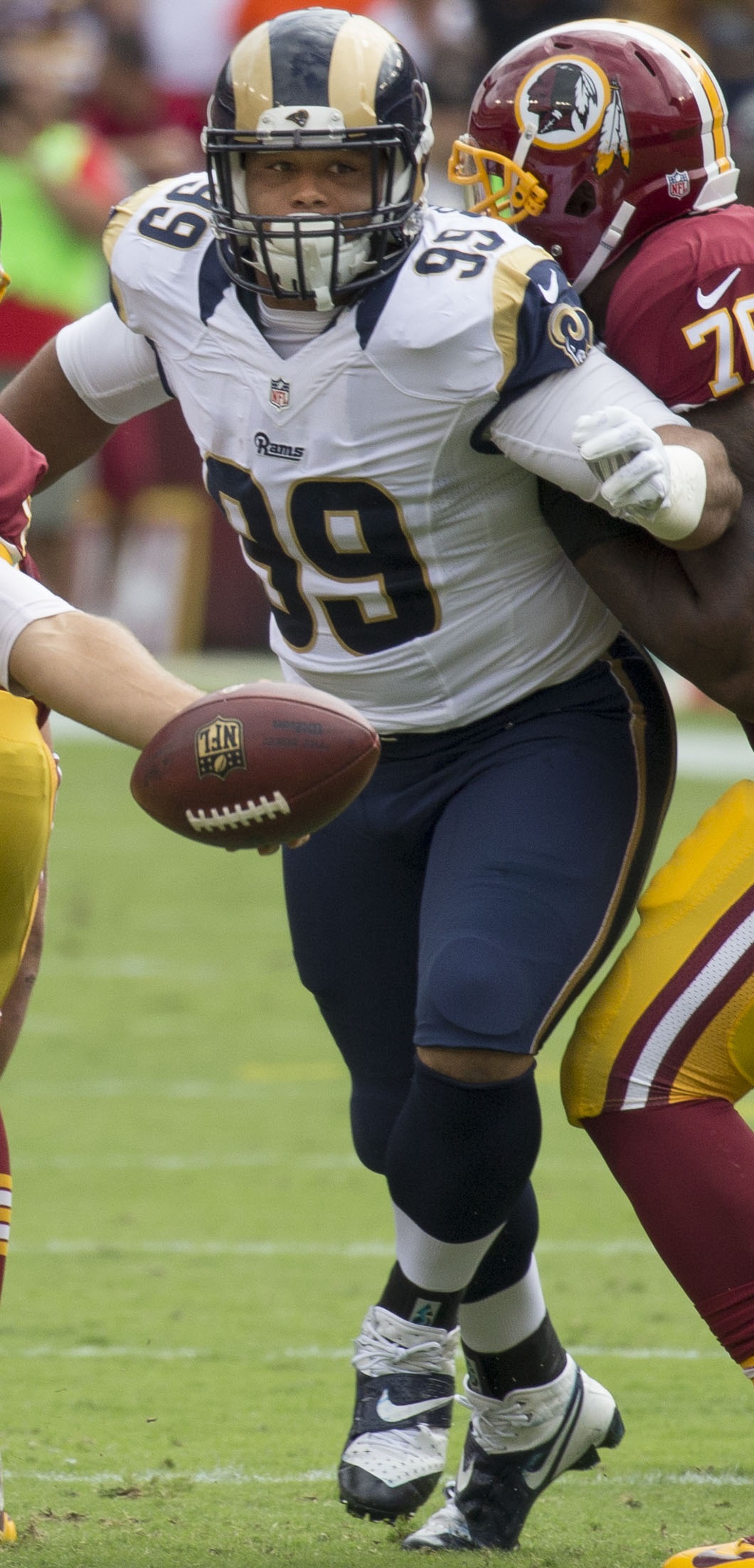

Role and responsibilities
Defensive tackles perform several complementary tasks. In run defense they must hold their assigned gaps, control the line of scrimmage and prevent blockers from reaching the second level. In pass defense they attempt to collapse the pocket from the inside, pressure the passer and create lanes for edge rushers. Their contributions are often measured by pressures and tackles for loss rather than headline statistics.
- Plugging and controlling one or two gaps to stop inside runs.
- Occupying one or two blockers to free linebackers for plays.
- Generating interior pass rush through leverage, hand technique and short-area quickness.
Alignment, techniques and variations
Coaches use different alignments and technique names to describe interior roles. A "nose tackle" aligns over the center and often plays a two-gapping, space-eating role. A "three-technique" lines up between guard and tackle and is typically asked to penetrate and disrupt plays in the backfield. Modern defenses rotate interior linemen to keep them fresh and to mix one-gap penetration with two-gap control depending on personnel and down-and-distance.
Physical and technical attributes
Defensive tackles are usually among the biggest players on the roster, combining size and strength with quickness off the snap. Key technical skills include pad level, hand placement, leverage, footwork and the ability to read blocking schemes. Conditioning, flexibility and the ability to play with proper technique in the middle of the line are valued as much as raw mass.
Training, measurement and tactical importance
Coaches emphasize strength training, short-area explosive drills and technique work. Statistical evaluation often includes pressures, run stops, disruptions and double-team rates rather than just sacks. A strong interior presence changes opponents' play-calling and improves overall defensive effectiveness by limiting inside runs and helping collapse the pocket on passing downs.
Rules, numbering and league distinctions
Numbering rules vary by league. In the NFL, defensive linemen commonly wear numbers in several ranges including the 50s, 60s, 70s and 90s; college rules are generally less restrictive and a defensive tackle may wear a wider range of numbers in college football. In Canadian football the position is similar but coaching tactics adapt to a larger field and an extra player on offense and defense. For practical context on blocking and passing, see general resources on offensive linemen and passing concepts.
Distinctions and concluding notes
Defensive tackle is distinct from defensive end (edge players) and interior linebackers (who operate off the line and have more coverage responsibilities). While the position may not always produce highlight plays, it is central to both run defense and interior pass rush. Coaches value technique, toughness and situational awareness when developing players for this role.
Related articles
Author
AlegsaOnline.com Defensive Tackle (American and Canadian football) Leandro Alegsa
URL: https://en.alegsaonline.com/art/26270