
Dawes County, Nebraska
Dawes County is a rural county in northwest Nebraska. County seat Chadron; founded 1885 and named for Governor James W. Dawes. Population about 9,182 at the 2010 census. Economy: ranching, education and outdoor recreation.
Dawes County is a rural county in northwestern Nebraska. Its administrative center is Chadron, which functions as the region’s service and cultural hub. The county was organized in 1885 and named for Governor James W. Dawes. According to the 2010 U.S. census, about 9,182 people lived in the county, which remains sparsely settled and oriented toward agriculture, ranching and outdoor recreation.
Image gallery
1 Image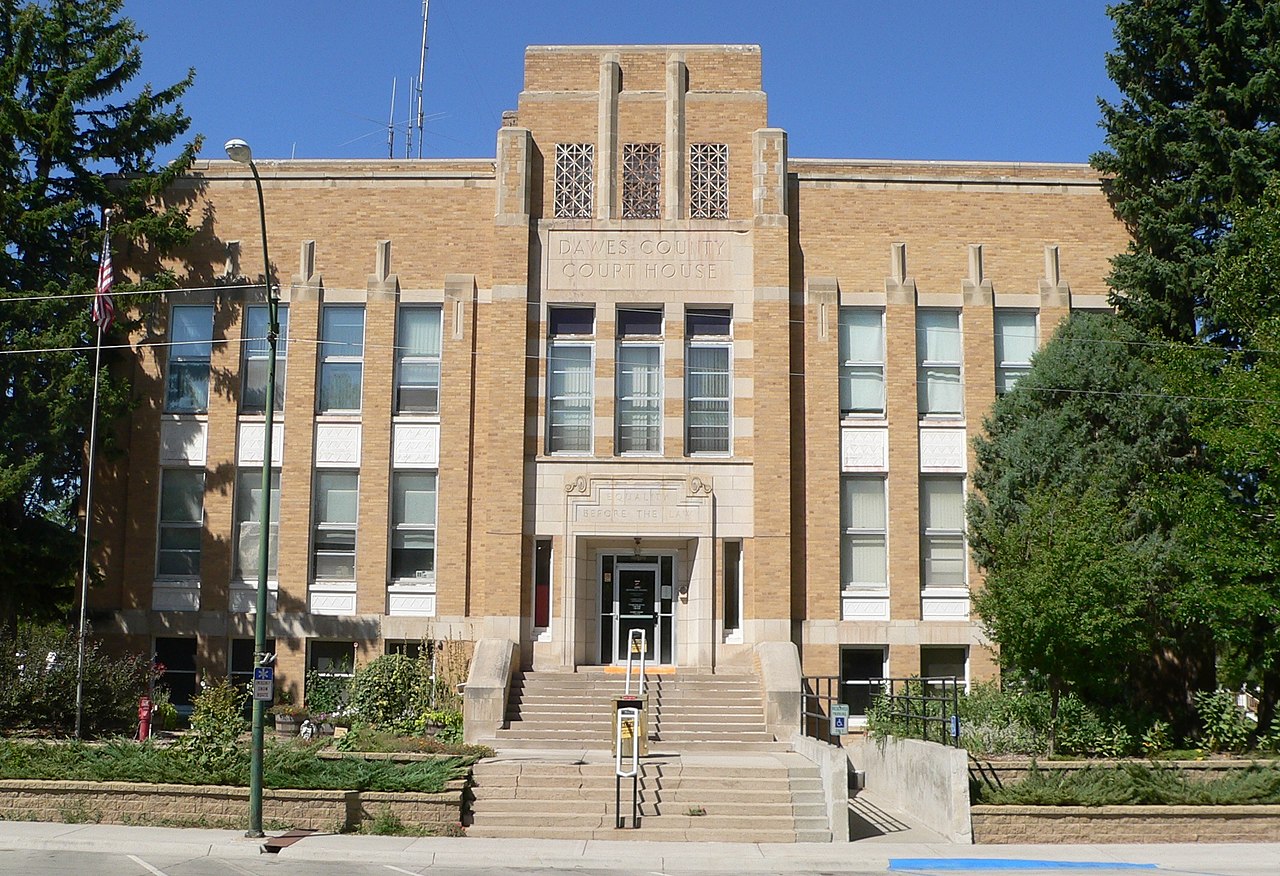
Geography and natural features
Dawes County lies within the Pine Ridge area of the northern High Plains. The landscape mixes ponderosa-dotted buttes, rolling prairie and narrow canyons, offering habitat for diverse wildlife and scenic opportunities for hiking, hunting and wildlife viewing. The county’s continental climate produces cold winters and warm summers, and conservation efforts have shaped much of the public and private land use.
Communities and institutions
Chadron is the largest town and home to Chadron State College, an important local employer and cultural center. Smaller towns and unincorporated settlements support ranching and local services. Visitor amenities cluster around state parks, forested ridges and recreational trails that bring seasonal tourism to the area.
History and development
Established in the late 19th century, Dawes County grew with homesteading and rail access but has retained a low population density compared with Nebraska’s eastern counties. Early 20th-century conservation and tree-planting projects helped reduce erosion and expanded recreational land; agriculture and livestock remain core economic activities.
Significance and uses
- Economy: farms, ranches, education and service businesses connected to outdoor recreation.
- Recreation: parks, trails and scenic drives that attract regional visitors.
- Education and culture: Chadron State College provides higher education, athletics and arts for northwest Nebraska.
For official statistics and local government information see county resources or general material about Nebraska regions.
Related articles
Author
AlegsaOnline.com Dawes County, Nebraska Leandro Alegsa
URL: https://en.alegsaonline.com/art/25859