
Das Boot (1981 German war film)
Das Boot is a 1981 German war film directed by Wolfgang Petersen, adapted from Lothar-Günther Buchheim's novel. It depicts life aboard a WWII German submarine and is noted for its realism and tension.
Overview
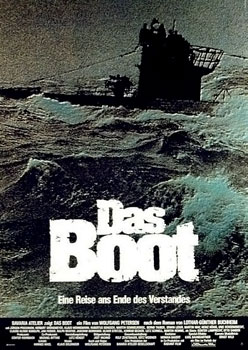
Das Boot (German for "The Boat") is a 1981 German war film directed by Wolfgang Petersen and adapted from Lothar-Günther Buchheim's 1973 novel. The picture follows the experiences of a German U-boat crew during the early 1940s, focusing on the daily stresses of life at sea rather than large-scale battle spectacle. Shot in German and released internationally, the film balances intense action sequences with quieter passages that emphasize atmosphere, character and the psychological strain of prolonged confinement.
Image gallery
10 Images




Production and style
The film is widely admired for its technical detail and immersive production design. Much of the story takes place inside the submarine, where tight quarters, dim lighting and realistic engine and machinery sounds are used to create a sense of claustrophobia and immediacy. Cinematography, sound design and editing work together to sustain tension during attacks, depth charge sequences and surface engagements. Petersen's direction emphasizes human responses—fear, boredom, camaraderie—over overt propaganda, giving the film an anti-war subtext that many viewers and critics have noted.
Historical context
Set during World War II, the film presents the Battle of the Atlantic from the perspective of a German crew tasked with long patrols, convoy interceptions and survival under increasingly difficult conditions. Rather than dramatizing grand strategy, it concentrates on the operational realities and moral ambiguities faced by sailors, reflecting the novel's semi-autobiographical roots. This approach contributed to its reputation as one of the more realistic depictions of submarine warfare on screen.
Reception and legacy
Upon release, Das Boot received broad critical acclaim for its performances, direction and technical achievements, and it attracted multiple international award nominations. Audiences responded to its tense atmosphere and human-centered storytelling, and the film has since been referenced as a benchmark for submarine and naval war dramas. Later editions expanded the material into a longer television version and a director's-cut release, allowing more of the novel's episodic events to appear on screen.
Notable elements and distinctions
- Emphasis on realism: attention to the boat's controls, crew routines and the sensory environment of a submerged vessel.
- Character-driven narrative: interpersonal dynamics, morale, and the psychological cost of sustained combat duty.
- Multiple versions: theatrical release, an extended television miniseries and a later director's cut offer different viewing experiences.
Key people and resources
Main contributors include director Wolfgang Petersen and a principal ensemble cast led by Jürgen Prochnow. For further information, cast and crew credits or archival material, see these resources:
- Official film page or distributor listing
- Director Wolfgang Petersen profile
- Jürgen Prochnow — lead actor profile
- Supporting cast and biographies
- Novel source and author background
- Critical essays and archival reviews
Das Boot remains a frequently cited example of wartime filmmaking that prioritizes human experience and technical authenticity. Its enduring reputation rests on a combination of immersive filmmaking craft and a sober, reflective portrayal of life aboard a combat submarine.
Related articles
Author
AlegsaOnline.com Das Boot (1981 German war film) Leandro Alegsa
URL: https://en.alegsaonline.com/art/25603
Sources
- indiewire.com : indiewire.com/news/general-news/editorial-life-isnt-beautiful-anymore-its-dubbed-82123/
- nytimes.com : "Archived copy" · web.archive.org