
Daniel Mytens (1590–1647)
Dutch-born portrait painter who worked in England in the early 17th century; a leading court portraitist before Anthony van Dyck and noted for refined, costume-rich depictions of the Stuart court.
Overview
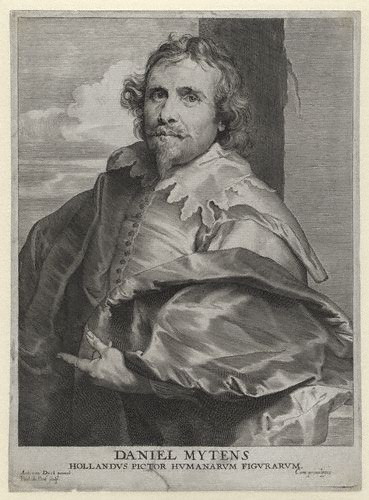
Daniel Mytens, often called Daniel Mytens the elder, was a Dutch-born portrait painter who established a significant career in England during the early 17th century. Born in Delft in 1590 and dying in The Hague in 1647, Mytens became one of the leading portraitists of the Stuart court before the arrival of Anthony van Dyck.
Image gallery
5 Images



Career and patrons
After training and working in the Low Countries, Mytens moved to England where he received commissions from members of the royal family and aristocracy. He painted portraits for James I and Charles I and for the wider circle of courtiers and landowners, producing full-length and three-quarter-length likenesses that emphasized rank and fashion as much as physiognomy.
Style and characteristics
Mytens's work is marked by smooth, carefully modelled skin tones, meticulous rendering of fabrics and costume, and a composed, dignified pose suited to ceremonial portraiture. His technique reflects Dutch workshop training — a controlled palette and attention to fine detail — adapted to the English taste for sumptuous dress and status display.
Legacy and later life
The arrival of Anthony van Dyck in England shifted court preference toward a more fluid and elegant manner, and Mytens's prominence declined. He returned to the Netherlands later in life and died in The Hague in 1647. His portraits nevertheless contributed to the visual language of court portraiture in Britain and survive in museum and private collections.
Notable facts
- Also known by variant spellings such as Meytens or Meijtens; "the elder" distinguishes him from later artists with similar names.
- Worked primarily in oil on canvas, producing both full-length state portraits and smaller domestic commissions.
- Seen historically as a bridge between Netherlandish workshop practice and the later, more fashionable English school led by van Dyck.
For a concise introduction to Mytens and his milieu, see standard surveys of seventeenth-century Dutch and English portraiture and specialized catalogues of early Stuart painting.
Related articles
Author
AlegsaOnline.com Daniel Mytens (1590–1647) Leandro Alegsa
URL: https://en.alegsaonline.com/art/25399