
Dances with Wolves (1990 film)
1990 epic Western drama directed by and starring Kevin Costner. Based on a novel by Michael Blake, it won seven Academy Awards including Best Picture and Director and is noted for its portrayal of the Lakota Sioux.
Dances with Wolves is a 1990 epic drama-Western film directed by and starring Kevin Costner. Produced by Jim Wilson, Kevin Costner and Jake Eberts, the movie marked Costner's major-studio directorial debut and became an unexpected box-office and awards success. The film was released in North America on November 21, 1990, and established itself as a landmark mainstream drama about cross-cultural encounter and frontier life. Kevin Costner plays the lead role and also helped shepherd the project from page to screen.
Image gallery
1 Image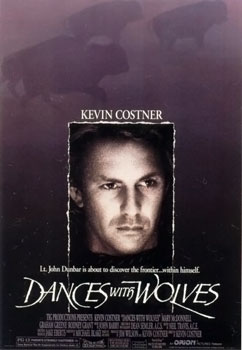
Story and themes
The narrative follows Lieutenant John J. Dunbar, a Civil War soldier posted at a remote frontier outpost who gradually forms a bond with a nearby Sioux band. Having been isolated from Euro‑American society, Dunbar learns the Lakota language and customs and earns the name by which he becomes known to the tribe. The film explores themes of solitude, identity, cultural exchange, and the transformation of the American West as expansion accelerated. Its relatively measured pace and emphasis on daily life set it apart from many action-driven Westerns.
Production and language
The screenplay was adapted from the novel by Michael Blake. Costner and the production team made a deliberate effort to present Native American characters with dignity; Lakota language and advisors were used during filming to increase authenticity. The casting mixed established actors with Indigenous performers, and Graham Greene received widespread recognition for his supporting role.
Reception, awards and impact
Critics and audiences largely embraced the film: contemporary review aggregators record favorable scores (Rotten Tomatoes, Metacritic). At the Academy Awards the picture was a major winner, taking home seven Oscars including Best Picture—an achievement documented among the film's notable honors (Academy Awards, Best Picture). It also earned Golden Globe awards for Best Motion Picture – Drama and Best Director.
Legacy and discussion
The movie revived mainstream interest in the Western genre and brought greater attention to Native American stories in Hollywood. While praised for its respectful tone and sweeping cinematography, it has also prompted debate: some commentators lauded its sympathetic portrayal, while others critiqued elements of romanticization and historical simplification. Nonetheless, it remains widely cited as an influential mainstream film about cross-cultural encounter on the frontier.
- Based on the novel by Michael Blake.
- Noted for use of the Lakota language and landscape cinematography.
- Graham Greene received awards attention for his supporting performance.
- Won seven Academy Awards and multiple Golden Globes.
For more background on the film's production, critical response, and awards history, see contemporary coverage and archival materials via industry and film reference sources (director profile, release details, release year, critic aggregate, reviews summary, awards overview, Best Picture list).
Related articles
Author
AlegsaOnline.com Dances with Wolves (1990 film) Leandro Alegsa
URL: https://en.alegsaonline.com/art/25344