
Crash Boom Bang! — Crash Bandicoot party game for Nintendo DS
A 2006 party-style spinoff in the Crash Bandicoot franchise for the Nintendo DS, developed by Dimps and published by Sierra/Vivendi Universal in Japan; noted for board-game structure and mixed reception.
Crash Boom Bang! is a party video game released for the Nintendo DS in 2006. Known in Japan as Crash Bandicoot Festival (クラッシュ・バンディクー フェスティバル), it departs from the platforming roots of the series and presents a board-game framework punctuated by short, competitive minigames. The title was developed by Dimps and published by Sierra Entertainment (credited as Vivendi Universal Games in Japan). The platform of release is noted on the cartridge as the Nintendo DS.
Image gallery
3 Images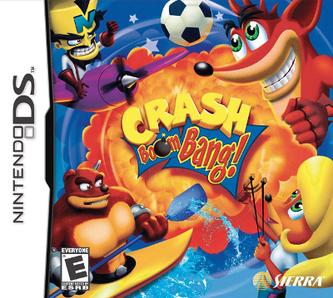


Gameplay and features
Players move characters across themed boards, triggering events and entering minigames to earn points or items. The design emphasizes quick, accessible contests rather than deep single-player progression. Games typically use simple inputs and short rounds intended for group play. Features include:
- Multiple Crash Bandicoot characters and visual variations.
- Board-based progression with chance elements and minigame challenges.
- Single-player modes that simulate multiplayer sessions and competitive party play.
Development and release
The game was produced for a handheld audience during a time when many established franchises experimented with party or spinoff formats. It was released in Japan on July 20, 2006, and later in North America on October 10, 2006, in Europe on October 27, 2006, and in Australia on November 2, 2006. Regional information and release dates are recorded in publisher materials and listings: see the North American release note at North America, the European release at Europe, and the Australian release at Australia. It is the first—and to date the only—Crash Bandicoot game developed by a Japanese company, a distinction discussed in series histories and developer credits (series details), and it was the last Crash game released in Japan under the period's distribution structure (Japan release note).
Reception and legacy
Critics and players often found the title weaker than mainline Crash Bandicoot platformers. Common points of criticism included the game's minigame balance, limited depth for solo players, and how faithfully it represented the series' strengths. Despite mixed reviews, the release is a notable example of a well-known franchise experimenting with genre and handheld controls.
For readers seeking further information, developer credits, and release specifics can be consulted through publisher pages and game databases linked above. The game remains a curiosity within the Crash Bandicoot catalogue: a licensed party game that illustrates how established characters are sometimes repurposed for different audiences and portable formats.
Related articles
Author
AlegsaOnline.com Crash Boom Bang! — Crash Bandicoot party game for Nintendo DS Leandro Alegsa
URL: https://en.alegsaonline.com/art/23981
Sources
- gamespot.com : "Crash Boom Bang! (Nintendo DS) at GameSpot"
- gamefaqs.com : "Crash Boom Bang! at GameFAQs"
- ds.ign.com : "Crash Boom Bang! at IGN"