
Cotswold Line — regional railway between Oxford and Hereford
Regional railway running approximately 86.5 miles between Oxford and Hereford via the Cotswolds, connecting market towns, providing local passenger services and scenic journeys through central England.
Overview
The Cotswold Line is a regional railway linking Oxford and Hereford in central England. The route runs for approximately 86.5 miles (139.2 km) and serves a mix of university, market and county towns as it crosses the Cotswolds and approaches the West Midlands. It is valued both for everyday local travel and for its scenic qualities.
Image gallery
8 Images




Route and principal stations
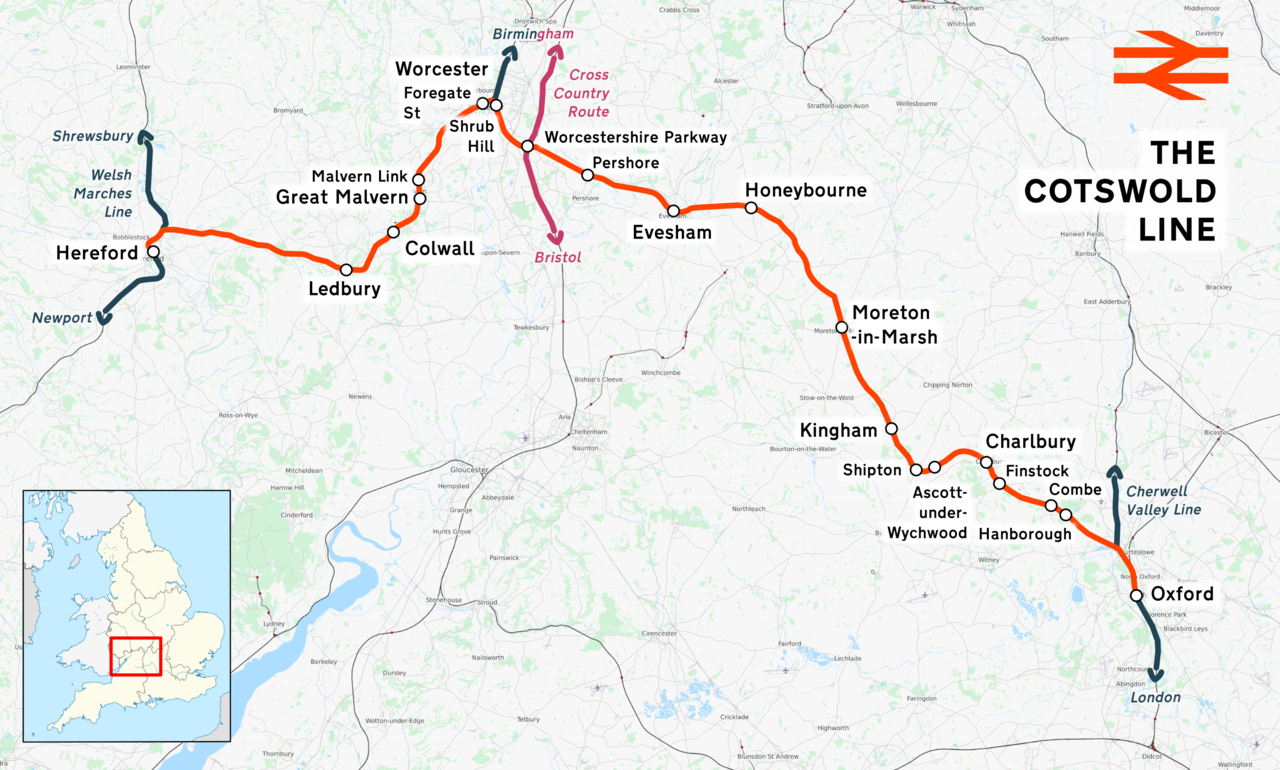
The line connects a number of towns and intermediate stations that provide regional accessibility. Typical principal places served include Oxford at the eastern end and Hereford at the western terminus, with important intermediate stops commonly cited by timetables and local guides.
- Oxford — a major rail hub and university city
- Market towns such as Moreton-in-Marsh and Evesham
- Worcester area stations before the final leg toward Hereford
- Hereford — administrative centre for the surrounding county
History and development
The line has Victorian origins: sections were built in the 19th century as part of the rapid expansion of Britain’s railway network. Over time the route was amalgamated from several local schemes and later managed under larger railway companies. In the late 20th and early 21st centuries there have been upgrades to rolling stock, signalling and station facilities driven by local demand and campaigning groups seeking better services.
Services, uses and importance
Services on the Cotswold Line are principally regional passenger trains, providing connections for commuters, students, shoppers and tourists. The route supports economic links between market towns and larger cities, and it is used for leisure travel by visitors attracted to the Cotswolds Area of Outstanding Natural Beauty. Freight movements may occur on sections of the route where operationally necessary, but passenger traffic is the dominant use.
Notable features and distinctions
- Scenic character: parts of the route run through classic Cotswold landscapes and attract leisure travellers.
- Local advocacy: community and rail promotion groups have campaigned for service improvements and infrastructure investment.
- Operational mix: the line balances regional stopping services with through connections to larger rail hubs.
For route maps, timetables and operator information, consult the appropriate railway resources or the line’s informational pages linked above.
Related articles
Author
AlegsaOnline.com Cotswold Line — regional railway between Oxford and Hereford Leandro Alegsa
URL: https://en.alegsaonline.com/art/23363