
Concentric: shared centers in geometry, design, and nature
Concentric describes shapes or objects that share the same center or origin. Common in geometry (circles, spheres), engineering, art, and natural patterns; distinct from eccentric or coaxial arrangements.
Concentric describes two or more shapes that share a common center, origin, or axis so that each is arranged around the same midpoint. The term most often appears with round objects: concentric circles, rings, spheres, cylinders and tubes are standard examples. Concentric figures typically differ by size (radius or diameter) while keeping the same center point.
Image gallery
4 Images


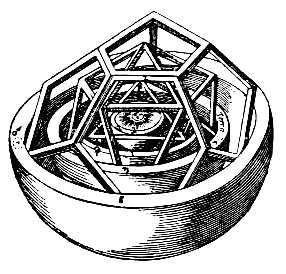
Mathematical definition and properties
In the plane, circles are concentric when they have identical center coordinates (h,k) but different radii; algebraically each satisfies (x−h)2+(y−k)2=r2 with different values of r. For spheres the idea extends to three dimensions. The area between two concentric circles is an annulus, with area π(R2−r2). Concentricity preserves rotational symmetry about the center.
Examples and uses
- Targets and bullseyes use concentric rings to encode distance from center.
- Mechanical parts such as bearings, seals and O-rings are designed to be concentric for smooth rotation.
- Architectural plans and layered garden designs exploit concentric layouts for balance and sightlines.
- Natural patterns — ripples on water, tree growth rings, and some geologic ring faults — often appear concentric about a focal point.
Concentric arrangements are distinct from eccentric ones, in which centers differ; and from coaxial arrangements, where objects share an axis but not necessarily a central point in every cross-section. In practice the terms overlap: concentric cylinders are also coaxial, but two objects can be coaxial without being perfectly concentric in cross-section.
Concentricity is important where alignment and symmetry matter: optics and lens mounts, rotating machinery, concentric tubing for insulation or flow, and visual composition. For technical guidance and measurement of alignment one may consult specialized sources or standards; see further reading for general reference.
Related articles
Author
AlegsaOnline.com Concentric: shared centers in geometry, design, and nature Leandro Alegsa
URL: https://en.alegsaonline.com/art/22371