
Communes of Seine-Maritime, France
Overview of the 745 communes in the Seine-Maritime department: administrative structure, geography, history, intercommunal cooperation and examples of major towns.
Overview
The communes of the Seine-Maritime department form the basic layer of local government in this coastal part of Normandy. There are 745 communes in the department, each governed by an elected mayor and municipal council. For a full enumeration and basic data about each municipality see the list of communes. The department itself is identified as Seine-Maritime and is one of the administrative départements of France.
Image gallery
1 Image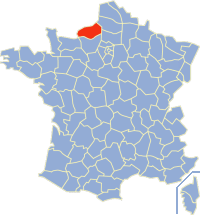
Administrative structure and functions
Communes handle local services such as civil registration, elementary schools, local roads and planning permissions. They are grouped into cantons and arrondissements for electoral and administrative purposes, and they participate in intercommunal bodies to coordinate services and development projects. Typical commune institutions include the town hall, municipal council and mayoralty.
Geography, economy and character
Seine-Maritime covers a varied landscape: the Seine valley, chalk cliffs and beaches along the English Channel, and rural farmland inland. Major urban centres include Rouen, the departmental capital; Le Havre, an important port and industrial hub; Dieppe; and Elbeuf. Smaller communes range from coastal fishing villages to agricultural hamlets. The mix of maritime commerce, industry, tourism and agriculture makes the department economically diverse.
Intercommunal cooperation
To manage services beyond the capacity of individual communes, many have joined formal intercommunal structures. Examples include:
- Communauté d'agglomération Rouennaise (CAR) — metropolitan cooperation around Rouen.
- Communauté d'agglomération Havraise (CAH) — centred on Le Havre.
- Communauté d'agglomération Elbeuf-Boucle de Seine (CAE) — grouping towns along the Seine near Elbeuf.
- Communauté d'agglomération de la région Dieppoise (CAD) — cooperation in and around Dieppe.
History and development
The modern commune system dates from the French Revolution, when existing parishes and settlements were reorganised into municipal entities. Boundaries and responsibilities have evolved since then, and especially in recent decades communes have pooled resources through intercommunalities to respond to urban growth, economic change and infrastructure needs.
Notable facts and how to use this information
When researching local administration, tourism or genealogy, distinguishing the commune from higher-level units (canton, arrondissement, department, region) is essential. Local regulations, planning rules and public services are usually determined at the commune level, while larger-scale policies are handled by intercommunal bodies or departmental authorities. For further administrative details and statistics consult the departmental pages linked above and specialised datasets available through regional services (list of communes, Seine-Maritime).
Questions and answers
Q: What is the Seine-Maritime département?
A: The Seine-Maritime département is a region in France.
Q: How many communes are in the Seine-Maritime département?
A: There are 745 communes in the Seine-Maritime département.
Q: What is CAR?
A: CAR stands for Communauté d'agglomération Rouennaise, which is a community of municipalities created in 2000.
Q: When was CAH created and what does it stand for?
A: CAH stands for Communauté d'agglomération Havraise, which is a community of municipalities created in 2001.
Q: What is CAE?
A: CAE stands for Communauté d'agglomération Elbeuf-Boucle de Seine, which is a community of municipalities created in 2000.
Q: What is CAD?
A: CAD stands for Communauté d'agglomération de la région Dieppoise, which is a community of municipalities created in 2003.
Q: What is the purpose of these communities of municipalities?
A: These communities of municipalities are created to promote cooperation and collaboration between the municipalities in the region on issues such as transportation, economic development, and public services.
Related articles
Author
AlegsaOnline.com Communes of Seine-Maritime, France Leandro Alegsa
URL: https://en.alegsaonline.com/art/22144