
Communes of the Ariège department, France
Overview of the communes in the Ariège department: administrative role, geography, history, notable towns and uses, with pointers to alphabetical and administrative listings.
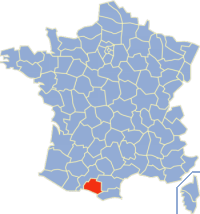
The communes of the Ariège department lie in southwestern France, scattered across the foothills and valleys of the Pyrenees. A French commune is the smallest unit of local government; in Ariège this includes a large number of villages, towns and small cities, many of them rural and historically rooted in medieval settlement patterns. Complete alphabetic registers of these communes are commonly compiled for administration and reference.
Image gallery
2 Images
Administrative characteristics
Each commune is governed by an elected mayor (maire) and a municipal council responsible for local services, planning and civil records. Communes are grouped into cantons and arrondissements for higher-level administration; in Ariège the main arrondissement seats include Foix, Pamiers and Saint-Girons. Communal boundaries and identities remain important for local elections, schooling, cultural events and postal addressing.
Geography and economy
Ariège communes span mountainous terrain, river valleys (notably the Ariège river) and agricultural lowlands. The economy is a mix of livestock and mixed farming, forestry, small-scale industry and tourism—especially hiking, winter sports near mountain resorts and historical tourism focused on medieval sites and Cathar heritage. Many communes are gateways to protected natural areas and walking routes.
History and cultural notes
The modern communal system dates from the French Revolution, but settlements in Ariège often have medieval or older origins. The area is associated with Occitan language and traditions; some communes preserve distinct local festivals, markets and architectural features such as bastides, fortified villages and Romanesque churches. The Cathar period and related castles remain prominent in local interpretation of the past.
Notable communes and uses of lists
- Foix — the prefectural seat with a historic castle and administrative services.
- Pamiers — one of the department’s larger towns and commercial centers.
- Saint-Girons, Lavelanet, Mirepoix — other important market towns and service hubs.
Alphabetical lists of communes are useful for research, public administration, genealogy and tourism planning. Because many communes are small, regional cooperation through intercommunal structures helps deliver services efficiently while preserving local identities.
Tags
Related articles
Author
AlegsaOnline.com Communes of the Ariège department, France Leandro Alegsa
URL: https://en.alegsaonline.com/art/22067