
Communes of Burundi
The communes are the intermediate administrative level of Burundi: 117 communes sit below provinces and above collines, organizing local governance, services, and communal identity.
Overview
The communes of Burundi are the country's mid-level administrative units. There are 117 communes in total, each forming part of one of Burundi's provinces. Communes are further subdivided into smaller units called collines (literally "hills"), which correspond to villages or neighborhood groupings and are the most local level of communal life.
Image gallery
1 Image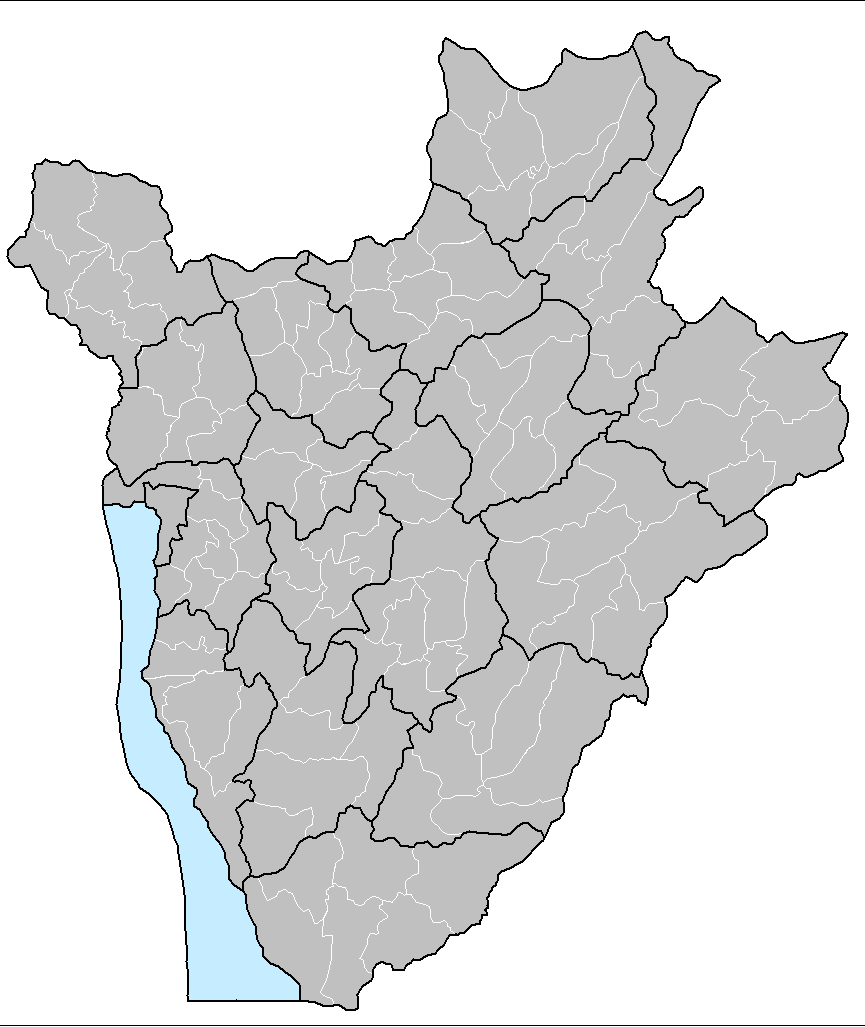
Structure and governance
A commune typically groups several collines and serves as the primary interface between national authorities and local communities. Administrative arrangements vary over time under national law, but communes generally provide a framework for local planning, basic public services, and coordination of community matters. Local decision-making is exercised through communal institutions that involve both administrative officials and representative bodies.
History and development
The present system builds on territorial divisions from the colonial era, when Burundi was administered within larger colonial territories and later under a mandate and trusteeship. After independence, successive governments retained and modified communes as a practical way to manage rural and urban areas. The commune has continued to evolve with reforms intended to strengthen local administration and civic participation.
Functions and importance
- Organizing local service delivery such as primary education, basic health outreach, and local markets.
- Serving as the arena for local planning, dispute resolution, and civil registration in cooperation with provincial authorities.
- Facilitating electoral administration and community consultation during national and local processes.
Local communities and collines
Collines are the smallest recognized units within communes and often reflect long-standing social and geographic identities tied to particular hills or village clusters. Because Burundi is a largely rural country, communal and colline structures are central to daily life and local governance. The network of communes and collines helps channel resources and information from provincial and national levels down to families and households.
For an overview of the provinces that group these communes, see the provinces of Burundi.
Related articles
Author
AlegsaOnline.com Communes of Burundi Leandro Alegsa
URL: https://en.alegsaonline.com/art/22056