
Clockwise (direction of rotation)
Movement around a circle that follows the same direction as the hands of an analog clock; used as a standard orientation in clocks, mechanics, navigation and everyday description.
Overview
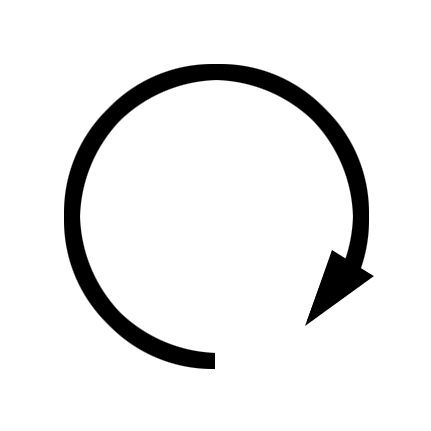
Clockwise describes circular motion that follows the same sequence as the hands of a traditional analog clock: from the top toward the right, then down, then left, and back up. The term is used both as an adjective and an adverb to indicate direction. For a simple visual reference see a conventional clock and compare its hands’ motion to a drawn circle.
Image gallery
4 Images


Characteristics and measurement
A clockwise turn proceeds in the order 12 → 3 → 6 → 9 → 12 when the top of the dial is taken as the reference point. In geometry and engineering this orientation is used to describe rotation about an axis. Note that mathematical sign conventions vary: many branches of mathematics treat counterclockwise as the positive direction for angle measurement, while some applied fields (such as compass headings) increase clockwise from north. The idea of moving around a circle is central to both interpretations.
History and origin
The familiar convention of clockwise motion for clock hands is often traced to sundials. In the Northern Hemisphere the shadow on a vertical or horizontal sundial moves in the same sense as modern clock hands; early mechanical clocks adopted that movement and the term for the direction followed the device. This historical explanation is a widely accepted account of why the standard clock-hand direction looks as it does.
Uses and examples
- Clocks and watches: the most direct example of clockwise motion.
- Fastening: many fasteners and rotating knobs use right-hand (clockwise to tighten) threads or turns; left-hand threads are used where reverse rotation is likely.
- Navigation and maps: bearings and headings may be expressed with clockwise increments from a reference point.
- Mechanical systems and user interfaces: animations, dials and valves often follow clockwise conventions for intuitive operation.
Distinctions and notable facts
The opposite direction is called counterclockwise or anticlockwise; see counterclockwise. Different disciplines adopt different defaults: in mathematics positive angles are usually counterclockwise, while many instruments and instruments’ scales increase clockwise. In three-dimensional contexts the right-hand rule helps relate rotation direction to axis orientation. The words and their antonyms appear in many languages and are used routinely in instructions, safety signage, and technical specifications to reduce ambiguity.
For a concise definition and further context, consult a general reference on directional terms or a technical manual describing rotation conventions and standards (clockwise movement).
Related articles
Author
AlegsaOnline.com Clockwise (direction of rotation) Leandro Alegsa
URL: https://en.alegsaonline.com/art/21065