
Clavichord: the intimate keyboard instrument
A small stringed keyboard instrument widely used from the Renaissance through the Classical era, valued for expressive touch, quiet tone, and its role in practice and composition.
Overview
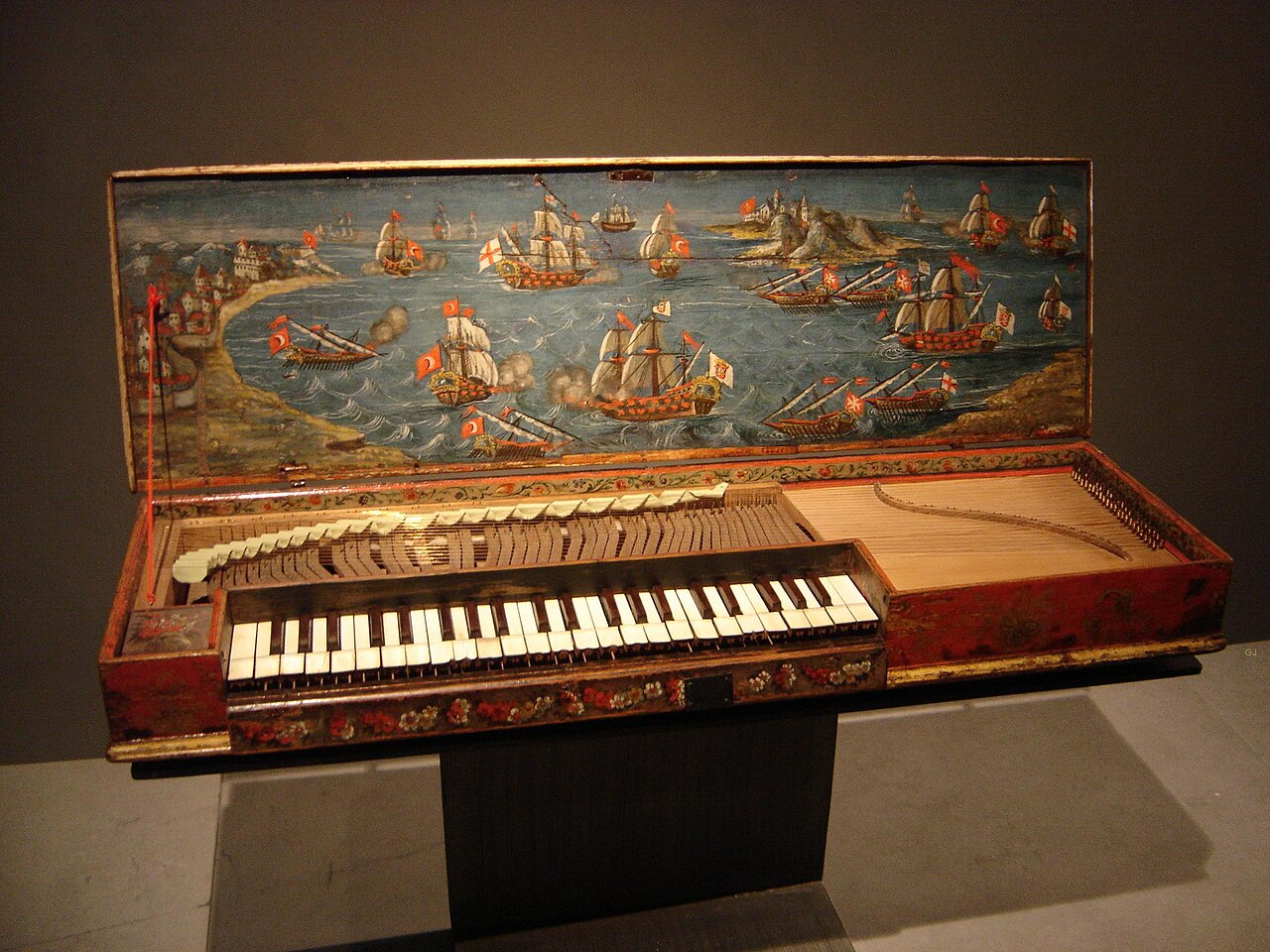
The clavichord is a small, stringed keyboard instrument historically common in domestic and teaching settings from the Renaissance through the 18th century. It produces sound when small metal tangents attached to the keys strike the strings and remain in contact, allowing the player subtle control over volume and pitch. Because its sound is very quiet compared with the harpsichord or piano, the clavichord was chiefly used for practice, composition and intimate performance.
Image gallery
8 Images



How it works
When a key is depressed, a tangent (usually brass) strikes a string and immediately holds it against the instrument's soundboard. This direct, continuing contact transmits the vibration but limits loudness. The basic parts include keys and keyframe, tangents, strings, a soundboard, bridges, and a wrest plank for tuning. Two general construction types are recognized:
- Fretted clavichords, in which one string or pair of strings serves several notes (a cost- and space-saving method).
- Unfretted clavichords, where each note has its own string or string pair, permitting clearer sustain and independent tuning.
Playing technique and expression
The clavichord responds directly to finger pressure, so the performer can shape dynamics and apply subtle pitch variation. A characteristic expressive device is bebung, a finger vibrato produced by rapidly altering pressure on a depressed key; because the tangent remains in contact, pitch can be modulated slightly. These capabilities made the clavichord attractive to keyboard players who sought refined expressive control rather than volume.
History and context
Forms of struck-key instruments developed in late medieval and Renaissance Europe, and the clavichord became widespread in the 16th–18th centuries. It coexisted with the louder harpsichord and, later, with early pianos. Once larger concert instruments became available around the turn of the 18th to 19th centuries, the clavichord's role as a public concert instrument declined, but it remained important for private study and composition.
Uses, repertoire and legacy
Because of its quiet nature, the clavichord was mainly used at home for practice, intimate performance, and composing. Many Baroque and early Classical keyboard players used it as a study instrument; notable keyboard writers and composers discussed its qualities in their treatises. In modern times it appears in historically informed performances and recordings and is reproduced by builders who specialize in period instruments.
Distinctions and notable facts
- The clavichord differs from the harpsichord, which plucks strings and cannot vary loudness by touch, and from the piano, which strikes strings with hammers and allows greater volume.
- Its continuous contact between tangent and string uniquely permits effects such as bebung and delicate dynamic nuance.
- Because of limited projection, surviving clavichords are often found in museums or private collections, and modern makers recreate them for research and performance.
For a general introduction and images, see a concise online overview: clavichord overview. To compare keyboard families and learn how the clavichord relates to other keyed instruments, consult a reference on keyboards: keyboard instruments.
Related articles
Author
AlegsaOnline.com Clavichord: the intimate keyboard instrument Leandro Alegsa
URL: https://en.alegsaonline.com/art/20829