
Church of Anthrax
Church of Anthrax is a 1971 collaborative studio album by John Cale and Terry Riley blending avant‑garde minimalism with rock instrumentation, released on Columbia Records.
Overview
Church of Anthrax is a collaborative studio album by multi‑instrumentalist John Cale and minimalist composer Terry Riley. Issued in early 1971 on the Columbia Records label, it represents an experimental meeting of two very different musical worlds: Cale’s background in rock and the avant‑garde, and Riley’s pioneering work in American musical minimalism.
Image gallery
1 Image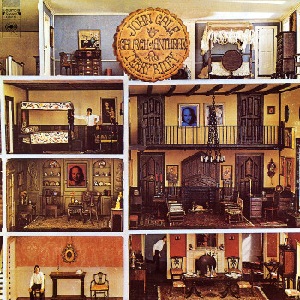
Musical character
The album is largely instrumental and built around extended pieces. Its sound combines repetitive patterns, drones and modal improvisation associated with minimalist composition with more conventional rock textures such as electric guitar, organ and percussion. The result is hypnotic and exploratory rather than song‑based, emphasizing atmosphere, texture and gradual transformation over verse–chorus structures.
Recording and collaborators
The project grew from mutual interests in improvisation and non‑traditional forms. Both artists contribute to the performances and arrangements: Cale brings a grounding in rock, experimental studio techniques and multi‑instrumentalism; Riley contributes looping ideas, repetitive motifs and a taste for sustained harmonic fields. The record features studio interplay rather than tight, pop‑style production.
Release, reception and legacy
Upon release the album received mixed responses: some listeners found it a compelling fusion of styles, while others considered it an uneasy hybrid. Over time Church of Anthrax has been reassessed by many as a curious and influential moment where minimalism intersected with rock and experimental pop, helping to expand the possibilities for crossover collaborations.
Notable aspects and distinctions
- Not a conventional pop or rock album—mostly instrumental and improvisational.
- Illustrates a direct dialogue between mid‑20th century minimalism and late‑60s/early‑70s rock avant‑gardism.
- Seen as an example of boundary‑crossing collaborations that influenced later experimental and ambient projects.
For listeners today the album remains of interest to those exploring the margins between minimal composition and electric, studio‑based experimentation.
Tags
Related articles
Author
AlegsaOnline.com Church of Anthrax Leandro Alegsa
URL: https://en.alegsaonline.com/art/20307