
Childress, Texas
Childress is a city in north Texas and the county seat of Childress County, serving as a transportation, government, and service center for the surrounding ranching and farming region.
Childress is a city in Texas and the county seat of Childress County. It stands in the northern part of the state, near the southeastern edge of the Texas Panhandle, and functions as a local center for commerce, public services, and travel. While it is not a large urban place, it has long held importance for the many smaller communities and ranchlands around it.
Image gallery
10 Images


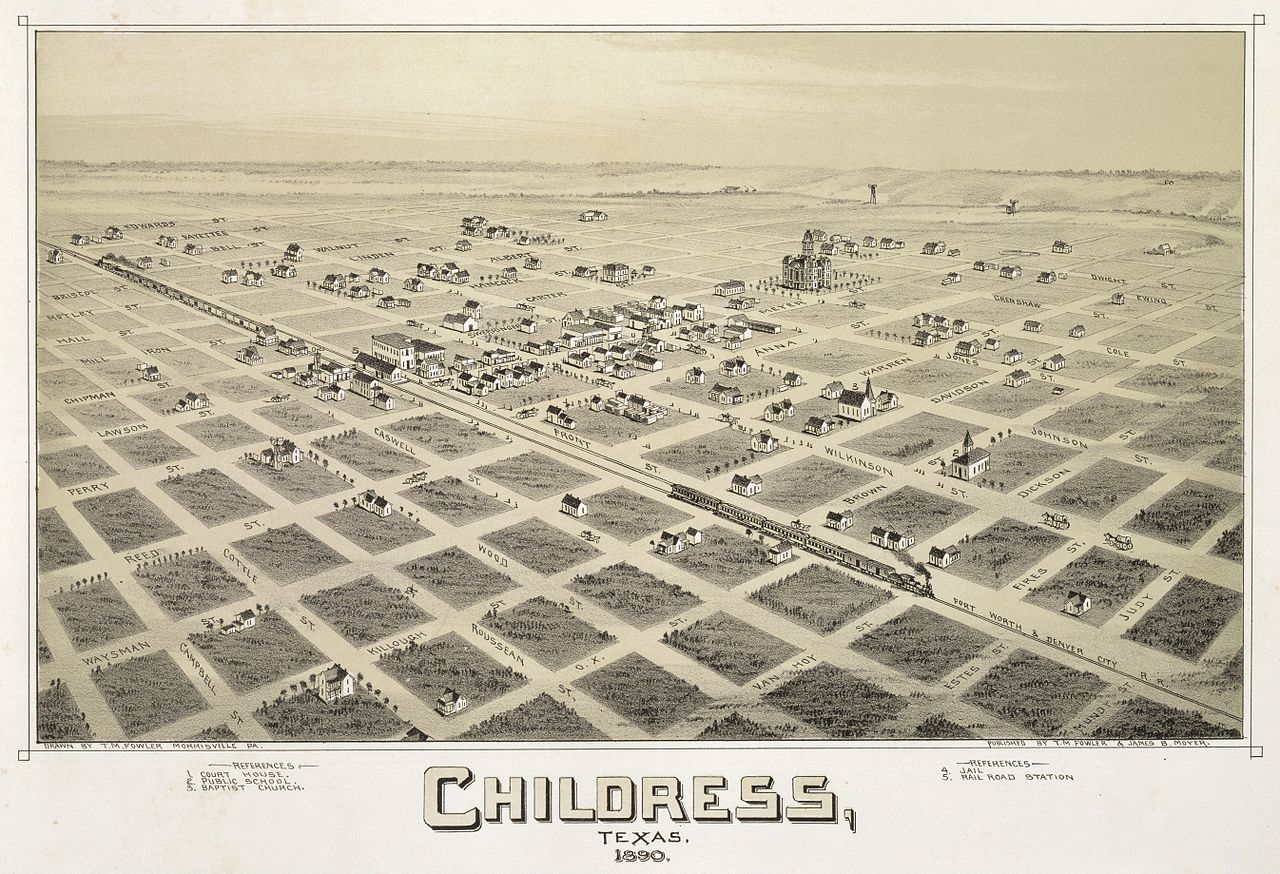


Setting and character
The landscape around Childress is shaped by open plains, broad skies, and a climate marked by hot summers, cool winters, wind, and periodic drought. The city developed as a practical service town, with government offices, schools, shops, and medical facilities supporting a wide rural area. Its downtown and civic buildings reflect its role as an administrative center rather than an industrial metropolis.
Transportation has been one of Childress's main advantages. The city sits at the junction of major highways, including U.S. routes that connect it with Amarillo, Wichita Falls, Lubbock, and other regional destinations. This crossroads position helps explain why Childress remains active as a stop for travelers, freight movement, and businesses that serve agriculture and highway traffic.
History and economy
Childress took shape in the late 19th century as settlement expanded across northwestern Texas. It was named for George Campbell Childress, an important figure in early Texas history, and it grew when railroad access made it easier to ship livestock, cotton, grain, and supplies. Like many towns on the plains, its fortunes were closely tied to ranching, farming, and the basic needs of settlers building permanent communities.
- Government: seat of county administration and courts.
- Regional services: schools, health care, retail, and lodging for surrounding towns.
- Transportation: a recognized highway crossroads in north Texas.
Today, Childress remains best understood as a small but significant regional hub. Its identity combines courthouse town, agricultural service center, and travel stop. That mix gives the city a role larger than its population alone might suggest, making it an enduring part of the social and economic geography of rural Texas.
Tags
Related articles
Author
AlegsaOnline.com Childress, Texas Leandro Alegsa
URL: https://en.alegsaonline.com/art/19672