
Chihuahua Municipality (municipio in the state of Chihuahua, Mexico)
Municipality in northern Mexico whose seat is the city of Chihuahua, the state capital. Includes a large urban core and surrounding rural territory; area ~9,219 km² and a heavily concentrated population (2005).
Overview
Chihuahua is one of the 67 municipalities of the state of Chihuahua in northern Mexico. Its municipal seat and principal population center is the city of Chihuahua, which also serves as the state capital and the primary administrative, cultural and economic hub for the region.
Image gallery
3 Images

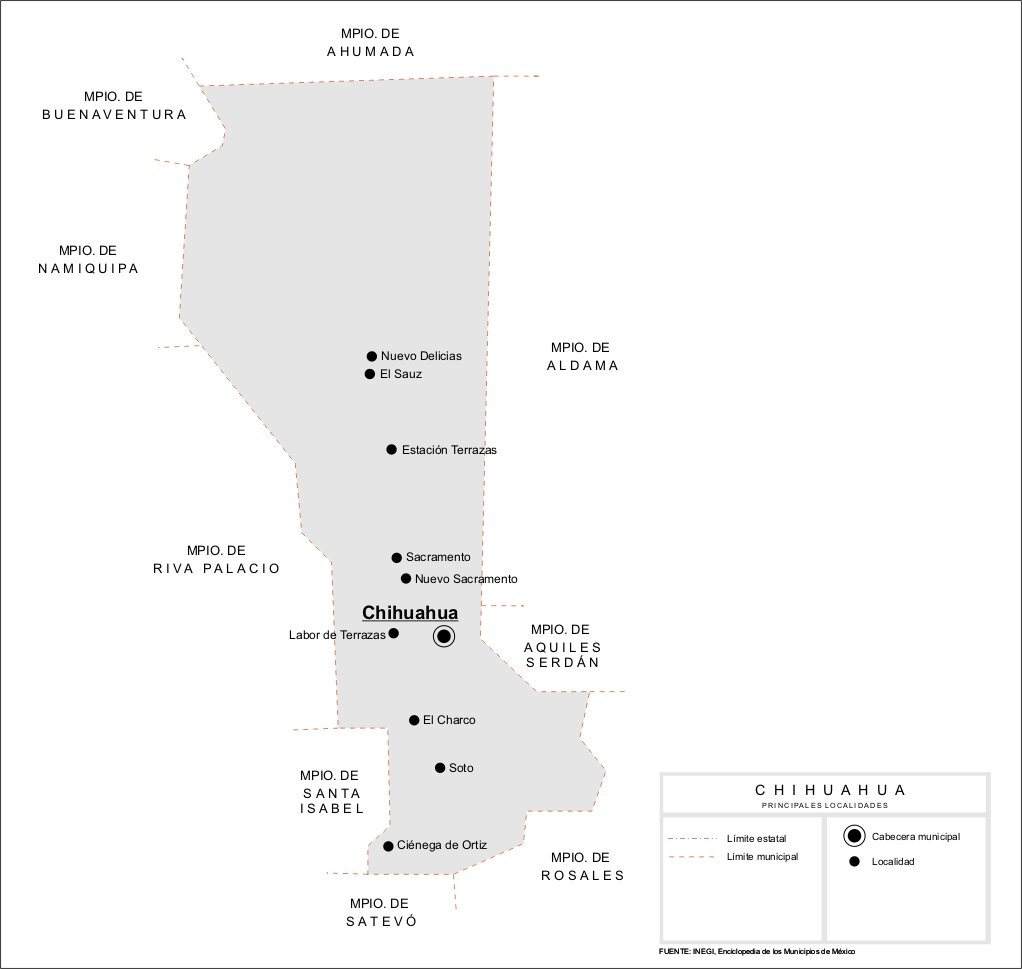
Geography and territory
The municipality covers a large swath of territory in the central part of the state, with an area of approximately 9,219.30 km2 (3,559.59 sq mi). The landscape reflects the wider Chihuahua Plateau: a mix of semi‑arid plains, river valleys and upland areas. Local climate is generally dry with warm summers and cooler winters, and watercourses and irrigated valleys support pockets of agriculture around the city.
Population and settlement pattern
The population of the municipality is highly concentrated in the municipal seat. According to the 2005 census figures, the municipality had a total population of 758,791, of which 748,551 lived in the city itself. That concentration makes the city the dominant urban area within the municipal boundaries, while the remainder of the municipality contains smaller towns, ejidos and rural settlements.
History and development
The municipality grew from colonial-era settlement and developed as a regional administrative and commercial center linking agricultural plains and mineral-producing districts. Over time the city of Chihuahua became the political capital of the state and a focal point for regional transportation, government institutions and cultural life. The area also played roles in 19th- and 20th-century national events, reflecting its strategic and economic importance in northern Mexico.
Economy, culture and services
As the state capital, the municipality's economy is a mix of public administration, services, commerce and industry. The urban core hosts government offices, educational and cultural institutions, retail and professional services. Surrounding rural areas support agriculture and livestock production. Cultural attractions in the city include historic architecture, museums and civic venues that serve both residents and visitors.
Government, infrastructure and functions
The municipal government is responsible for local public services such as urban planning, public safety, potable water, sewage, street maintenance and local markets. The city functions as a transportation hub for the state, with major highways and regional transport links that connect the municipality to other parts of Chihuahua and to national routes.
Notable features
- Serves as the state capital and principal urban center of Chihuahua state.
- Large urban concentration within the municipal boundaries compared with surrounding rural territory.
- Contains civic, cultural and administrative institutions important to the region.
The municipality combines the responsibilities of managing a sizable capital city with oversight of extensive surrounding lands, making it a central node for government, economy and culture in northern Mexico.
Related articles
Author
AlegsaOnline.com Chihuahua Municipality (municipio in the state of Chihuahua, Mexico) Leandro Alegsa
URL: https://en.alegsaonline.com/art/19629
Sources
- e-mexico.gob.mx : Municipio de Chihuahua