
Chevrolet Impala
Full-size Chevrolet model produced intermittently from the late 1950s through 2020, known for multiple body styles, broad market appeal, and use in both retail and fleet roles.
Overview
The Chevrolet Impala is a long-running passenger car nameplate from Chevrolet, the mass-market division of General Motors. Introduced in the late 1950s (first appearing for the 1958 model year), the Impala was positioned as a spacious, comfortable automobile aimed at American families and buyers seeking a stylish full-size car. Over several decades the Impala nameplate was applied to a range of body types, powertrains and market segments, and it became one of Chevrolet's most recognizable models.
Image gallery
10 Images
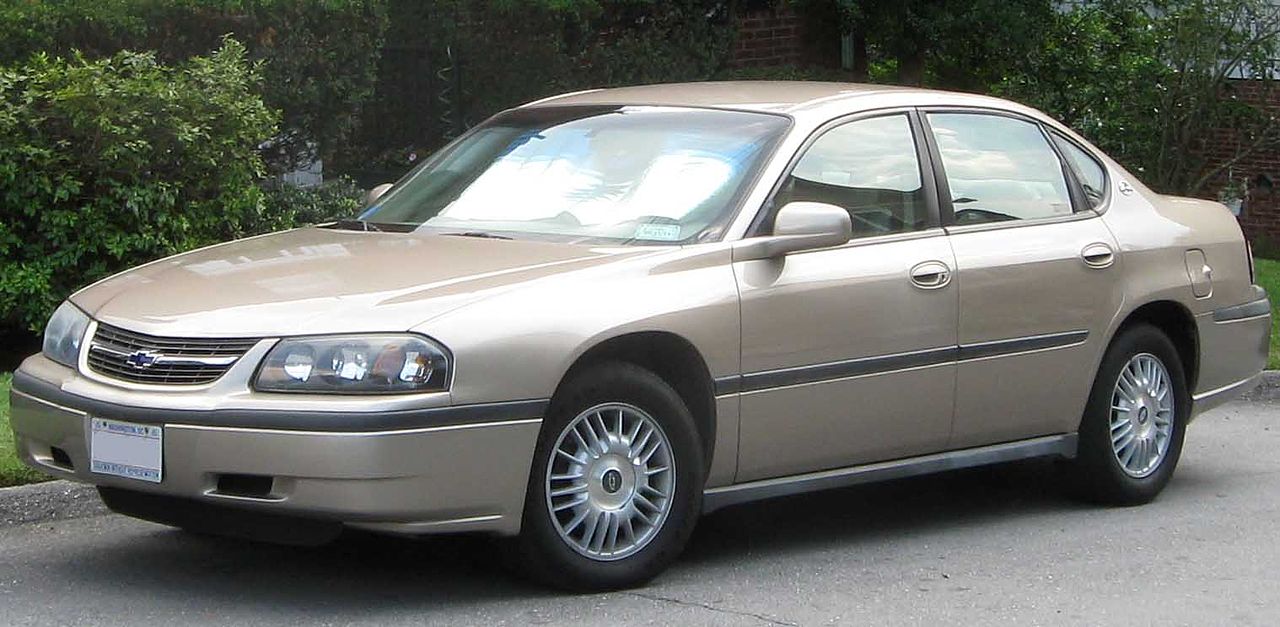


Design, layout and common characteristics
Across its many generations the Impala has been offered with a variety of engines, drivetrains and body styles. Characteristics that recur in descriptions of the model include roomy interiors, a long wheelbase compared with smaller Chevrolet models, and a focus on straightforward durability and comfort rather than niche sportiness. In different eras the Impala was available as two-door coupes, four-door sedans, station wagons and later as a modern four-door sedan; it has been built with both rear-wheel and front-wheel drive layouts at different times.
- Typical body types: coupe, sedan, station wagon (historically).
- Powertrains: range of inline, V6 and V8 engines across generations.
- Market focus: family transport, fleet use (including police and taxi applications).
History and development
The Impala name first appeared in the United States in the late 1950s and became a regular part of Chevrolet's lineup through the mid-1980s. After a period out of production, Chevrolet revived the Impala for the 1994 model year. The model underwent size and platform shifts: in the early 2000s it was marketed in a mid-size configuration and effectively took the place of some of Chevrolet's earlier mid-size models, while from the mid-2000s it returned to a full-size format. A fleet-oriented version called the Impala Limited continued in restricted production for some years after a public-market redesign, concluding in the mid-2010s. The last full redesign for the Impala arrived with a generation introduced in the early 2010s; Chevrolet ceased Impala production in March 2020, ending the model's long run.
Uses, examples and market role
The Impala has filled several commercial and retail roles. As a mass-market full-size car it was popular with families and buyers needing interior space and a smooth ride. It has also been widely used by fleets: law enforcement agencies, taxi services and rental companies have favored specific Impala versions for their balance of cost, reliability and interior space. During periods when Chevrolet marketed an updated Impala to retail buyers, the brand also maintained simpler or older-configuration Impala models for fleet customers.
Distinctions and notable facts
The model name comes from the impala, a medium-sized African antelope, and Chevrolet used the name to evoke a sense of elegance and motion. Over its lifetime the Impala reflected broader trends in the American auto industry—ranging from the large, chrome-accented cars of the 1950s and 1960s through downsizing and platform sharing in later decades. For related Chevrolet models and historical context see Chevrolet and the mid-size successor line represented by the Lumina.
Legacy: While production has ended, the Impala remains a familiar reference in discussions of American full-size cars and is remembered for its broad appeal, long production history, and varied roles in both private and fleet ownership.
Related articles
Author
AlegsaOnline.com Chevrolet Impala Leandro Alegsa
URL: https://en.alegsaonline.com/art/19417