
Chambers County, Alabama: Overview, History, and Communities
Chambers County, Alabama, located along the Georgia border, includes Lafayette and Valley. Created in the 19th century, it has a mix of small cities, rural areas, and a history of agriculture and textile industry.
Chambers County is a local government jurisdiction in the U.S. Deep South. The county includes small cities and rural landscape and is centered on the city of Lafayette, its county seat. It is part of a regional economic and social area commonly grouped as the Valley micropolitan area. For official information consult the county's website or resources at county government.
Image gallery
2 Images
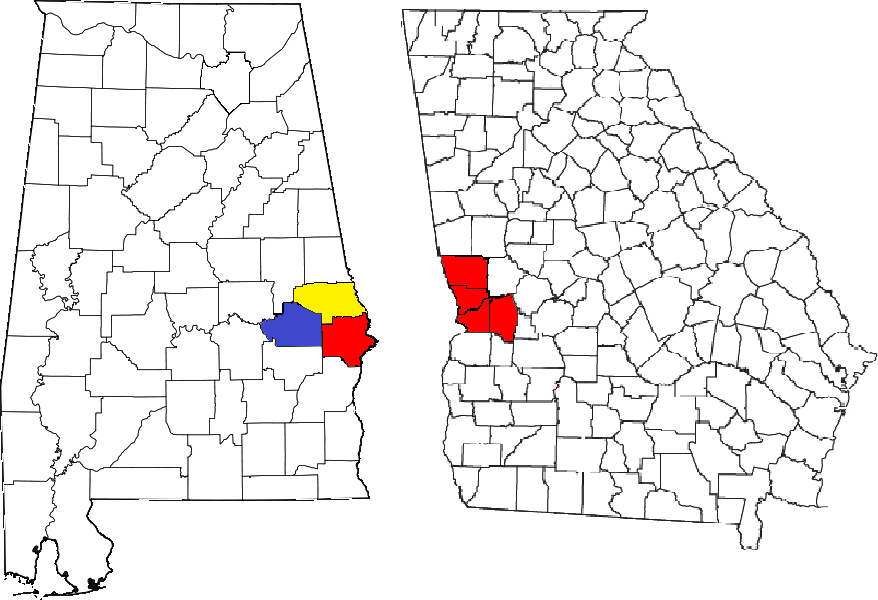
Location and geography
Chambers County sits along Alabama's eastern edge, bordering the state of Alabama's neighbor to the east and sharing river valleys and lowlands that have shaped settlement and industry. It lies within the interior of the U.S. state and includes river frontage that historically supported mills and transport. The landscape mixes small urban centers, farmland, and forested areas.
History and development
The county was organized in the early 19th century following removal of indigenous claims and was named for an early national political figure. Agriculture—especially cotton—dominated the 19th-century economy. In the 20th century, textile mills and manufacturing along river corridors brought industrial jobs to several towns. Economic shifts later led communities to diversify into services and light industry.
Communities and economy
Settlements range from the county seat to mill towns and small villages. Major municipalities and towns include:
- Lafayette (county seat) — administrative and service center
- Valley — part of the region's industrial and residential cluster
- Lanett — historic mill town on the river
- Cusseta and smaller unincorporated communities
Today the local economy combines public services, small manufacturing, agriculture, and retail. Cultural life reflects rural Southern traditions, and many communities preserve historic sites tied to their 19th- and 20th-century development.
For regional statistics and planning information see county and regional resources linked above and local historical societies for deeper background.
Related articles
Author
AlegsaOnline.com Chambers County, Alabama: Overview, History, and Communities Leandro Alegsa
URL: https://en.alegsaonline.com/art/18423
Sources
- census.gov : "Census 2000 U.S. Gazetteer Files: Counties"
- tools.wmflabs.org : 32°54′40″N 85°23′38″W / 32.91111°N 85.39389°W / 32.91111; -85.39389