
Chalice
A chalice is a footed drinking vessel used especially in liturgical rites. It has distinctive parts, varied materials and long religious and cultural significance across traditions.
Overview
A cup with a stem and a broad base, the chalice is primarily defined as a footed drinking vessel used in formal contexts. In many faith traditions it serves a ritual purpose during religious ceremonies, but similar forms have appeared in civic and funerary contexts as well. The chalice's shape — a bowl supported above a foot — distinguishes it from simple beakers or goblets.
Image gallery
10 Images


Design and parts
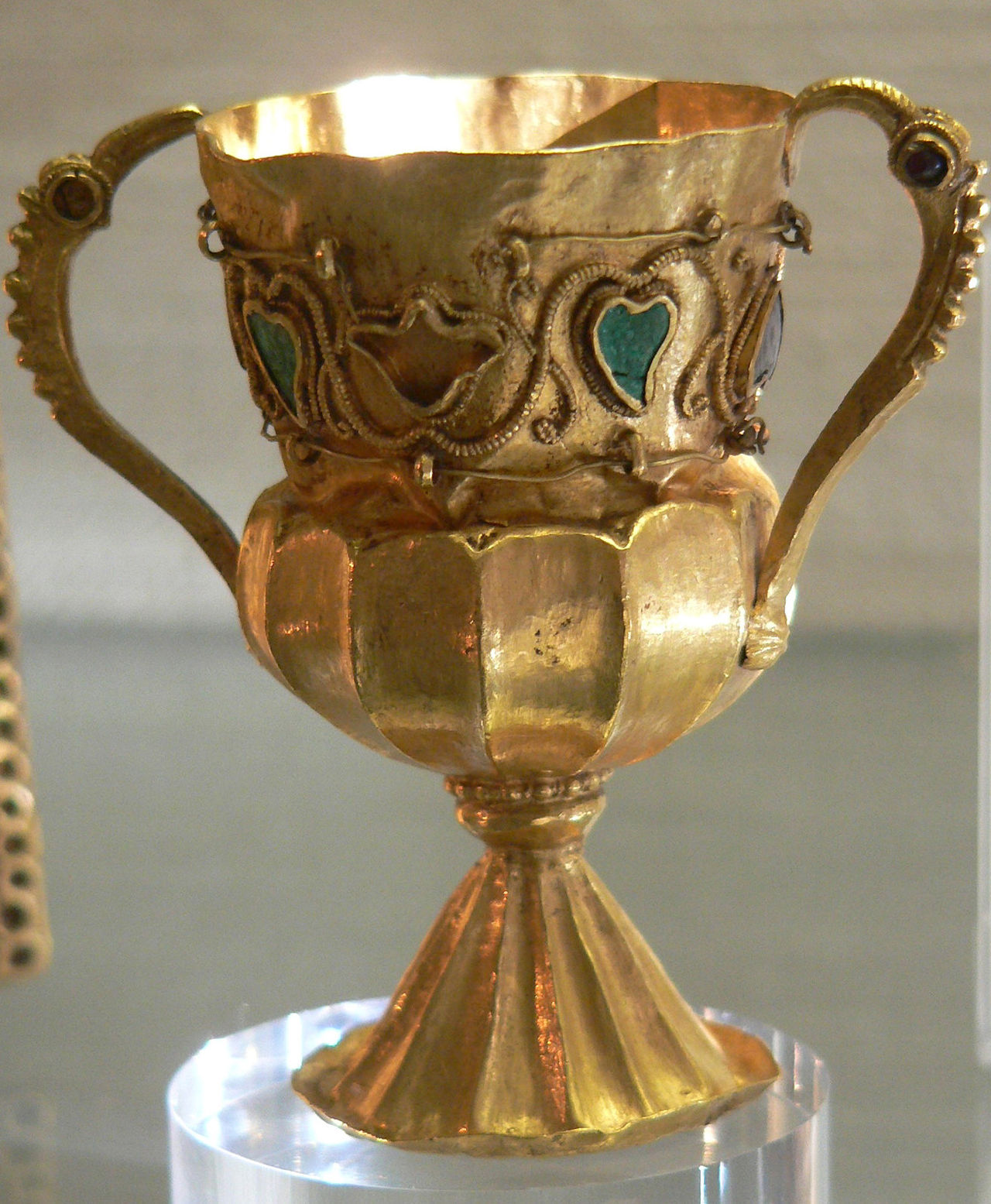
A typical chalice consists of three main components: the bowl (or cup) that holds liquid, the stem that provides a handhold and distance from the base, and the foot (or base) that stabilizes the object. Decorated examples may include engravings, gem settings, or a knop (a decorative knob) on the stem. Practical additions in liturgical use include a cover, a paten placed nearby, and cloths used for purification.
Materials and variations
Chalices are made from a wide range of materials: precious metals such as gold and silver are common in high ceremonial contexts for their durability and perceived sanctity, while glass, ceramic, wood, or even modern alloys appear in everyday or ecumenical settings. The choice of material often reflects theological, economic, and aesthetic considerations. Secular or commemorative chalices may be engraved with dates, coats of arms, or donor names.
History and cultural significance
Footed drinking vessels have ancient precedents across the Mediterranean and Near East. In Christianity, the chalice acquired special importance as the vessel used for the wine of the Eucharist, symbolizing sacrifice and communal sharing. Outside Christian rites, similar forms appear in Jewish ceremonial cups, in pagan and neo-pagan ritual sets, and in medieval courtly feasting. Stories such as the medieval legends of the "Holy Grail" illustrate the chalice's powerful symbolic role in literature and popular imagination.
Uses and ritual practice
Within liturgy, handling the chalice often follows prescribed rules: it may be consecrated, carried with reverence, and cleaned with specific linens. In many Christian denominations the chalice holds sacramental wine; in other contexts it can serve as an offering vessel or a symbol of hospitality. Contemporary practice ranges from ornate ceremonial cups to simple, approachable designs used in community gatherings.
Distinctions and notable facts
- Terminology: while all chalices are cups, not all ritual cups are called chalices; usage depends on tradition and formality.
- Conservation: historic chalices are preserved for artistic, liturgical, and historical study and may be displayed in museums under controlled conditions.
- Cross-cultural forms: similar footed vessels exist worldwide and can be studied comparatively for design and function.
For more general definitions and images, see a basic illustration of a footed part and broader entries on ceremonial vessels at reference sites or museum catalogs describing cups and ritual equipment. Scholarly treatments and liturgical guides provide detailed rules for use in particular traditions describing ceremonies, while popular accounts explore legends like the Grail and their cultural impact on religion and myth.
Related articles
Author
AlegsaOnline.com Chalice Leandro Alegsa
URL: https://en.alegsaonline.com/art/18385