
Casino Royale (1967 film)
1967 satirical, ensemble spy-comedy loosely adapted from Ian Fleming's novel; notable for its fragmented production, star-studded cast, mixed reviews and commercial success.
Overview
Casino Royale (1967) is a satirical spy-comedy film that reconfigures Ian Fleming's first James Bond novel into a broad, episodic farce. The production abandons the straight thriller approach of the official Bond series and instead presents a collage of comic set pieces, musical interludes and deliberate absurdities. The central conceit sends an older, retired Sir James Bond back into the field to investigate the deaths and disappearances of international operatives, while the film also plays with the idea of multiple characters assuming the Bond identity.
Image gallery
5 Images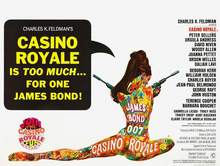


Production and style
The picture was notable for its complex production: multiple creative teams contributed sequences, and the finished work displays distinct tonal shifts from one episode to the next. The filmmakers emphasized parody and pastiche, using exaggerated scenarios, visual gags and musical numbers to lampoon spy-film conventions. This approach produced a film that is sometimes described as a cinematic patchwork rather than a single unified narrative.
Plot sketch
Rather than retelling Fleming's novel faithfully, the screenplay disperses the book's characters and episodes across an array of vignettes. The retired agent is coaxed back into service to follow leads linked to a casino, a mysterious female figure and a shadowy organization. Interludes of mistaken identity, comic violence and elaborate stunts punctuate the investigation, and the film repeatedly undercuts its own suspense in favor of jokes and visual surprise.
Cast and performances
The film features an ensemble cast led by David Niven as Sir James Bond and Ursula Andress as Vesper Lynd. A wide array of well-known performers appear in supporting or cameo roles, contributing to the film's episodic, variety-show feel. Performances range from straight-faced to deliberately comic, reflecting the production's shifting aims.
Release, reception and box office
Upon release the movie drew a large audience and was a commercial success, earning reported worldwide receipts of about $41 million. Contemporary reviews were mixed: some critics and viewers appreciated its ambition and moments of wit, while others criticized the inconsistent tone and fragmented storytelling. Over time the film has attracted both derision and a cult appreciation as an example of 1960s cinema and mainstream parody.
Legacy and later adaptations
Casino Royale (1967) remains distinct from the official Bond films and is often cited when discussing adaptations that knowingly subvert a source text. Its existence has influenced how later filmmakers approached the same material: a very different, more conventional adaptation of Fleming's novel was produced decades later. Scholars and fans consult histories of the franchise and studies of parody to place the 1967 film in context; for broader franchise context see entries on James Bond and on themes of retirement and return in spy fiction.
Further information
For box-office details, production credits and archival materials, consult specialized filmographies and summaries available through film-reference resources and databases: for example, production notes and contemporary box-office summaries are collected under box office summaries and in other cinema reference works. Additional overviews of the film's comedic approach and place in 1960s popular culture are found in essays and retrospectives on spy spoofs and cinematic parody.
Related articles
Author
AlegsaOnline.com Casino Royale (1967 film) Leandro Alegsa
URL: https://en.alegsaonline.com/art/17411