
Carrefour, Haiti
Carrefour is a densely populated suburban commune of Port-au-Prince in the Ouest Department of Haiti, known for rapid urban growth, persistent poverty, and notable social challenges.
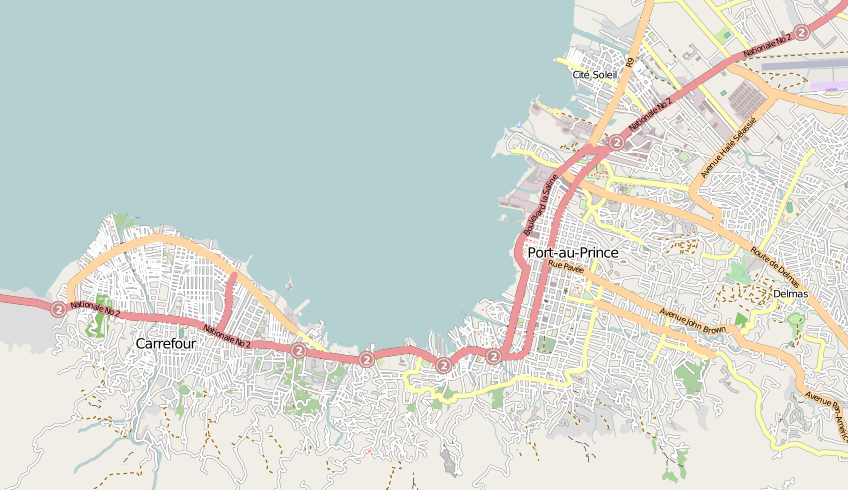
Carrefour is a suburban commune located on the southern fringe of the Port-au-Prince metropolitan area. Administratively it lies within the Ouest Department and forms part of greater Port-au-Prince in Haiti. It developed from rural settlements into a large peri-urban district as people moved toward the capital for work. Contemporary descriptions commonly note dense, informal housing and uneven access to public services.
Image gallery
4 Images


Characteristics and population
Carrefour functions largely as a residential and informal commercial zone. Street vendors, small workshops and local markets dominate the local economy, while public utilities such as water, sanitation and electricity are frequently intermittent. Official and unofficial estimates place the population at around 408,000, making it one of the more populous communes in the metropolitan area. Housing ranges from modest permanent buildings to makeshift structures in outlying neighborhoods.
History and development
The name "Carrefour" means "crossroads" in French, reflecting its historical role as a junction of routes leading from Port-au-Prince toward the southern peninsula. Urban expansion accelerated in the late 20th century as internal migration increased. The commune has been shaped by waves of construction, both informal and small-scale planned projects, interspersed with periods of limited municipal investment and infrastructure repair.
Notable events and challenges
Carrefour has faced several high-profile social and security challenges. One neighborhood, known locally as Feuilles, received attention after a violent episode in 1999 that highlighted issues of law enforcement, human rights and impunity. The commune was also affected by the 2010 earthquake that struck the greater Port-au-Prince area, which damaged buildings and strained already limited services.
Economy, services and ongoing efforts
The local economy is dominated by informal trade, small-scale construction and remittances. Infrastructure improvements are often piecemeal: road resurfacing, market renovations and community-led sanitation projects occur alongside persistent gaps in waste collection and public health facilities. International agencies, local NGOs and municipal authorities periodically coordinate programs to improve living conditions, but progress is variable.
Distinctive facts and context
- Carrefour is part of the larger Port-au-Prince urban area and shares many metropolitan challenges, including traffic congestion and rapid unplanned growth.
- The commune should not be confused with commercial brands that share the name; in this context it refers to a geographic and administrative entity in Haiti.
- Community resilience and local neighborhood organizations play a significant role in everyday life and in recovery after crises.
For more detailed administrative or demographic data consult municipal records, national census materials or local studies produced by NGOs and research institutions that focus on urban Haiti.
Related articles
Author
AlegsaOnline.com Carrefour, Haiti Leandro Alegsa
URL: https://en.alegsaonline.com/art/17239