
Carrara: Italian city of marble and radical traditions
Carrara, in Tuscany's Massa-Carrara province, is famed for its white and blue-gray marble from the Apuan Alps and for a long history of labor activism and anarchist traditions.
Carrara is a town in northern Tuscany known for its long association with high-quality stone and a distinctive social history. The municipality of Carrara lies in the province of Massa-Carrara within the region of Tuscany, in Italy. Its name commonly evokes both the steep, quarry-scarred slopes of the nearby Apuan Alps and extensive workshops where raw blocks are cut and finished into sculpture and building stone.
Image gallery
10 Images
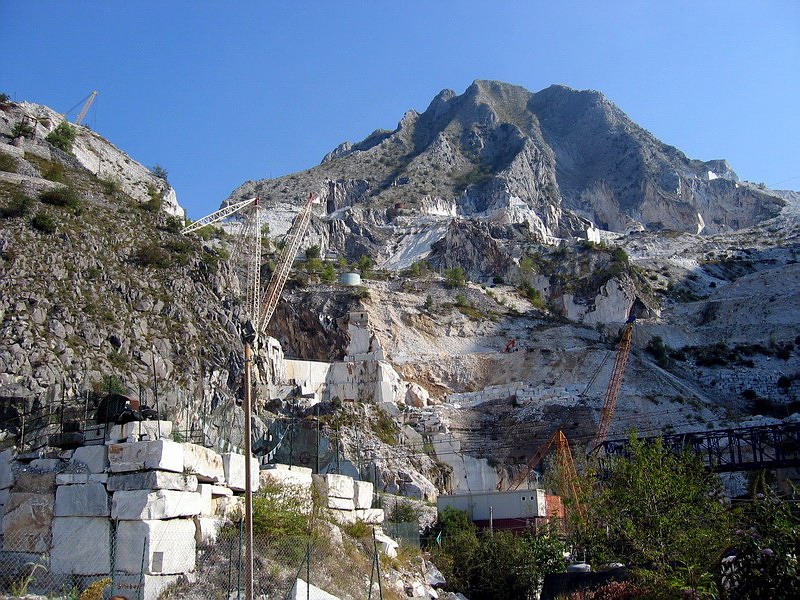


Stone and industry
The area around Carrara contains extensive deposits of fine-grained white and blue-gray marble that have been quarried since antiquity. This marble has been prized for sculpture and architecture across Europe; famous sculptors and architects selected Carrara blocks for their purity and workability. Extraction, processing and trade in marble have long been central to the local economy, shaping transport, craftsmanship and industrial organization in the town and its hinterland.
Geography and quarries
Carrara sits at the foot of the Apuan Alps and close to the Tyrrhenian coast, combining mountain quarries with port and rail links that developed to move heavy stone. Quarrying techniques evolved from simple pick and wedge methods to modern saws and wire cutting; contemporary debates link economic needs with environmental management, landscape rehabilitation and worker safety.
Social and cultural life
Quarrying communities produced a distinctive social fabric. Skilled carvers, quarry workers and artisans formed cooperatives and trade associations, and the town became notable for its strong labor movements and anarchist traditions. International connections of workers and radical activists contributed to Carrara’s political reputation; readers interested in that history can consult materials on anarchism and labor organizing.
Heritage, uses and tourism
Carrara marble is used in sculpture, monuments and high-end architecture. Visitors encounter studios, conservation workshops, small museums and guided quarry visits that explain geology, historic techniques and contemporary practices. Exhibitions and local craft schools preserve carving skills while balancing industrial use with cultural heritage and environmental concerns. For practical information and further reading consult municipal and museum resources in and about Carrara, the province of Massa-Carrara and regional guides to Tuscany.
- Common uses: sculpture, monuments and building stone.
- Key issues: heritage conservation, quarry safety and landscape impact.
- Where to learn more: local museums, artisan workshops and cultural centres.
Related articles
Author
AlegsaOnline.com Carrara: Italian city of marble and radical traditions Leandro Alegsa
URL: https://en.alegsaonline.com/art/17237