
Carlos Torre Repetto — Mexican chess master and namesake of the Torre Attack
Mexican chess master (1904–1978), developer of the Torre Attack. Early Latin American international contender who withdrew from top competition and was awarded a FIDE grandmaster title in 1977.
Carlos Jesús Torre Repetto (29 November 1904 – 19 March 1978) was a prominent Mexican chess player of the early 20th century. Born in the Yucatán region, he became one of the first widely recognized masters from Latin America and achieved international attention in the 1920s. Torre combined a clear positional sense with tactical resources, and his brief period of peak activity produced several notable games that remain studied by players and historians.
Image gallery
1 Image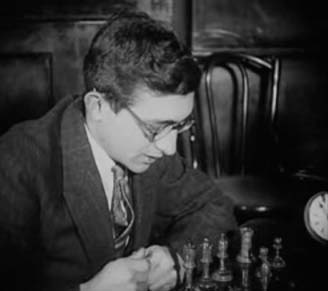
Early life and rise
Torre grew up in Mexico and rose rapidly to national prominence before competing abroad. In the context of a chess world then dominated by European masters, his results and style demonstrated that strong players were emerging from other regions. His international presence helped draw attention to chess in Mexico and Latin America.
The Torre Attack and playing style
His name is most widely known through the Torre Attack, a flexible opening system for White that typically arises after 1.d4, 2.Nf3 and 3.Bg5 (or similar piece deployments). The system emphasizes coordinated piece play, a solid pawn structure and practical attacking chances without heavy theoretical preparation. Because it can be used against a variety of Black set-ups, the Torre Attack has lasting value for club players and grandmasters seeking a reliable, system-like approach.
Later life and recognition
Torre's time at the top level was relatively brief. Personal and health difficulties led him to withdraw from regular international competition while still young. Decades later, in recognition of his achievements and influence on chess, the world chess federation awarded him the title of grandmaster in 1977. He died the following year.
Legacy
- Regarded as a pioneering figure in Mexican and Latin American chess, demonstrating the region's capacity to produce international masters.
- The Torre Attack remains a common, respected choice for White and continues to appear in contemporary opening literature.
- His games and career are cited as an example of creative play and enduring influence despite a curtailed competitive life.
Carlos Torre Repetto's contribution to opening theory and his role as an early international representative of Mexican chess ensure his continued presence in chess histories and instructional material. Students of the game encounter his name both in the study of openings and in discussions of chess development outside traditional European strongholds.
Related articles
Author
AlegsaOnline.com Carlos Torre Repetto — Mexican chess master and namesake of the Torre Attack Leandro Alegsa
URL: https://en.alegsaonline.com/art/17090