
Candy (1968 film)
Candy is a 1968 episodic sex comedy film starring Ewa Aulin with an ensemble cast including Ringo Starr, Walter Matthau and Marlon Brando. It adapts a satirical novel and attracted controversy on release.
Overview
Candy is a 1968 sex comedy film built as a sequence of loosely connected episodes that follow a young woman named Candy. The movie adapts a satirical novel and places its heroine in a series of provocative encounters that combine farce, satire and late-1960s sexual humor. The lead role was played by Ewa Aulin, and the production features an ensemble of well-known actors including Ringo Starr, Walter Matthau and Marlon Brando.
Image gallery
1 Image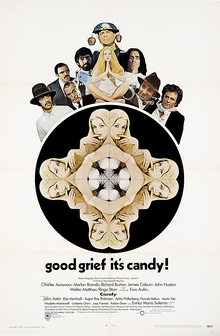
Structure and themes
Rather than a single continuous plot, Candy is organized as a chain of vignettes. Each segment showcases Candy's naiveté and the often absurd or exploitative behavior of the adults she meets. The tone moves between broad comedy and pointed satire, using sexual situations to comment on hypocrisy, greed and sexual politics of the period. Because of its material and presentation, the film was seen at the time as part of the permissive wave in mainstream cinema that tested boundaries of taste and censorship.
Cast and production
The film centers on Ewa Aulin in the title role. Supporting appearances include notable actors such as Ringo Starr, Walter Matthau and Marlon Brando. The production assembled an international cast and crew and drew attention because of its star names and its frank approach to sexual subject matter. The screenplay and direction translate the episodic, satirical quality of the source novel into a cinematic form that emphasizes caricature and set-piece situations.
Release and reception
Candy was released in December 1968. Upon its release the picture attracted strong public interest and performed respectably at the box office. Critical reaction was varied: some reviewers praised the performances and the film's comic ambition, while others found its handling of sexual themes gratuitous or uneven. Over time it has been discussed as an example of late-1960s sexual satire and as a period piece reflecting changing attitudes toward onscreen sexuality.
Legacy and notable facts
Today Candy is often remembered for its episodic structure, the youthful lead and the high-profile supporting cast rather than for a single definitive artistic achievement. It remains part of conversations about film adaptations of provocative novels, celebrity cameos in feature films, and the shifting boundaries of mainstream comedy during the 1960s. For further reading and archival information, consult contemporary reviews and published histories of 1960s cinema.
Further resources
Related articles
Author
AlegsaOnline.com Candy (1968 film) Leandro Alegsa
URL: https://en.alegsaonline.com/art/16531