
Cape Fear (1962 film)
1962 psychological thriller directed by J. Lee Thompson, starring Gregory Peck and Robert Mitchum; adapted from John D. MacDonald's novel The Executioners. Known for its suspense, Bernard Herrmann score and lasting influence.
Cape Fear is a 1962 American psychological thriller directed by J. Lee Thompson and produced by Sy Bartlett. Adapted from John D. MacDonald’s novel The Executioners, the film follows a relentless campaign of intimidation and revenge after a convicted criminal returns to haunt the family of the lawyer who helped put him behind bars. Released in April 1962, the picture is often cited for its tense atmosphere, moral ambiguity and the performances of its two leads.
Image gallery
1 Image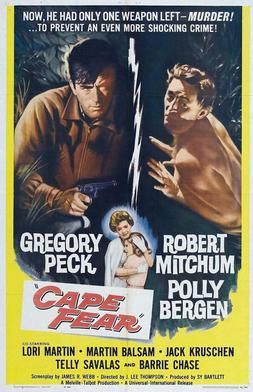
Overview and plot
The central conflict pits a respectable attorney and his household against a vengeful ex-convict. The film charts the escalation from ominous warnings and menacing letters to direct threats and psychological torment. Rather than relying on graphic violence, the story builds dread through stalking, implied menace and the invasion of domestic space, making the seemingly safe family home a locus of fear.
Production, cast and music
Gregory Peck plays the lawyer at the center of the drama, and Robert Mitchum portrays the film’s antagonist, Max Cady. J. Lee Thompson’s direction emphasizes measured pacing and composition, while Bernard Herrmann’s score contributes a memorable, unsettling musical backdrop. The script and technical choices work together to create a formally restrained but emotionally stark thriller that foregrounds character confrontation over action set pieces.
Themes and critical reception
Cape Fear explores themes of justice, retribution and the vulnerability of middle-class life. Critics noted the film’s tight plotting and ominous mood; contemporary reviews praised its ability to provoke discomfort while maintaining dramatic restraint. Bosley Crowther of The New York Times highlighted the film’s “tough, tight script” and “steady and starkly sinister style,” calling it a shocker that elicits both disgust and regret. Modern appraisals continue to recognize the movie for its craftsmanship and performances, and it maintains a strong approval rating on modern review aggregators.
Legacy and adaptations
The story’s potency led to a high-profile remake in 1991 directed by Martin Scorsese and starring Robert De Niro and Nick Nolte. That later version amplified the violence and psychological intensity, reflecting changing expectations for thrillers while keeping the core dynamic of predator and pursued. The original film has endured as an influential example of psychological suspense cinema; the villain Max Cady has been noted on lists of memorable film antagonists for his chilling persistence and moral ambiguity.
Notable facts
- Based on a novel by John D. MacDonald and adapted for the screen with emphasis on tension and character-driven menace.
- Bernard Herrmann’s musical score is frequently singled out for heightening the film’s uneasy tone.
- The film’s restraint and focus on atmosphere distinguish it from more overtly violent or action-oriented thrillers.
Further reading and references
- Film overview and synopsis
- Production notes and credits
- Director J. Lee Thompson
- Biographical notes on the director
- Producer Sy Bartlett
- Themes of stalking and suspense
- Analysis of the antagonist
- Context on the crime portrayed
- 1991 remake information
- Martin Scorsese’s remake
- Critical reception and reviews
- Contemporary critic responses
- Rotten Tomatoes aggregator page
- Bosley Crowther review excerpt
- New York Times coverage
- Archival reporting and release details
- American Film Institute villain ranking
Questions and answers
Q: What is Cape Fear?
A: Cape Fear is a 1962 American psychological thriller movie directed by J. Lee Thompson and produced by Sy Bartlett.
Q: When was Cape Fear released?
A: Cape Fear was released on April 12, 1962.
Q: What is the story of Cape Fear about?
A: The movie is about an attorney who, along with his family, is stalked by a vengeful criminal who he helped send to jail for rape.
Q: Is Cape Fear adapted from a novel?
A: Yes, Cape Fear is adapted from the John D. MacDonald novel The Executioners.
Q: Was Cape Fear remade?
A: Yes, a remake of Cape Fear was made by Martin Scorsese and released in 1991.
Q: How did critics receive Cape Fear?
A: Critics gave Cape Fear positive reviews, with a 95% rating on Rotten Tomatoes. Movie critic Bosley Crowther of the New York Times praised the "tough, tight script" and "steady and starkly sinister style" and described it as a "shocker that provokes disgust and regret."
Q: What ranking did Cady receive on the American Film Institute's list?
A: Cady, the villain in Cape Fear, was ranked as #28 on the American Film Institute's list of top 50 movie villains of all time.
Related articles
Author
AlegsaOnline.com Cape Fear (1962 film) Leandro Alegsa
URL: https://en.alegsaonline.com/art/16702
Sources
- rottentomatoes.com : "Cape Fear (1962)"
- nytimes.com : "Pitiless Shocker: Mitchum Stalks Peck in 'Cape Fear'"
- afi.com : "AFI's 100 Greatest Heroes & Villains"