
Cadmium iodide
Cadmium iodide (CdI2) is an ionic crystalline compound with a layered structure. It is used as a reagent and precursor in inorganic and organic chemistry and is notable for its toxicity and the prototypical “CdI2” structure type.
Cadmium iodide is an inorganic compound with the chemical formula CdI2. It consists of cadmium cations and iodide anions and typically forms soft, plate-like crystals. The substance is a water-soluble solid used mainly as a laboratory reagent and precursor to other cadmium compounds. For general reference see compound overview.
Image gallery
4 Images
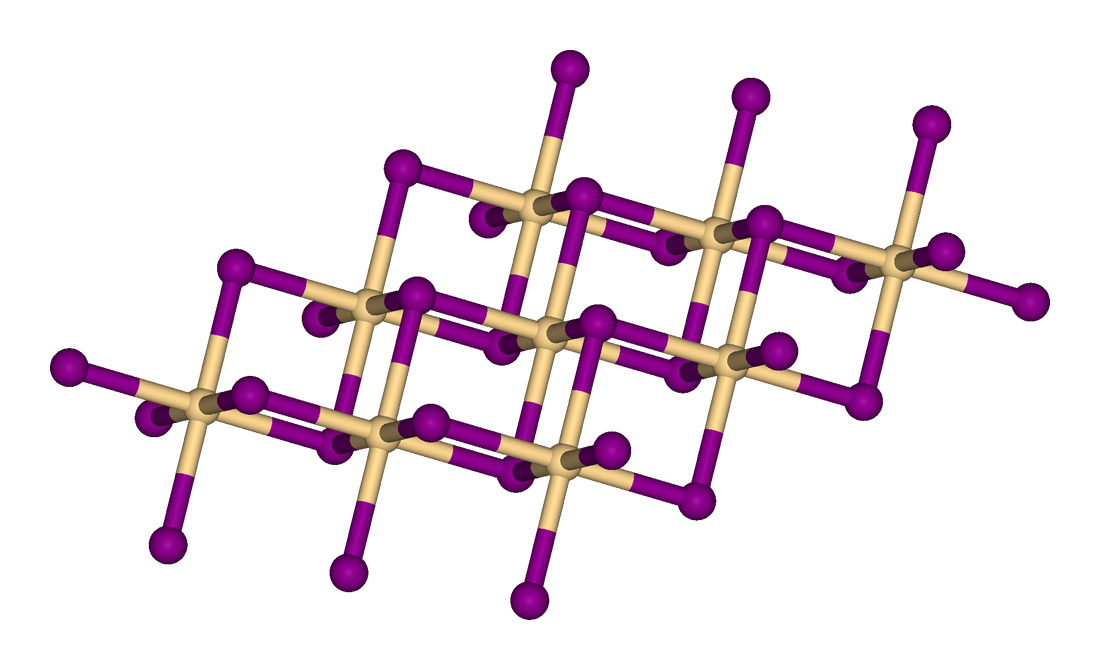

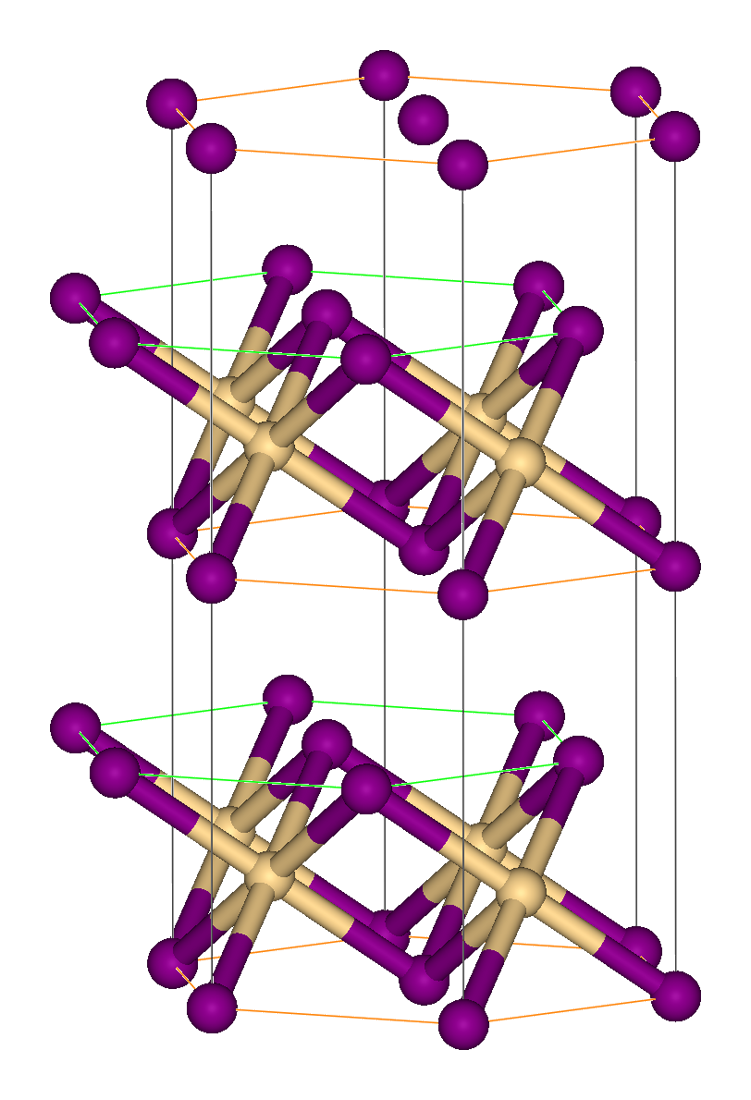
Structure and physical properties
CdI2 adopts a characteristic layered arrangement in which cadmium ions occupy octahedral sites between sheets of iodide ions. This motif is so distinctive that materials with analogous arrangements are described as having the “CdI2 structure type.” The layers are held together by relatively weak forces, which gives the material a flaky habit and influences its cleavage. The compound is relatively dense because both cadmium and iodine are heavy elements, and it dissolves in polar solvents such as water.
Preparation and chemistry
Typical laboratory preparations involve combining cadmium metal or a cadmium salt with an iodide source or by direct combination of cadmium and iodine under controlled conditions. CdI2 behaves as an ionic solid but exhibits some covalent character due to the polarizability of iodide. It can act as a source of cadmium(II) ions in syntheses and may participate in forming coordination complexes and organometallic reagents.
Uses and applications
- As a precursor to other cadmium salts and sulfide or selenide materials used in research.
- As a reagent in certain organic and inorganic syntheses where cadmium(II) is required.
- In studies of layered materials and crystal chemistry, as a model for similar two-dimensional solids; see the structural family at structure types.
Safety, history, and notable facts
Both cadmium and many of its compounds are toxic and regulated due to risks of inhalation, ingestion, and long-term environmental persistence. Handling requires appropriate protective measures and waste controls. The elements involved—cadmium and iodine—have been known to chemists since the 19th century, and CdI2 has been part of classical studies into solid-state structures. For background on the element cadmium and the iodide ion see cadmium and iodide.
Related articles
Author
AlegsaOnline.com Cadmium iodide Leandro Alegsa
URL: https://en.alegsaonline.com/art/15922