
Bungee jumping: origins, equipment, safety and variations
Bungee jumping is an adventure sport in which a jumper is attached to an elastic cord and leaps from a high point. This article explains its origins, equipment, safety practices, and common variations.
Bungee jumping is an activity in which a person leaps from a raised structure while connected to an elastic cord that absorbs the fall and returns the jumper in a series of rebounds. Performed from bridges, towers, cranes or purpose-built platforms, the elastic line is designed to stretch and decelerate the jumper rather than stop them abruptly. The sensation combines free fall with a strong rebound, and participants may use ankle or body harnesses depending on the rigging and jump style.
Image gallery
10 Images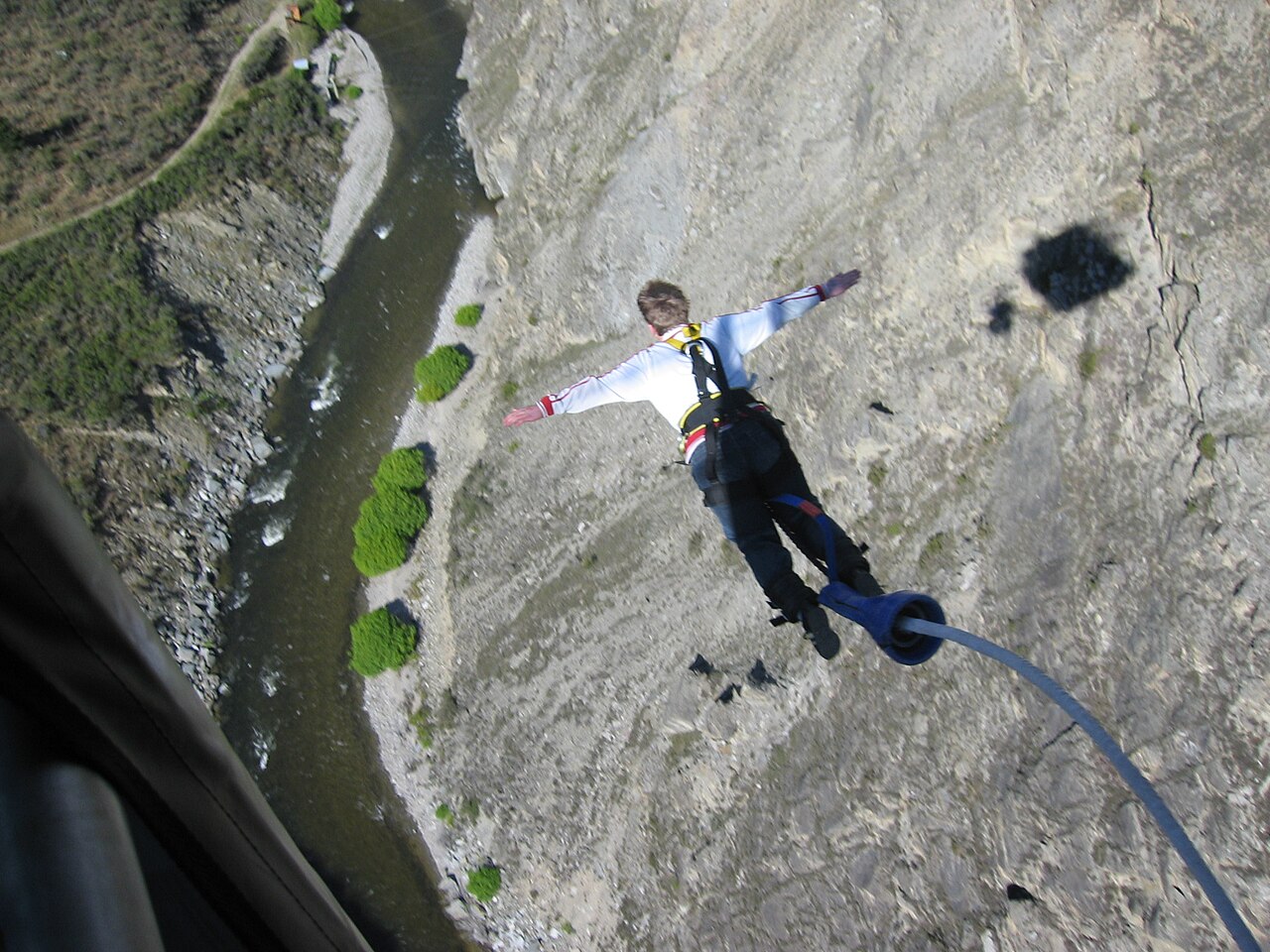




Equipment and technique
Modern bungee systems rely on carefully engineered cords and secure attachment points. Typical components include:
- Elastic cord: multi-strand rubber elements packaged in protective sheathing to provide predictable stretch characteristics.
- Harnesses: ankle loops, waist belts or full-body harnesses chosen to spread loads safely.
- Anchors and rigging: strong mounting points on bridges, cranes or platforms, with shackles and backup attachments.
- Safety hardware: secondary lines, load-rated connectors and redundancy in critical connections.
Operators calculate the cord length and pre-stretch for each jumper based on weight, jump height and cord properties so that the lowest point remains clear of the ground or water.
History and cultural origins
Practices resembling bungee jumping have older cultural roots. A well-known precursor is the land-diving ritual of Pentecost Island, Vanuatu, where participants tied vines to their ankles and leaped from wooden towers. The sport in its modern, recreational form developed in the late 20th century when enthusiasts adapted elastic ropes and safety methods into what became a commercial adventure attraction. Since then it has spread worldwide and been refined with engineering standards and professional operators.
Safety, regulation and common practices
Because bungee jumping imposes large, sudden forces on the body, safety is central to the activity. Typical precautions include pre-jump medical screening, weight checks, formal equipment inspections and established operating procedures. Many jurisdictions require operators to meet specific safety standards, maintain records, and train staff in rigging, rescue and emergency response. Common safety measures include redundant attachments, regular cord replacement policies, and conservative calculations to avoid ground or water contact.
Variations and notable distinctions
Variations include tandem jumps, bungee from moving platforms or cranes, water-touch jumps, and indoor alternatives that replicate the experience. Bungee jumping differs from skydiving and BASE jumping in that the jumper remains attached to a fixed elastic line rather than deploying a parachute; falls are typically shorter, and the descent is arrested by cord stretch rather than air resistance. The activity remains popular for its intense but brief thrill, and reputable operators emphasize training, equipment quality and risk management to make the experience as safe as possible.
Related articles
Author
AlegsaOnline.com Bungee jumping: origins, equipment, safety and variations Leandro Alegsa
URL: https://en.alegsaonline.com/art/15319
Sources
- ajhackett.com.au : "History"