
Bukittinggi, West Sumatra
Highland city in West Sumatra, Indonesia, known for Jam Gadang clock tower, Sianok Canyon, Dutch colonial history and Minangkabau culture; population around 120,000 (2010).
Overview
Bukittinggi (literally "high hill" in Indonesian) is a city in the Indonesian province of West Sumatra, set in the island's highlands. It has long been a regional cultural and transport hub and had an estimated population of about 120,000 at the 2010 census. The city's altitude gives it a cooler climate than the coastal lowlands and shaped its role as a trading and administrative centre in colonial and modern times. For municipal information see the city's portal official page.
Image gallery
10 Images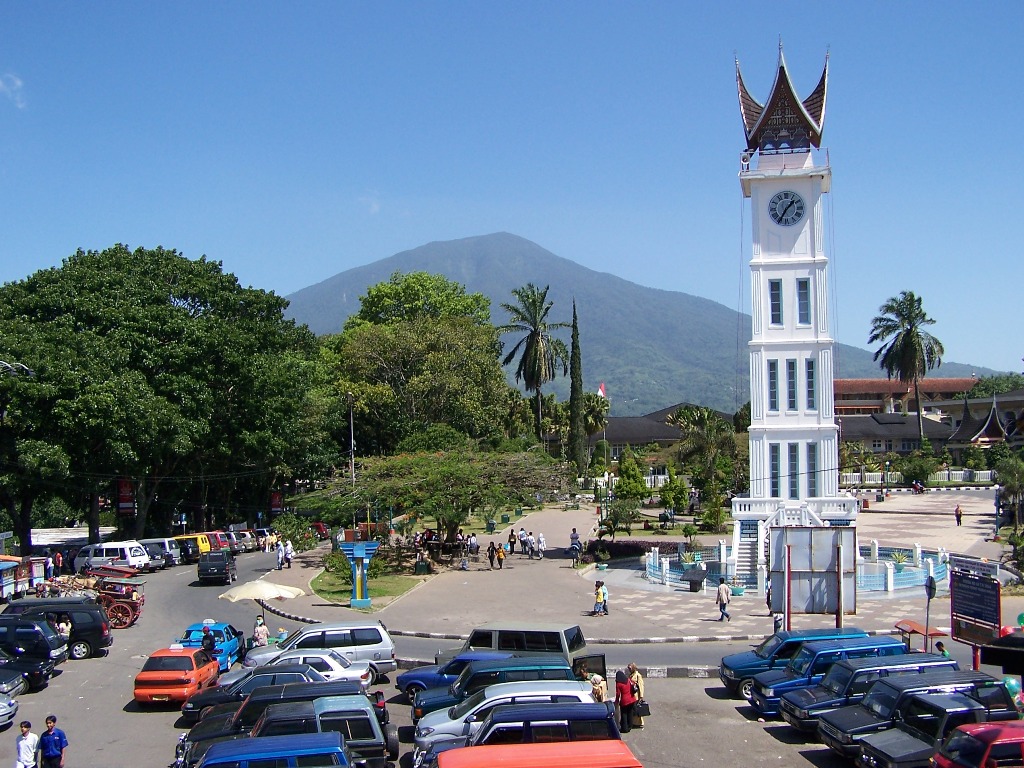


Geography and climate
Bukittinggi stands near a deep valley known as the Ngarai Sianok (Sianok Canyon) and is surrounded by volcanic highlands including the peaks commonly called Marapi and Singgalang. The terrain is rugged, with steep ravines and a network of small rivers. Its elevation, roughly around nine to ten hundred metres above sea level, produces milder temperatures and frequent mist, making the area attractive to visitors and suitable for upland agriculture.
History
The settlement developed under Dutch colonial rule, when a fort—locally called Fort de Kock after a Dutch officer—was established in the early 19th century to control the Minangkabau highlands. The town retains colonial-era buildings and street patterns. During the Japanese occupation of the Second World War the occupiers left a network of wartime tunnels nearby. Notably, Bukittinggi served as the administrative capital of the young Republic of Indonesia for a brief period during the national revolution of 1948–1949 when the central government moved inland during military conflict with the Netherlands see more.
Landmarks and culture
The city's best-known landmark is Jam Gadang, a large clock tower erected during the Dutch period that now functions as a civic symbol and meeting point. Other attractions include the remains of Fort de Kock, the Japanese wartime tunnel complex, the Pasar Atas market, and viewpoints along the Sianok Canyon. Bukittinggi is a centre of Minangkabau culture: traditional matrilineal customs, distinctive horned-roof houses (rumah gadang) and a rich culinary tradition—famous dishes include rendang and regional rice specialties—are visible in daily life and festivals.
Economy and tourism
Tourism is a major part of the local economy, driven by natural scenery, cultural heritage and colonial sites. The city also supports small-scale trade, handicrafts, services and education. Its markets sell textiles, traditional crafts and local foods, while guesthouses and restaurants cater to domestic and international visitors. Bukittinggi functions as a gateway for excursions into the broader Minangkabau highlands.
Notable facts and contemporary issues
Bukittinggi's combination of natural beauty, cultural identity and preserved historic buildings makes it one of West Sumatra's most visited towns. Contemporary challenges include managing tourism sustainably, protecting geological and cultural heritage, and balancing modernization with preservation of traditional lifestyles. Its accessibility from coastal cities and its compact historic core continue to shape its regional importance.
Related articles
Author
AlegsaOnline.com Bukittinggi, West Sumatra Leandro Alegsa
URL: https://en.alegsaonline.com/art/15206
Sources
- dds.bps.go.id : Jumlah Penduduk Sumbar