
Buangkok MRT Station (NE15)
Buangkok MRT Station (NE15) is an infill station on Singapore’s North East Line serving the Buangkok and Sengkang residential precincts; opened on 15 January 2006.
Buangkok MRT Station (station code NE15) is a Mass Rapid Transit stop on Singapore’s North East Line, located in the Sengkang residential area. The station provides rail access to nearby housing estates and local amenities and forms part of the city’s rapid transit network operated on the North East Line. It is situated within the northeastern urban corridor of Sengkang and serves commuters travelling to and from Singapore’s central and suburban districts.
Image gallery
5 Images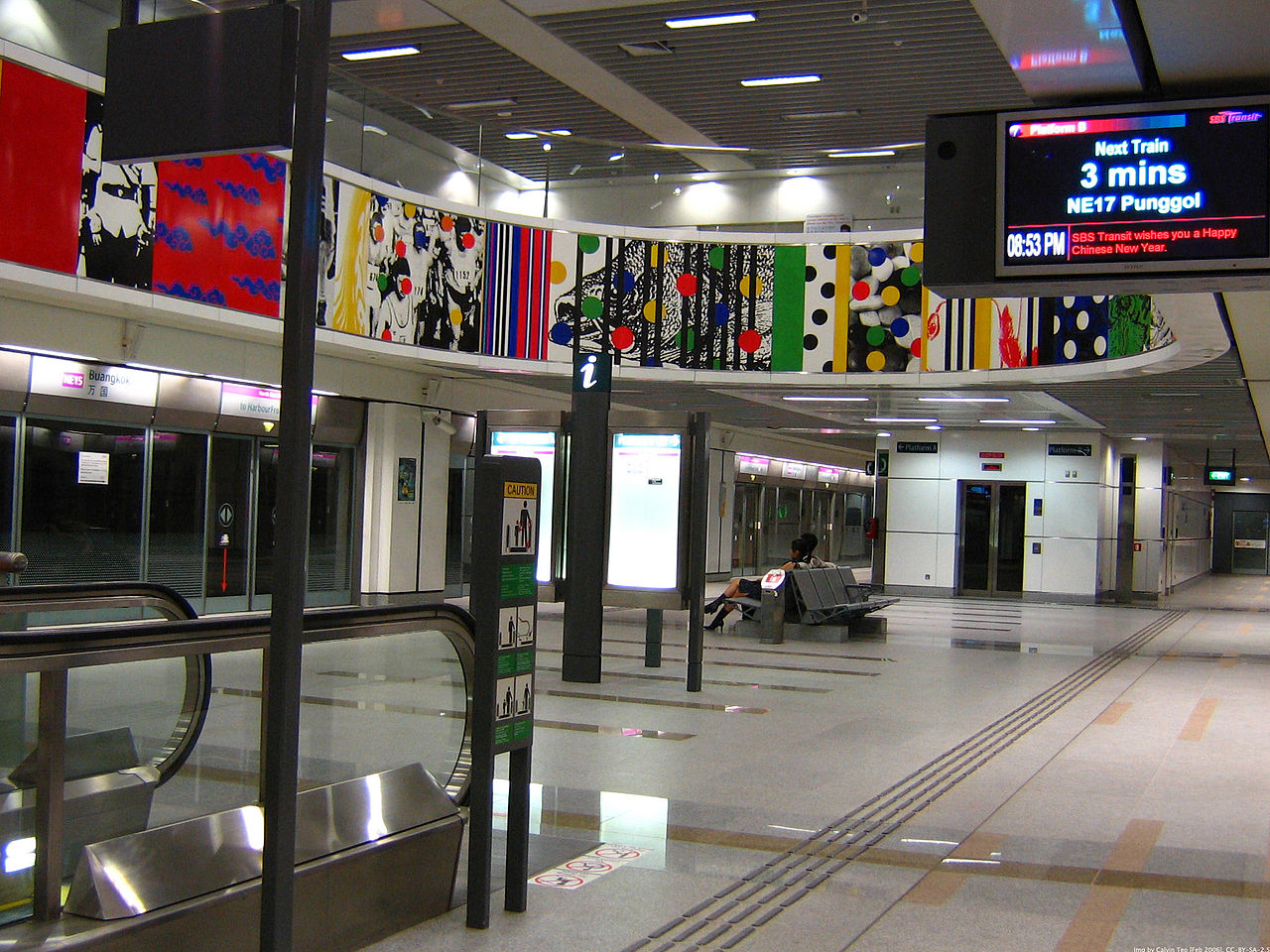


Characteristics and facilities
The station was designed for everyday commuter use, offering platform-level access to trains in both directions, fare gates, lifts and escalators for step-free movement, and surface connections to local bus services. Typical safety and accessibility features found across Singapore’s MRT network—such as tactile guidance for visually impaired passengers, signage in English, and passenger information displays—are present. The station entrances link pedestrian routes with surrounding residential blocks and local shops.
History and opening
Although the North East Line was constructed and opened in phases, Buangkok functioned as an infill station: its structure was completed earlier but the station remained closed initially because projected ridership was low at the time. After public interest and local requests for improved access, the operator opened Buangkok Station to revenue service on 15 January 2006. Its opening demonstrated how community feedback and changing travel patterns can influence transit planning.
Location, connections and usage
Buangkok Station primarily serves the surrounding HDB residential precincts, community facilities and retail nodes. Commuters typically use the station for daily travel to employment centres, schools and shopping areas. At street level, the station links with feeder and trunk bus routes that extend access into pockets of the neighbourhood not immediately adjacent to the rail entrance.
Significance and notable facts
The station is often cited as an example of an infill station that was brought into service after initial planning and construction, reflecting how transport agencies adapt to demographic change. Its opening shortened some local journeys and increased the convenience of public transit for nearby residents, contributing to broader goals of promoting rail use and reducing short-distance car trips in the area.
Related articles
Author
AlegsaOnline.com Buangkok MRT Station (NE15) Leandro Alegsa
URL: https://en.alegsaonline.com/art/14971
Sources
- mot.gov.sg : "Minister For Transport Announces Opening Of Buangkok MR Station | Ministry of Transport, Singapore"
- sgtrains.com : "North East Line"
- sbstransit.com.sg : "Station Details - NE15 Buangkok"
- channelnewsasia.com : "Residents willing to walk over 400 metres to Buangkok station: survey"
- sbstransit.com.sg : "Buangkok NEL Station Commences Revenue Service Amid Great Fanfare"
- straitstimes.com : "11 train stations will no longer accept cash-top ups at counters from Sept 1"
- sbstransit.com.sg : "Welcome to SBS Transit"