
Brunel University London
A public research university in Uxbridge, West London, founded in 1966 and named for engineer Isambard Kingdom Brunel; organised into three colleges and known for engineering, design and applied research.
Brunel University London is a public research university based in Uxbridge in West London. Established as a university in 1966, it takes its name from the nineteenth-century engineer Isambard Kingdom Brunel. The institution is often grouped among Britain's post‑war 'plate glass' universities—universities created in the 1960s with a modern campus and a practical, professionally oriented curriculum. For institutional information and public resources see the official university page.
Image gallery
10 Images


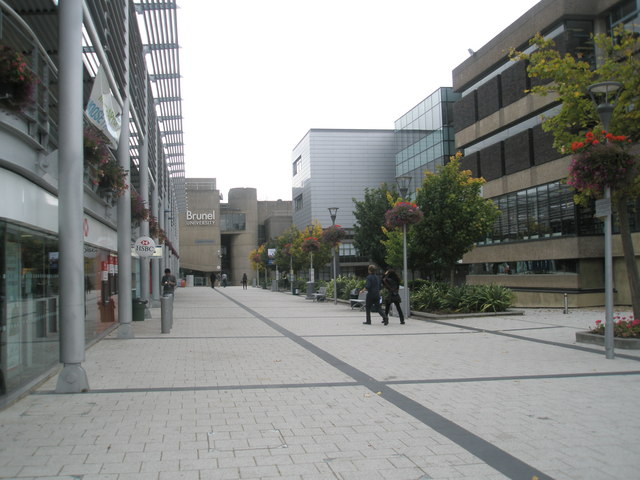
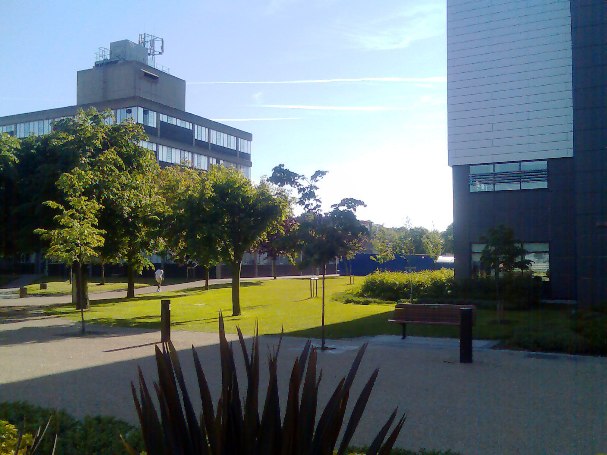


Campus, structure and scale
The main campus sits in the Uxbridge area, a suburban district of London with links to transport and industry Uxbridge and West London. Brunel adopted a college structure in 2014 and is organised into three broad academic colleges: the College of Business, Arts and Social Sciences; the College of Engineering, Design and Physical Sciences; and the College of Health, Medicine and Life Sciences. The campus combines teaching buildings, laboratories and student accommodation with sports and performing‑arts facilities.
Teaching, research and finances
Brunel is a teaching and research university with an applied focus. It offers undergraduate, postgraduate and research degrees across engineering, design, business, health and the humanities, and it emphasises links with employers and professional practice. As of 2019–20 the university reported around 16,150 students and approximately 2,500 staff, and an annual income reported in that year of about £237 million, with roughly 30% of income coming from grants and research contracts.
History and development
The institution traces its modern form to the 1960s: Brunel College of Advanced Technology received a royal charter and became Brunel University in June 1966 (royal charter). Its early emphasis on applied science and technology reflected national priorities for expanding higher education and technical training in the post‑war period. Since then the university has broadened its curriculum and developed stronger research capability while retaining a practical orientation.
Areas of strength and collaborations
Brunel is particularly noted for engineering, design, and health‑related subjects, and it hosts research centres and industry partnerships that address transport, materials, biomedical engineering and related fields. The university is a member of several higher education networks and representative bodies, including the Association of Commonwealth Universities and the European University Association, and participates in national forums such as Universities UK.
Notable features and distinctions
- Named after a prominent Victorian engineer, reflecting an institutional identity tied to engineering and applied invention.
- Modernist campus architecture and a consolidated suburban site intended to foster interdisciplinary collaboration.
- An organisational structure of three colleges that groups related academic subjects and supports cross‑college programmes.
For visitors and prospective students the Uxbridge campus provides a compact environment combining academic facilities, student services and sporting opportunities, with links into the wider London economy and cultural life (England). Further official information on courses, research centres and admissions can be found via the university's resources and public pages (Brunel homepage). Additional historical and contextual references are available through regional and higher education archives (Uxbridge, West London).
Related articles
Author
AlegsaOnline.com Brunel University London Leandro Alegsa
URL: https://en.alegsaonline.com/art/14878