
Toshi Ichiyanagi: Japanese avant‑garde composer and innovator
Overview of Toshi Ichiyanagi (1933–2022), his experimental music, notable works blending Japanese and Western instruments, role in postwar avant‑garde, awards, and cultural legacy.
Overview
Toshi Ichiyanagi (1933–2022) was a Japanese composer whose work helped define postwar experimental music in Japan. He became known for combining traditional Japanese timbres with Western instruments, exploring indeterminacy, extended techniques and unconventional performance directions. His career spanned decades of composition, performance and participation in an international avant‑garde community that exchanged ideas across cultures and disciplines. For broader context about the movement he was associated with, see avant‑garde music.
Image gallery
1 Image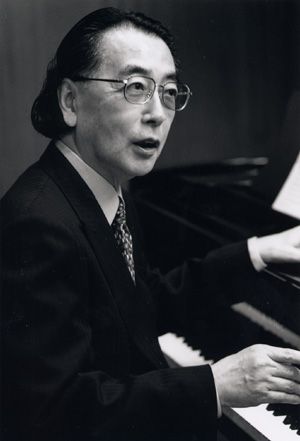
Style and innovations
Ichiyanagi's music frequently blurred boundaries between composition and event. He wrote pieces that specified nontraditional actions, spatial relationships or precise silences instead of conventional notes. He embraced experimental notation and instructions that allowed performers latitude, and he used Japanese instruments alongside Western ones to create new sound worlds. His approach often emphasized timbre, texture and the physical placement of performers in the performance space.
Notable works and examples
Some of Ichiyanagi's best‑known pieces illustrate his willingness to mix media and alter performance conventions. Kaiki (1960) juxtaposes the shō and koto with Western instruments and unexpected timbres such as the harmonica and saxophone, producing striking sonic contrasts. Distance (1961) tests the relationship between player and instrument by instructing performers to play from a set distance away. Anima 7 (1964) contains the instruction that chosen actions be performed "as slowly as possible", reflecting an interest in duration and the perception of time.
- Kaiki (1960) — fusion of Japanese and Western sonorities.
- Distance (1961) — spatial performance requirement.
- Anima 7 (1964) — extreme tempo and performative instruction.
Life, collaborations and context
Born in Kobe in 1933, Ichiyanagi emerged during a period of intense musical experimentation in Japan and abroad. He was part of a network of composers and artists who questioned traditional forms and embraced interdisciplinary practices. For a chapter of his life that attracted public attention, he was married to artist and musician Yoko Ono from 1956 to 1963; both figures were connected to the larger international avant‑garde circles of the 1950s and 1960s. Throughout his career Ichiyanagi maintained ties to both Japanese musical traditions and global experimental trends.
Honors, legacy and significance
Ichiyanagi received major recognitions in Japan, including the 33rd Suntory Music Award in 2001 and later the Order of Culture, acknowledging his influence on contemporary music and culture. His blending of instruments and instructions expanded the vocabulary available to composers and performers, and his work remains a reference for artists exploring indeterminacy, cross‑cultural instrumentation and the theatrical aspects of musical performance. He died on 7 October 2022 at age 89, leaving a body of work that continues to be studied and performed.
Author
AlegsaOnline.com Toshi Ichiyanagi: Japanese avant‑garde composer and innovator Leandro Alegsa
URL: https://en.alegsaonline.com/art/146892