
Tombstone, Arizona
Historic silver boomtown in Cochise County, Arizona, founded in 1877 and famous for the 1881 O.K. Corral gunfight; now a preserved frontier town and tourist destination with museums and reenactments.
Tombstone is a small historic city in Cochise County, Arizona, in the United States. Founded in 1877 during a silver-mining boom, the town rapidly grew into a bustling frontier center. Its name is commonly attributed to a prospector’s grim joke about finding only his tombstone in the desert.
Image gallery
10 Images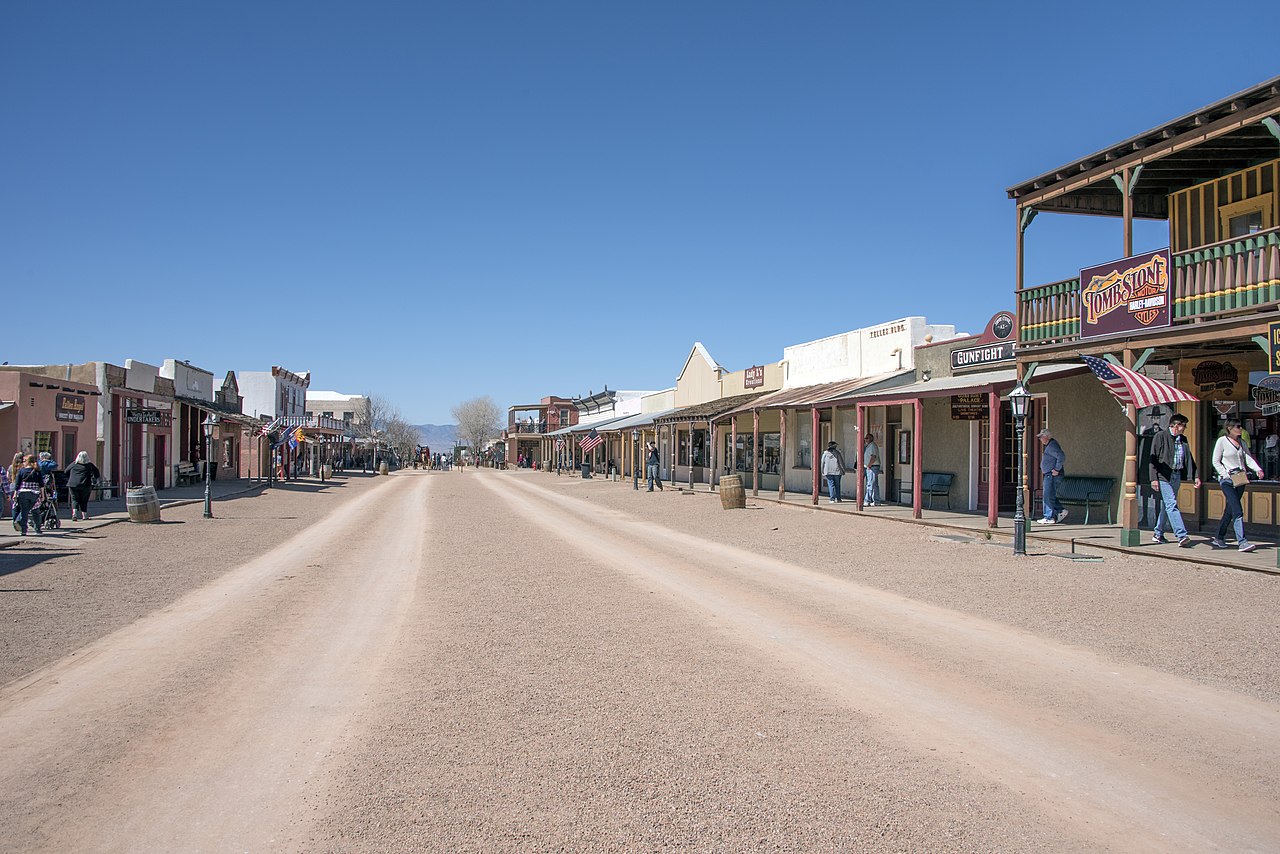






History and development
The discovery of high-grade silver ore drew miners, merchants, and gamblers, turning Tombstone into a lawless, fast-paced boomtown by the early 1880s. Conflicts between outlaws and lawmen, economic swings in mining, and episodic fires and disease shaped the town’s rise and decline. The town is best known for the 1881 gunfight at the O.K. Corral, an event that involved Wyatt Earp, his brothers, and Doc Holliday and became a symbol of the American West.
Characteristics and architecture
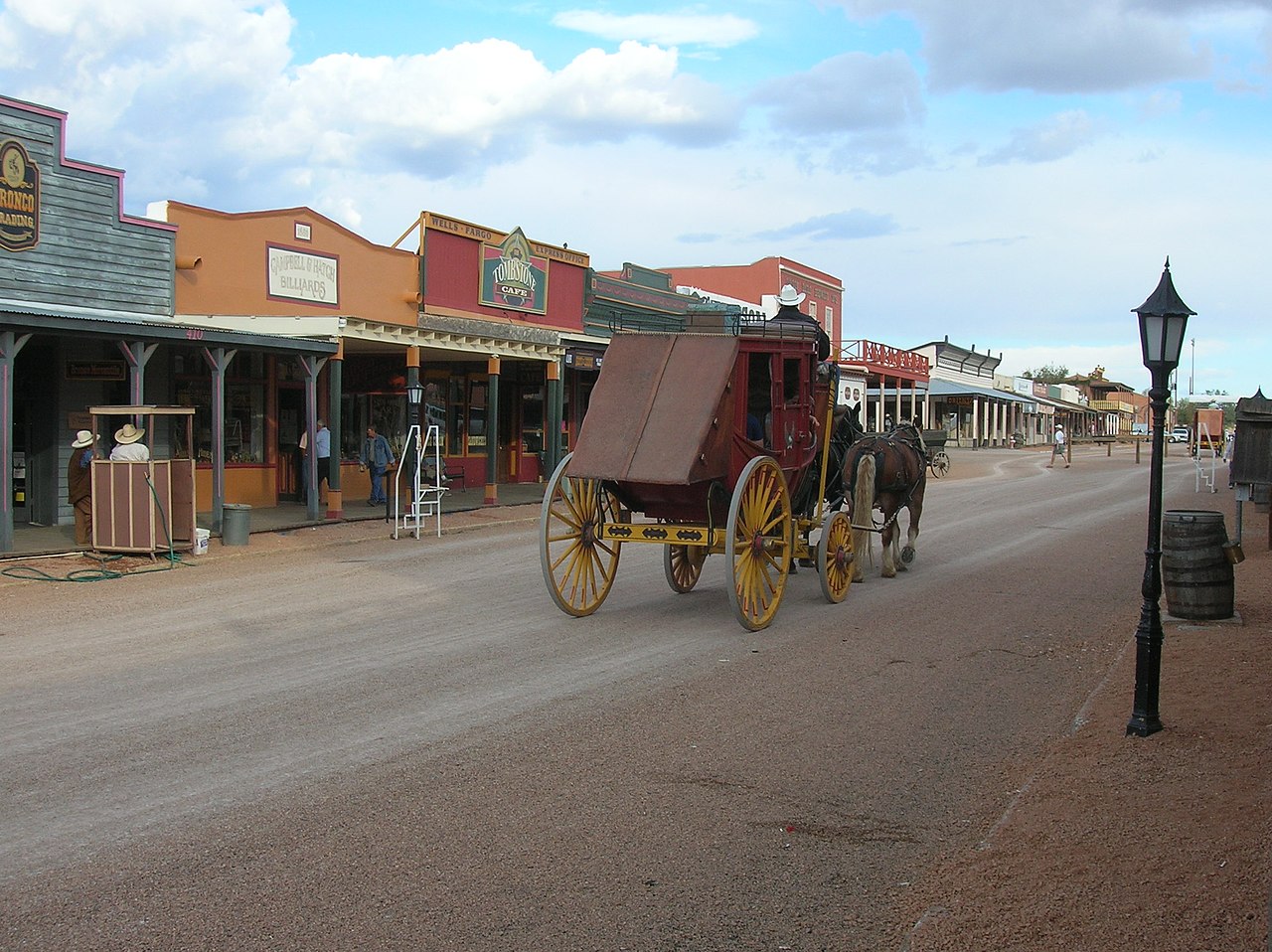
Many original and restored 19th-century buildings line Tombstone’s main street, preserving wooden storefronts, saloons, and theaters typical of a Western mining town. Narrow streets, period signage, and preserved interiors give visitors a sense of the frontier era. The surrounding landscape is arid high-desert foothills, reflecting the region’s mining geography.
Today: preservation and tourism
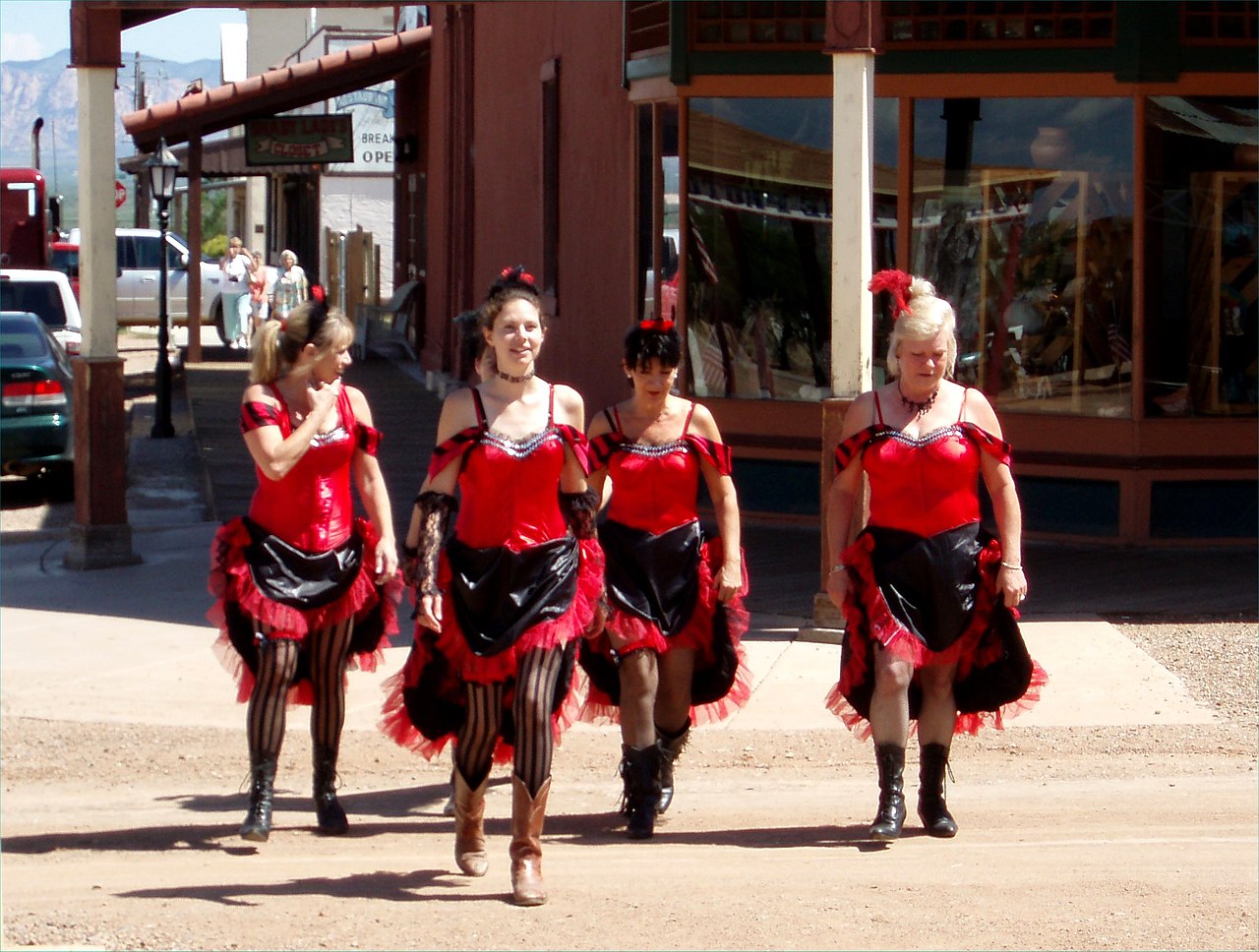
Tombstone’s modern economy centers on cultural heritage and tourism. Museums, guided walking tours, staged gunfight reenactments, and interpretive exhibits attract visitors interested in the Old West. Annual events and festivals celebrate the town’s frontier legacy and offer family-oriented programming alongside themed entertainment.
Notable sites and visitor attractions
- The O.K. Corral and related exhibits that interpret the famous gunfight.
- Historic theaters and saloons that host tours and performances.
- Boothill graveyard and preserved civic buildings illustrating 19th-century life.
Though its population is small today—the 2010 census recorded about 1,380 residents—Tombstone remains a widely recognized example of an American frontier boomtown that has been actively preserved for history and education.
Author
AlegsaOnline.com Tombstone, Arizona Leandro Alegsa
URL: https://en.alegsaonline.com/art/146828