
The Seventh Seal (1957 film)
Ingmar Bergman’s 1957 Swedish drama about a knight confronting Death during the Black Death — famous for its allegory, chess scene, stark cinematography, and enduring influence on cinema and culture.
The Seventh Seal is a 1957 Swedish film written and directed by Ingmar Bergman. Released as Det sjunde inseglet in Swedish, it stars Max von Sydow and features a memorable personification of Death. Bergman’s screenplay combines historical setting and philosophical dialogue to explore faith, doubt and mortality.
Image gallery
6 Images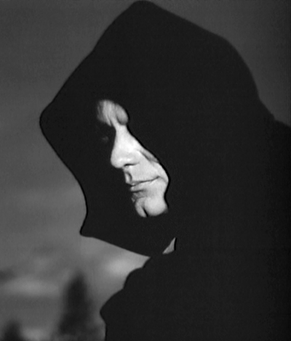


Overview
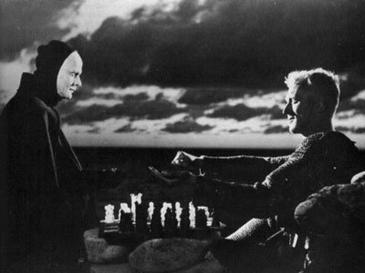
The story follows a disillusioned knight, Antonius Block (played by Max von Sydow), who returns to his homeland after the Crusades only to find his country ravaged by the Black Death. In one of the film’s most iconic sequences, the knight meets Death in human form — portrayed in a spare, haunting manner — and challenges him to a chess game to delay his fate. The film interweaves the knight’s quest with the lives of common people and a troupe of travelling actors, producing a mixture of allegory, allegorical dialogue and black comedy.
Characters and style
Bergman stages a small ensemble cast featuring figures who represent a range of responses to the plague and to existential crisis: the knight, his sceptical squire, itinerant performers and peasants. The role of Death was played with chilling stillness by Bengt Ekerot, while reliable members of Bergman’s company, including Ingmar Bergman collaborators and performers, contribute to the film’s austere tone. The cinematography emphasizes high-contrast black-and-white compositions, stark landscapes and theatrical staging to underscore the film’s moral and metaphysical themes.
Themes and motifs
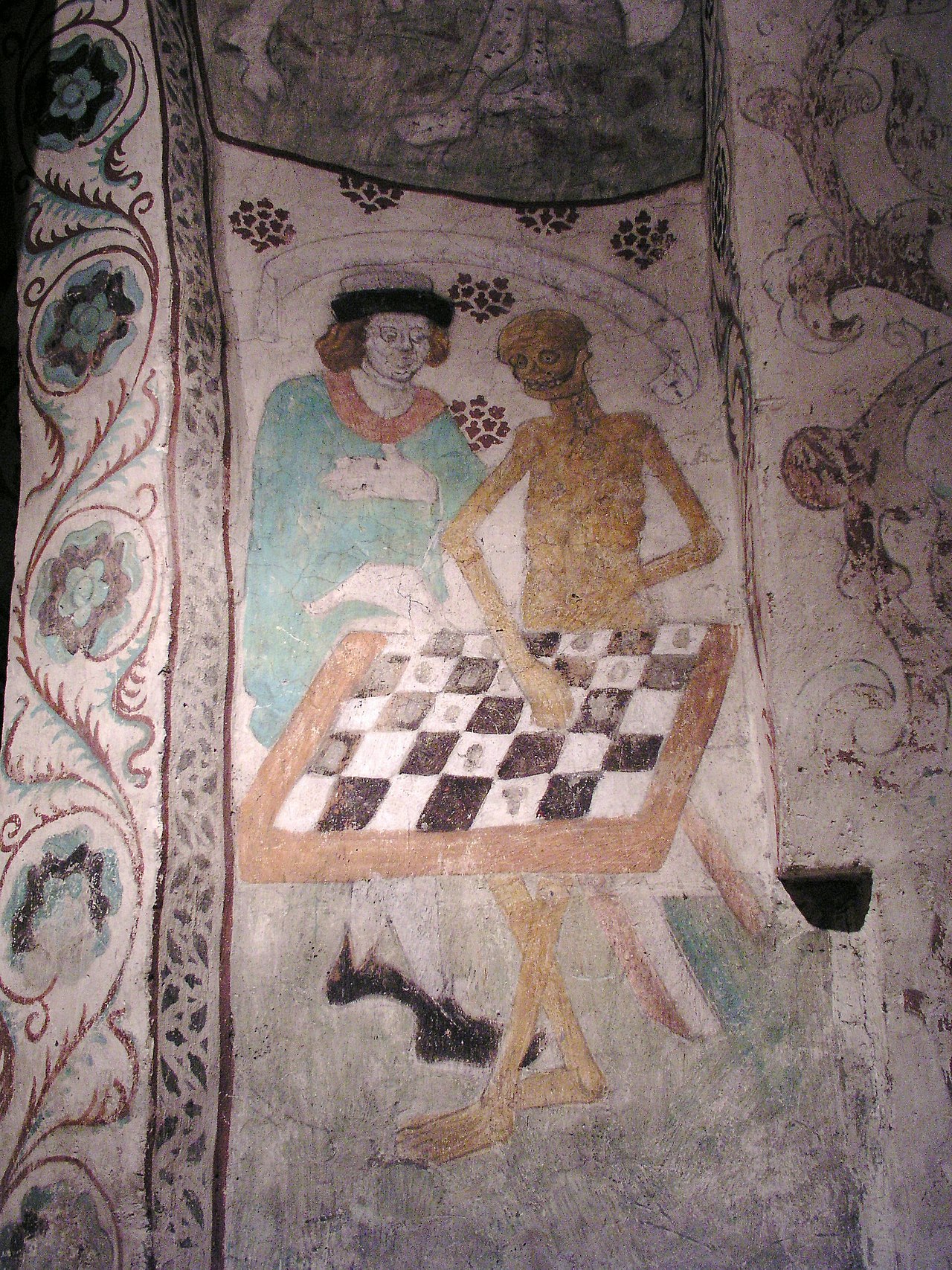
The Seventh Seal deals directly with questions of faith, the silence of God, fear of oblivion and the search for meaning in an apparently indifferent universe. The medieval setting — explicitly evoked amid the devastation of the Black Death — allows Bergman to examine perennial human concerns removed from modern trappings. Recurring images such as the chessboard, danse macabre motifs and theatrical performance function as symbolic devices rather than strict historical reportage.
Production, cast and context
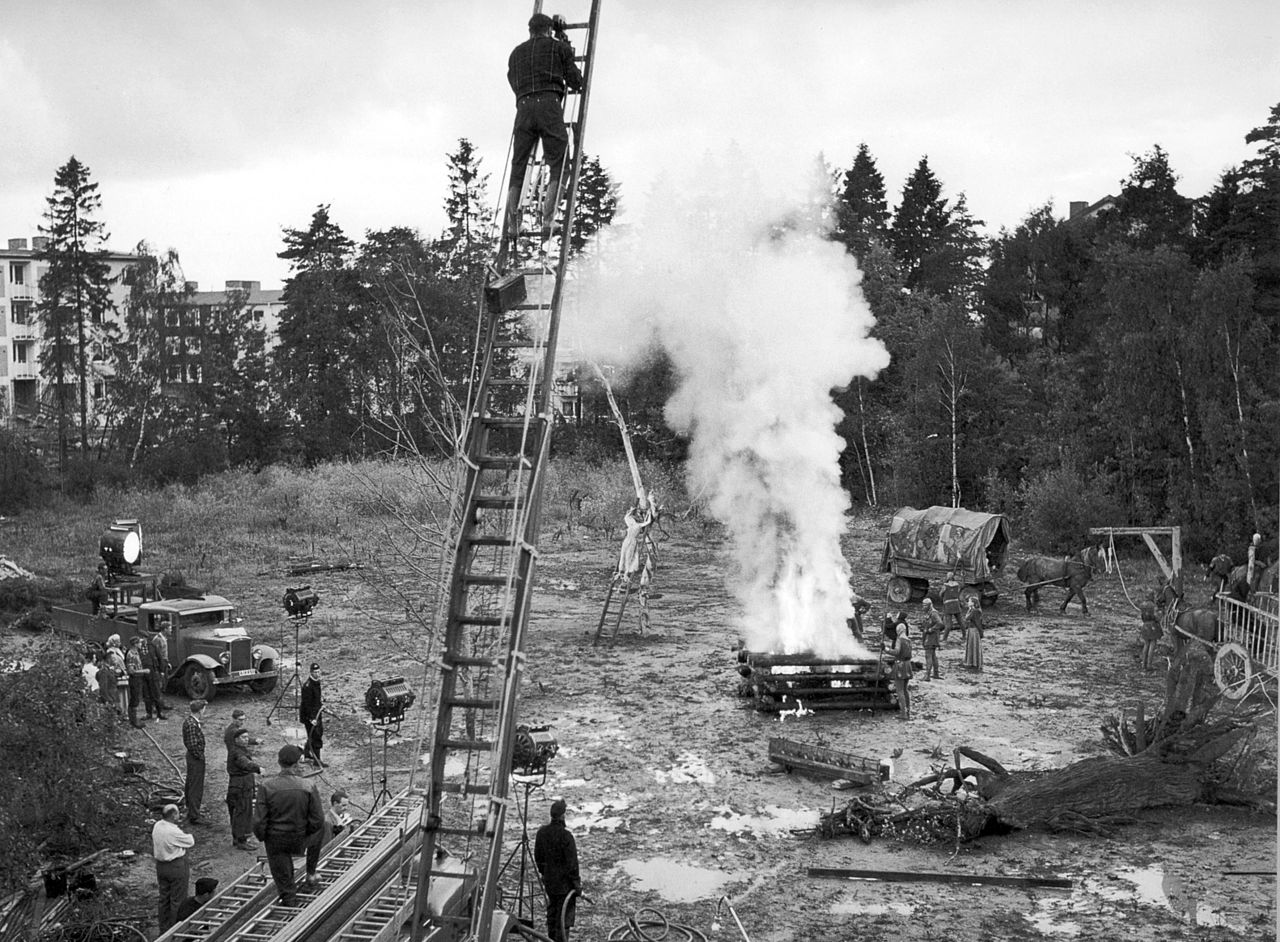
Made during the 1950s when Bergman’s international reputation was growing, the film helped launch the international career of Max von Sydow and showcased actors from Bergman’s repertory company, including Bibi Andersson and Gunnar Björnstrand. The film draws on medieval iconography and the cultural memory of the European plague era while engaging with mid-20th-century philosophical concerns. The setting evokes the broader period of the Middle Ages without attempting a documentary reconstruction.
Reception and legacy
On release The Seventh Seal secured Bergman’s position as a major international filmmaker and became emblematic of existential cinema. Critics and scholars have praised its visual power, thematic depth and memorable scenes — most famously the chess match with Death — which have been widely referenced and parodied in later films, television and other media. The film remains a frequent subject of study for its exploration of art, religion and mortality and continues to be screened and discussed in film history courses and retrospectives.
Notable facts
- The film’s title alludes to apocalyptic imagery and invites theological and literary interpretations.
- Its mixture of allegory, comic interludes and stark drama is characteristic of Bergman’s work in this period.
- Key cast and crew members from this production went on to long collaborations with Bergman and international careers.
For further reading and archival materials, consider searching film studies resources and director biographies that examine Bergman’s influences and the mid-century cultural responses to mortality and meaning.
Questions and answers
Q: Who directed the movie The Seventh Seal?
A: Ingmar Bergman directed The Seventh Seal.
Q: What is the movie based on?
A: The movie is based on Ingmar Bergman's own play.
Q: Who stars in the movie?
A: The movie stars Max von Sydow, Gunnar Björnstrand, Bengt Ekerot, Nils Poppe, Inga Landgré, Bibi Andersson, Åke Fridell, Inga Gill.
Q: What is the theme of the movie?
A: The theme of the movie is a knight's return to his country during the time of the Black Death.
Q: What is the most famous scene of the movie?
A: The most famous scene of the movie is when the knight plays chess with Death for his soul.
Q: What does the knight do after bargaining with Death?
A: After bargaining with Death, the knight sets out on his travels.
Q: What is the movie's genre?
A: The movie is a Swedish fantasy drama.
Author
AlegsaOnline.com The Seventh Seal (1957 film) Leandro Alegsa
URL: https://en.alegsaonline.com/art/146675