
The Dukes of Hazzard (American television series)
A popular American action-comedy television series (1979–1985) about the Duke cousins, their car 'General Lee', run-ins with local officials, and its cultural legacy and controversies.
Overview
The Dukes of Hazzard is an American action-comedy television series that originally aired on CBS from January 26, 1979, to February 8, 1985. Over seven seasons the program produced 147 episodes and became widely known for its high-speed car stunts, lighthearted tone, and memorable characters. The show centers on two young cousins who live in a fictional county in Georgia and frequently find themselves at odds with local authority figures while trying to uphold their family’s honor.
Image gallery
7 Images


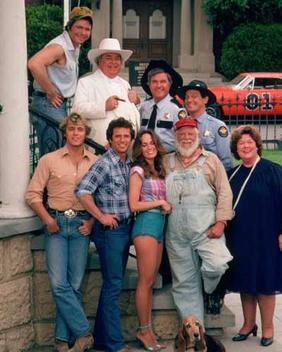
Premise, setting and main elements
Bo and Luke Duke are the principal protagonists: good-natured, adventurous cousins on probation for running moonshine. They, along with their cousin Daisy Duke and their older uncle Jesse Duke, oppose the schemes of the corrupt county commissioner Boss Hogg and the bumbling Sheriff Rosco P. Coltrane. The show blends comedy, chase scenes, and stunt driving. A signature element is the Dukes’ 1969 Dodge Charger nicknamed the "General Lee", notable for its bright orange paint, jumping stunts, and — controversially — a Confederate battle flag painted on its roof.
Characters and cast
- Bo Duke — one of the two lead cousins, originally played by John Schneider; a quick-thinking driver.
- Luke Duke — the other lead, played by Tom Wopat; often the calmer complement to Bo.
- Daisy Duke — the cousins' attractive and resourceful cousin, played by Catherine Bach; her short denim shorts inspired the term "Daisy Dukes".
- Uncle Jesse — the family patriarch, a moral anchor and former moonrunner.
- Boss Hogg — the greedy county commissioner, portrayed by Sorrell Booke; a recurring antagonist.
- Sheriff Rosco P. Coltrane — the comical lawman, portrayed by James Best, often assisted by Deputy Enos and Cooter the mechanic.
Origins, production and reception
The television series drew inspiration from the 1975 film Moonrunners and aimed at a broad audience with its mix of family-friendly action and country-folk humor. It featured a distinctive theme song and narration by Waylon Jennings, who became closely associated with the program. During its run the show was a ratings success and a staple of late-1970s and early-1980s pop culture, though critics sometimes dismissed it for improbable stunts and formulaic plots.
Legacy, adaptations and controversies
The Dukes of Hazzard has had a lasting influence on popular culture. A theatrical remake was released in 2005, and the series popularized styling trends and catchphrases that persist in public memory. At the same time the program's use of the Confederate battle flag on the General Lee has prompted criticism and debate in later decades, making the show part of broader conversations about historical symbols and their modern interpretations. The series also generated spin-offs, merchandise, and television reunion projects that reflect its enduring appeal.
Why it matters
Beyond its entertainment value, the show is an example of syndicated-era television that combined action set pieces with a rural Southern setting. It illustrates how television can shape cultural images — from car-stunt spectacle to fashion terms like "Daisy Dukes" — while also demonstrating how aspects of older programs can be reconsidered through changing social perspectives. For further information about the program and its cast, see the official series references and archival resources linked on related sites.
Related links: series overview, cast pages for Tom Wopat and Catherine Bach, network history at CBS, and more on regional culture and production in Georgia. Additional reading includes articles about bootlegging and moonshine in American folklore and profiles of supporting performers such as James Best.
Author
AlegsaOnline.com The Dukes of Hazzard (American television series) Leandro Alegsa
URL: https://en.alegsaonline.com/art/146600